Want to see the tools and containers I actually use? Start with Shop HOMe →


“Tiny wins, calmer rooms, and gentle resets for real-life homes.”

Gentle home organizing for real women, busy minds, and messy seasons of life.

  • The No-Shame Way to Reset Mid-Winter

    If your home feels behind, heavy, or undone right now—this is your reminder:

    Nothing has gone wrong.

    Mid-winter is not a failure point. It’s a fatigue point. Energy is lower. Light is scarce. Life has been demanding longer than expected. Of course things feel off.

    This reset is not about catching up.
    It’s about releasing shame and choosing support.


    Why Mid-Winter Feels So Hard

    By the middle of winter:

    • Motivation dips
    • Systems wear down
    • Mess accumulates quietly
    • Expectations stay high

    We often respond by blaming ourselves instead of adjusting the system.

    But winter doesn’t require discipline.
    It requires compassion and flexibility.


    First: Let Go of the Shame Narrative

    Shame sounds like:

    • “I should have kept up better.”
    • “Everyone else has it together.”
    • “I ruined my progress.”

    None of that is true.

    A messy or cluttered home in mid-winter isn’t a character flaw—it’s a seasonal reality.

    You don’t need fixing.
    Your systems need softening.


    The Rule for Mid-Winter Resets

    Do less—on purpose.

    This is not the time for:

    • Big decluttering projects
    • Emotional decisions
    • Overhauls
    • Perfection

    Mid-winter resets work when they are:
    ✔ Small
    ✔ Kind
    ✔ Repeatable


    What a No-Shame Reset Looks Like

    A no-shame reset:

    • Starts where you are
    • Focuses on relief
    • Ends early
    • Leaves you feeling better—not behind

    You are not resetting your whole home.
    You are resetting your relationship with it.


    Step 1: Choose Relief Over Results

    Ask one simple question:

    “What would make today easier?”

    That might be:

    • Clearing one surface
    • Resetting one room
    • Putting things back where they belong
    • Doing nothing but tidying a single zone

    Step 2: Reset the Spaces You Touch Most

    Ignore the rest for now.

    Mid-winter resets work best when focused on:

    • Entryway
    • Bathroom counters
    • Bedroom
    • Kitchen sink

    These spaces affect your mood daily. Supporting them first creates momentum without pressure.


    Step 3: Skip Emotional Decisions Entirely

    Do not:

    • Sort sentimental items
    • Revisit hard choices
    • Force letting go

    This is important.

    Neutral clutter only:

    • Trash
    • Expired items
    • Duplicates
    • Things that obviously don’t belong

    Save the rest for a gentler season.


    Step 4: Contain the Mess—Don’t Eliminate It

    Containment is a mid-winter miracle.

    Use:

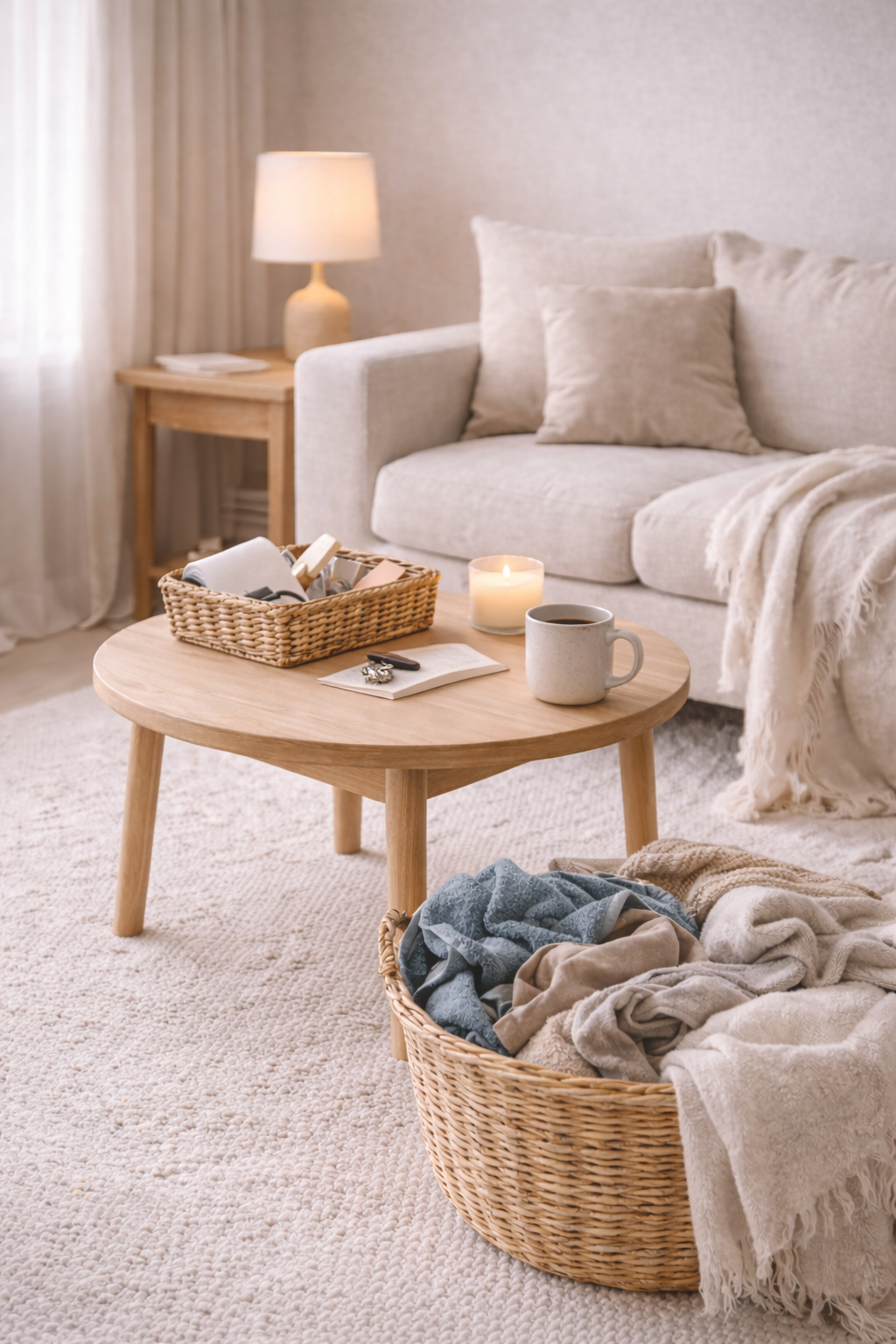
    • One basket
    • One bin
    • One tray

    Contain the mess so it stops spreading. That alone can change how your home feels.


    Tiny Wins That Count (Even Now)

    These all count:

    • Clearing one counter
    • Resetting one drawer
    • Putting away one category
    • Stopping early
    • Choosing rest

    Tiny wins still matter—especially when energy is low.


    What to Stop Doing Right Now

    Give yourself permission to stop:

    • Comparing your home to others
    • Expecting spring-level energy
    • Restarting from scratch
    • Talking to yourself harshly

    Your home is allowed to reflect the season you’re in.


    A Mid-Winter Reset Is Not a Fresh Start

    It’s a gentle continuation.

    You’re not beginning again.
    You’re adjusting.

    That’s wisdom—not failure.


    Your Home Doesn’t Need More From You

    It needs:

    • Understanding
    • Simplicity
    • Forgiveness
    • Support

    And so do you.

    Mid-winter is not the time to push.
    It’s the time to care differently.


    💛 Follow Through: See Your Home With New Eyes

    If you’re questioning whether your home is “good enough,” the next step is redefining what success actually looks like.

    👉 Read next: What a “Loved” Home Actually Looks Like

    Because love doesn’t require perfection.


    💬 Join the Conversation

    Join the conversation—share your tiny wins with me. 💛 Hit reply or drop a comment and tell me one small thing you did today that made your home feel lighter.
    Leave a comment

  • What a “Loved” Home Actually Looks Like

    A loved home doesn’t look perfect.
    It doesn’t look staged.
    And it definitely doesn’t look untouched.

    A loved home looks lived in, supported, and gently cared for—over and over again.

    Somewhere along the way, we started confusing “loved” with “flawless.” But love shows up very differently than perfection does.


    A Loved Home Is Used—Not Preserved

    A loved home shows signs of life:

    • Chairs pulled out
    • Blankets folded loosely
    • Items within reach
    • Evidence of daily routines

    Nothing is frozen in time.
    Nothing feels too precious to touch.

    A home that’s loved invites use, not caution.


    A Loved Home Makes Space for People

    In a loved home:

    • Surfaces aren’t crammed
    • Pathways are clear
    • There’s room to sit, rest, gather, or land

    Not because everything is minimal—but because clutter doesn’t crowd out connection.

    Love creates breathing room.


    A Loved Home Is Kind to Energy Levels

    A loved home doesn’t expect the same output every day.

    It has:

    • Easy resets
    • Forgiving systems
    • Spaces that recover quickly

    It works on low-energy days just as well as high-energy ones.

    That’s not laziness.
    That’s respect.


    A Loved Home Holds Routines Gently

    You can feel it when a home supports routines instead of fighting them.

    Things are:

    • Where you expect them
    • Easy to put away
    • Simple to maintain

    A loved home doesn’t demand constant fixing.
    It quietly supports daily life.


    A Loved Home Doesn’t Chase Perfection

    Perfection creates pressure.
    Love creates ease.

    A loved home allows:

    • A little mess
    • A little noise
    • A little imperfection

    Because love prioritizes comfort over appearance.


    A Loved Home Reflects the People Who Live There

    Not trends.
    Not someone else’s standard.

    A loved home reflects:

    • Real habits
    • Current seasons
    • Personal rhythms
    • Honest needs

    It evolves as life evolves.


    What a Loved Home Is Not

    Let’s clear this up:

    ❌ Not spotless
    ❌ Not magazine-ready
    ❌ Not rigid
    ❌ Not performative

    A loved home is:
    ✔ Supportive
    ✔ Flexible
    ✔ Forgiving
    ✔ Real


    Tiny Wins That Build a Loved Home

    Love doesn’t show up all at once.
    It shows up in small, repeatable ways.

    Tiny wins look like:

    • Clearing a surface
    • Resetting one room
    • Putting something back where it belongs
    • Choosing ease over control

    These moments add up.


    You Don’t Need to Earn a Home That Feels Good

    You don’t need:

    • Better habits
    • More discipline
    • A personality change

    You’re allowed to create a home that supports you now, exactly as you are.

    Love doesn’t require proof.


    A Loved Home Feels Safe to Return To

    At the end of the day, a loved home feels like:

    • Relief
    • Familiarity
    • Support
    • Softness

    It meets you where you are—again and again.

    And that’s what makes it feel loved.


    💛 Follow Through: Reset Without Shame

    If your home doesn’t feel loved right now, that doesn’t mean you’ve failed—it means you might need a gentler reset.

    Because love doesn’t rush—and neither should your home.


    💬 Join the Conversation

    Join the conversation—share your tiny wins with me. 💛 Hit reply or drop a comment and tell me one small thing you did today that made your home feel lighter.


    Leave a comment

  • Creating a Personal Reset Corner

    You don’t need an entire room to feel calmer.
    You don’t even need much space.

    Sometimes, what you need most is one small corner that belongs to you.

    A personal reset corner isn’t about aesthetics or productivity. It’s a place your nervous system recognizes as safe—a spot that quietly says, you can pause here.

    And in the middle of winter, that kind of space matters more than ever.


    What a Personal Reset Corner Is (and Isn’t)

    A reset corner is not:

    • A meditation shrine
    • A perfectly styled nook
    • Another project to maintain

    It is:

    • A place to sit, stand, or breathe
    • A space that feels intentional
    • A visual cue to slow down

    This corner exists to support real life, not ideal life.


    Why Small Spaces Can Have Big Impact

    Our brains respond to environment quickly.

    When you repeatedly use the same small space for rest or grounding, your body learns:

    This is where I exhale.

    That’s powerful.

    A reset corner doesn’t need to be large to be effective—it just needs to be consistent.


    Step 1: Choose a Spot That Feels Neutral (or Slightly Pleasant)

    You’re not looking for perfection. You’re looking for availability.

    Good options:

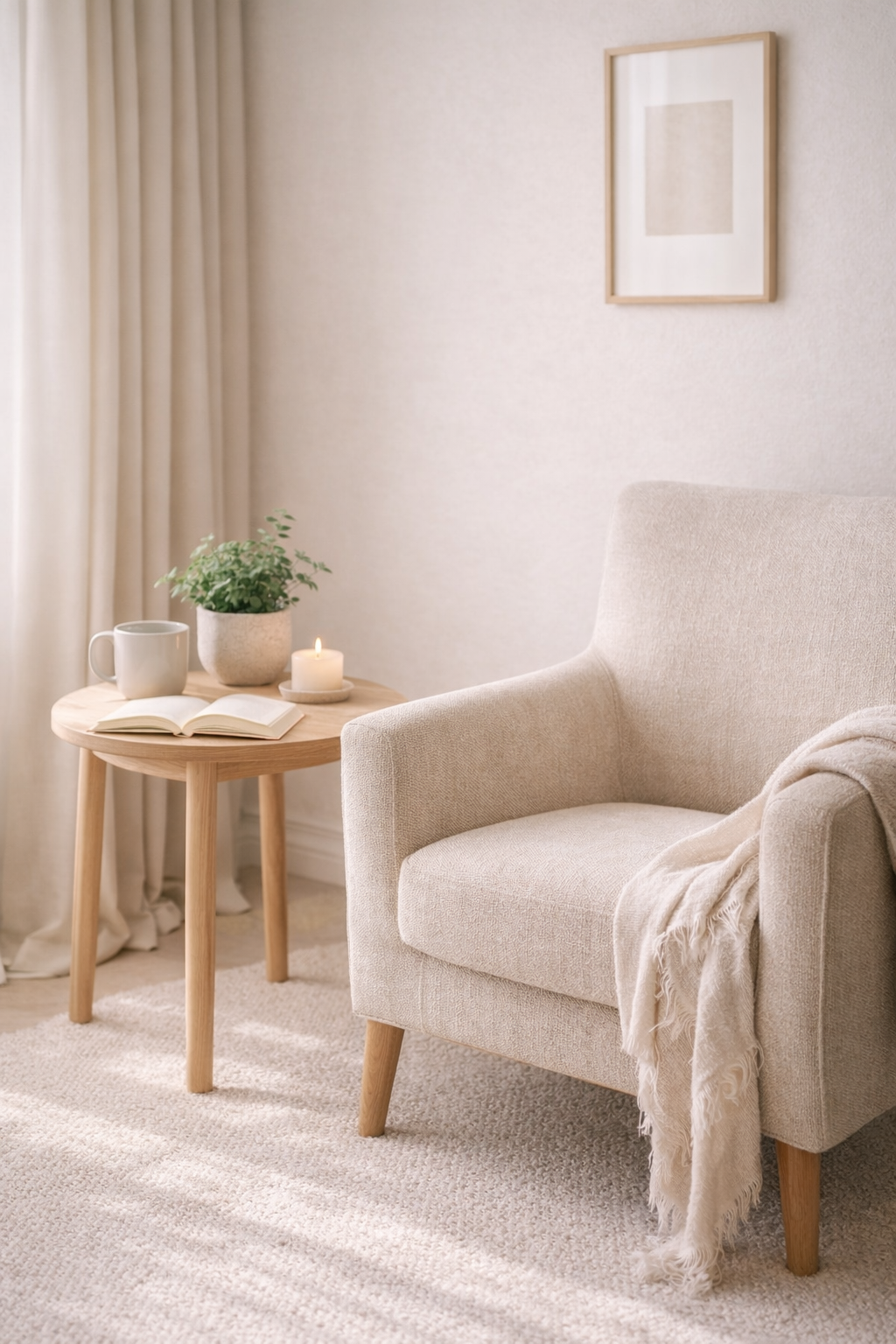
    • A chair near a window
    • A corner of your bedroom
    • A spot at the end of the couch
    • A quiet section of your office

    If the space already feels a little calmer than the rest of the house, that’s enough.


    Step 2: Remove What Distracts

    Before adding anything, subtract.

    Clear:

    • Visual clutter
    • Task-related items
    • Anything that reminds you of what you should be doing

    A reset corner should not feel like a to-do list.

    Even removing one distracting item is a tiny win.


    Step 3: Add One Anchoring Item

    Choose one thing that helps your body settle.

    Examples:

    • A comfortable chair or cushion
    • A soft blanket
    • A lamp with warm light
    • A plant or natural texture

    This item anchors the space emotionally—not decoratively.


    Step 4: Keep It Intentionally Sparse

    More items don’t equal more calm.

    A supportive reset corner usually includes:

    • One place to sit or lean
    • One grounding object
    • One source of soft light

    That’s it.

    The goal is ease, not stimulation.


    Step 5: Decide How You’ll Use It (Loosely)

    This is not a rigid rule—just a gentle intention.

    You might use your reset corner to:

    • Drink your morning coffee
    • Sit quietly before bed
    • Take three deep breaths
    • Read a page or two
    • Do absolutely nothing

    No timers. No expectations.


    Tiny Wins That Count

    You don’t need to finish the whole corner at once.

    Any of these are wins:

    • Clearing the space
    • Adding a lamp
    • Moving a chair
    • Sitting there once

    Tiny wins teach your nervous system that rest is allowed.


    What to Skip (On Purpose)

    You can skip:

    • Buying new furniture
    • Styling for photos
    • Making it perfect
    • Explaining it to anyone else

    This space is for you. It doesn’t need approval.


    Why This Matters for the Rest of Your Home

    When you have a place to reset emotionally, you:

    • React less
    • Carry less tension
    • Move through your home more gently

    A personal reset corner supports every other room—quietly, without effort.


    A Gentle Reminder

    You don’t need to earn rest.
    You don’t need to justify calm.
    You don’t need to wait for life to slow down first.

    You’re allowed to create small spaces that support you—right now.


    💛 Want to Make This Sustainable?

    If your home still feels heavy in winter, the next step is understanding why—and how to gently lighten it.

    👉 Read next: Why Your Home Feels Heavy in Winter—and How to Lighten It

    Small shifts create real relief.


    💬 Join the Conversation

    Join the conversation—share your tiny wins with me. 💛 Hit reply or drop a comment and tell me one small thing you did today that made your home feel lighter.

    Leave a comment

  • A Calm Bathroom Reset in One Afternoon

    You don’t need a full renovation—or an entire weekend—to make your bathroom feel calmer.

    You need one focused afternoon, a few intentional choices, and permission to stop before you’re exhausted.

    Bathrooms are small but intense spaces. They hold routines, stress, self-care, mess, and maintenance all at once. When they’re cluttered or chaotic, it shows up immediately in how your day starts and ends.

    This reset is about restoring calm, not creating perfection.


    Why Bathrooms Feel Overwhelming So Fast

    Bathrooms work hard.

    They collect:

    • Daily-use items
    • Half-used products
    • “Just in case” backups
    • Everyone’s stuff in one small space

    And because they’re used constantly, even small messes feel loud.

    The solution isn’t doing more—it’s making the space easier to maintain.


    The Goal of a One-Afternoon Reset

    This reset is designed to:

    • Reduce visual noise
    • Create breathing room
    • Support daily routines
    • Feel doable on a low-energy day

    You’re not organizing everything.
    You’re organizing what matters most.


    Step 1: Clear the Counters First

    Counters set the emotional tone of the bathroom.

    Start by removing everything that doesn’t need to live there.

    Keep only:

    • What you use daily
    • What supports your routine

    Put everything else temporarily in a bin or on a towel nearby.

    Even this step alone often creates instant relief.

    Tiny win.


    Step 2: Edit Without Overthinking

    Now is not the time for emotional decisions.

    Let go of:

    • Expired products
    • Products you avoid using
    • Duplicates you forgot you had
    • Anything that feels annoying or heavy

    If you hesitate, skip it.
    Neutral clutter goes first.


    Step 3: Group by Routine (Not Category)

    Bathrooms work best when organized by how you use them.

    Examples:

    • Morning routine
    • Night routine
    • Guest use
    • Cleaning supplies
    • Backups

    Grouping by routine reduces decision fatigue and makes daily habits smoother.


    Step 4: Contain the Small Stuff

    Loose items create visual chaos.

    Use:

    • Small bins
    • Drawer dividers
    • Cups or trays

    Containment matters more than matching containers.
    If it’s easy to put away, it will stay calmer longer.


    Step 5: Reset One Drawer or Cabinet

    Choose just one interior space.

    Not everything.

    One drawer.
    One shelf.
    One under-sink bin.

    Clear it, group items, return only what belongs.

    Stop when it feels better—not perfect.


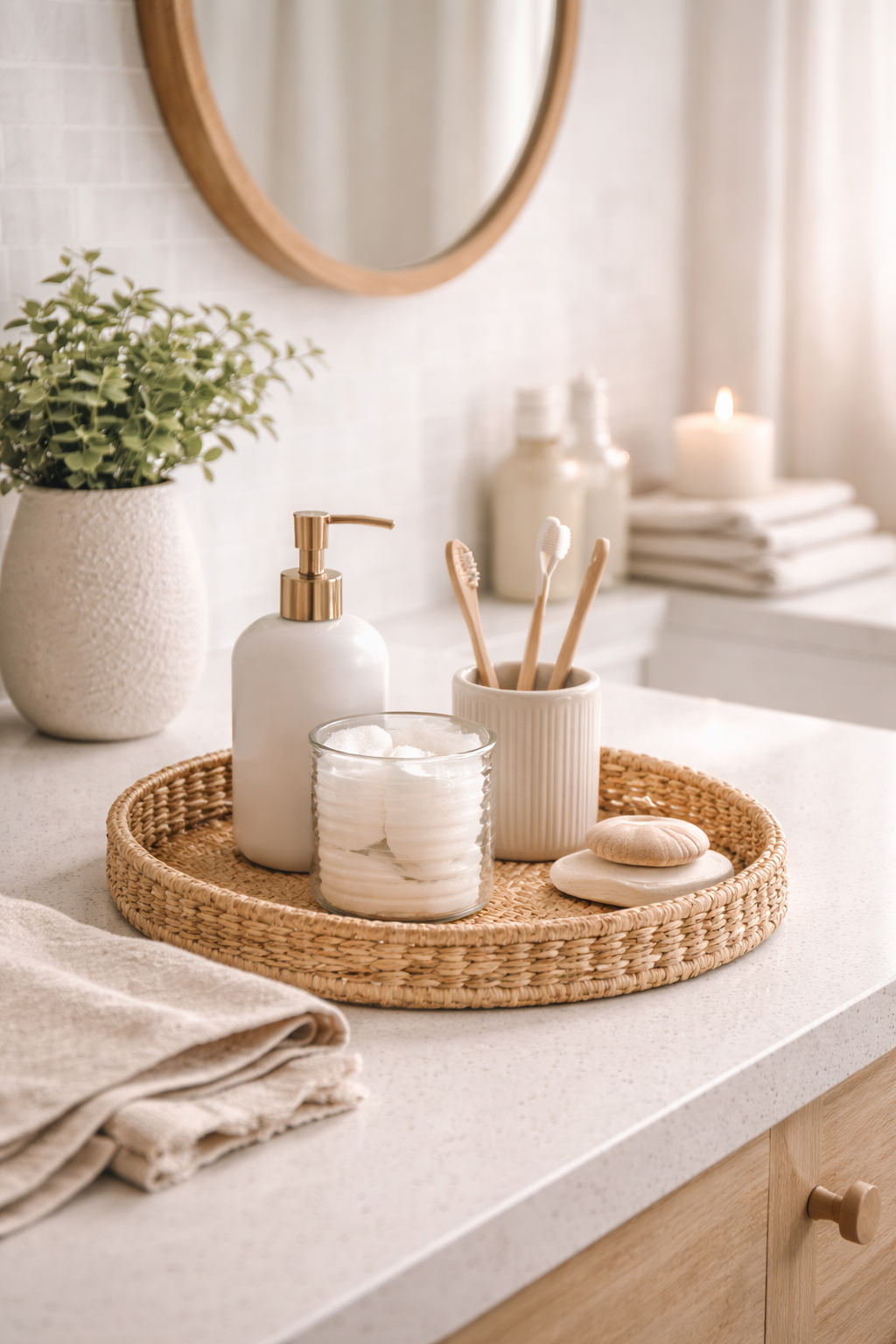
    Step 6: Put Calm Back on the Counter

    Before returning items, ask:

    “Does this support calm or create noise?”

    A calmer counter usually includes:

    • Fewer items
    • One tray or container
    • Space to set things down

    Clear space is not empty space—it’s functional space.


    Tiny Wins That Count

    You don’t have to do it all.

    Any of these count:

    • Clearing the counter
    • Resetting one drawer
    • Tossing expired items
    • Grouping daily essentials

    Tiny wins change how the room feels.


    What to Skip (On Purpose)

    You can skip:

    • Deep cleaning grout
    • Perfect labeling
    • Matching sets
    • Everything-at-once organizing

    This reset is about support, not standards.


    Why This Works

    This approach works because:

    • It respects low energy
    • It limits decisions
    • It creates visible calm quickly
    • It’s easy to maintain

    A bathroom that supports you quietly improves your entire day.


    Calm Doesn’t Require a Full Overhaul

    You don’t need a new bathroom.

    You need one that:

    • Feels lighter
    • Works better
    • Asks less of you

    One afternoon is enough to shift the energy.

    Tiny wins.
    Calmer rooms.
    Real relief.


    💛 Want to Make This Stick?

    Simple labels can help maintain bathroom zones without overthinking—especially for shared spaces.

    Pair this reset with your Bedroom Reset Printable to create calm, supportive routines from morning to night.


    👉 Follow Through: Create a Reset You Can Return To

    Once your bathroom feels calmer, the next natural step is creating a small space just for you.

    Read next: Organizing as an Act of Self-Respect
    A gentle way to build calm into daily life—without needing an entire room.


    💬 Join the Conversation

    Join the conversation—share your tiny wins with me. 💛 Hit reply or drop a comment and tell me one small thing you did today that made your home feel lighter.


    Leave a comment

  • The Emotional Clutter We Keep (and Why)

    Not all clutter is physical.
    Some of it is emotional—and it’s often the hardest to talk about.

    Emotional clutter isn’t about messiness or laziness. It’s about the stories, expectations, and attachments we quietly carry—sometimes long after they stop serving us.

    This post isn’t about forcing yourself to let go.
    It’s about understanding why certain things feel harder to release—and how to move forward with kindness.


    What Emotional Clutter Actually Is

    Emotional clutter shows up as items we keep because of:

    • Guilt
    • Obligation
    • Fear of regret
    • “Just in case” thinking
    • Old versions of ourselves

    These items aren’t neutral. They hold weight.

    And when too much emotional clutter builds up, it can make a home feel heavy—even if it looks “organized.”


    Why We Hold On (Even When We Want to Let Go)

    Most emotional clutter stays for very human reasons.

    1. It Represents a Version of Us We Once Were

    Past hobbies. Old clothes. Aspirations that no longer fit.

    Letting go can feel like admitting something ended—even if ending was the right thing.


    2. It Carries Someone Else’s Expectations

    Gifts. Hand-me-downs. Items tied to family pressure.

    Sometimes we keep things to protect relationships—even when the item itself brings no joy or use.


    3. It Feels Like Proof

    Proof that we cared.
    Proof that something mattered.
    Proof that we tried.

    But memories don’t live in objects—they live in you.


    The Problem With Emotional Clutter

    Emotional clutter quietly:

    • Drains energy
    • Creates avoidance
    • Adds guilt to everyday spaces
    • Makes organizing feel overwhelming

    When every decision feels emotional, progress stalls.

    That’s not a failure—it’s a signal.


    A Gentler Way to Approach Emotional Clutter

    This is not about decluttering everything that hurts.

    Instead, try this:

    Separate emotional awareness from physical action.

    You don’t have to let go right away to make progress.


    Tiny Wins That Don’t Require Letting Go

    You can reduce emotional weight without discarding items.

    Try one:

    • Move emotional items out of daily-use spaces
    • Group them into one contained area
    • Label a bin “Not Ready Yet”
    • Choose one item to thank and release—only if it feels right

    Tiny wins still count when the work is emotional.


    Ask Better Questions (No Pressure)

    Instead of “Should I keep this?” try:

    • Does this support who I am now?
    • Does this belong in my everyday space?
    • Would I notice if this were gone?

    These questions invite clarity—not guilt.


    What Emotional Decluttering Is Not

    Let’s clear this up:

    ❌ Not rushing
    ❌ Not forcing closure
    ❌ Not reliving memories
    ❌ Not proving strength

    It is:
    ✔ Awareness
    ✔ Choice
    ✔ Compassion
    ✔ Self-respect


    You’re Allowed to Go Slowly

    Some items are meant to be kept.
    Some are meant to be released later.
    Some just need to be moved out of the way so you can breathe.

    There is no timeline.


    A Gentle Emotional Reset (Pick One)

    • Acknowledge one item you’re not ready to decide on
    • Move one emotional item out of sight
    • Let go of one thing that feels complete
    • Stop early and notice the relief

    That is enough for today.


    Emotional Space Creates Physical Calm

    When emotional weight lightens, physical spaces follow.

    Not instantly.
    Not dramatically.
    But steadily.

    Tiny shifts create room to rest.


    💛 Follow Through: Support Your Rest

    If emotional clutter is showing up most in your bedroom, the next best step is creating a space that supports rest—not reflection.

    👉 Read next: Bedroom Reset That Supports Better Sleep

    A calm bedroom helps your nervous system settle while you do this deeper, quieter work.


    💬 Join the Conversation

    Join the conversation—share your tiny wins with me. 💛 Hit reply or drop a comment and tell me one small thing you did today that made your home feel lighter.

    Leave a comment

  • Linen Closets That Don’t Eat Towels

    If your linen closet feels like a black hole—where towels disappear, sheets avalanche, and nothing ever stacks the same way twice—you’re not alone.

    Linen closets are small but mighty. When they’re off, they quietly add friction to daily life. When they’re right, they make routines feel smooth, calm, and surprisingly supportive.

    This reset isn’t about making your linen closet pretty.
    It’s about making it usable—even on tired days.


    Why Linen Closets Get So Out of Control

    Linen closets tend to fail for a few common reasons:

    • Too many categories competing for the same space
    • Towels folded inconsistently
    • “Just shove it in” habits
    • Items stored without clear limits

    The result? Towels that slide, topple, or vanish entirely.

    The goal isn’t perfection—it’s containment and clarity.


    The Rule: Towels Need Boundaries

    Here’s the biggest shift:

    Towels don’t behave unless they have a container.

    Stacks alone aren’t enough. Every category needs a visible edge—something that says, this is where this ends.

    That might be:

    • A shelf per category
    • A basket
    • A bin
    • A clearly defined stack limit

    Boundaries prevent the slow creep that turns linen closets into chaos.


    Step 1: Decide What Belongs Here (and What Doesn’t)

    Before organizing, clarify the purpose of your linen closet.

    Ask:

    • Is this for towels only?
    • Sheets and pillowcases?
    • Toiletries or backups?
    • Cleaning supplies?

    If too many unrelated items live here, the closet will always feel full.

    Less variety = easier maintenance.


    Step 2: Simplify the Towel Categories

    You don’t need endless towel types.

    Most homes do well with:

    • Bath towels
    • Hand towels
    • Washcloths
    • Guest or backup towels

    Anything beyond that should earn its space.

    If you can’t remember the last time you used it, it’s a candidate to let go—or relocate.


    Step 3: Fold for the Space You Have

    There is no “right” way to fold towels—only what fits your shelves.

    Choose one fold style that:

    • Fits front to back
    • Stacks evenly
    • Is easy to repeat

    Consistency matters more than technique. When towels stack the same way every time, they stop collapsing.


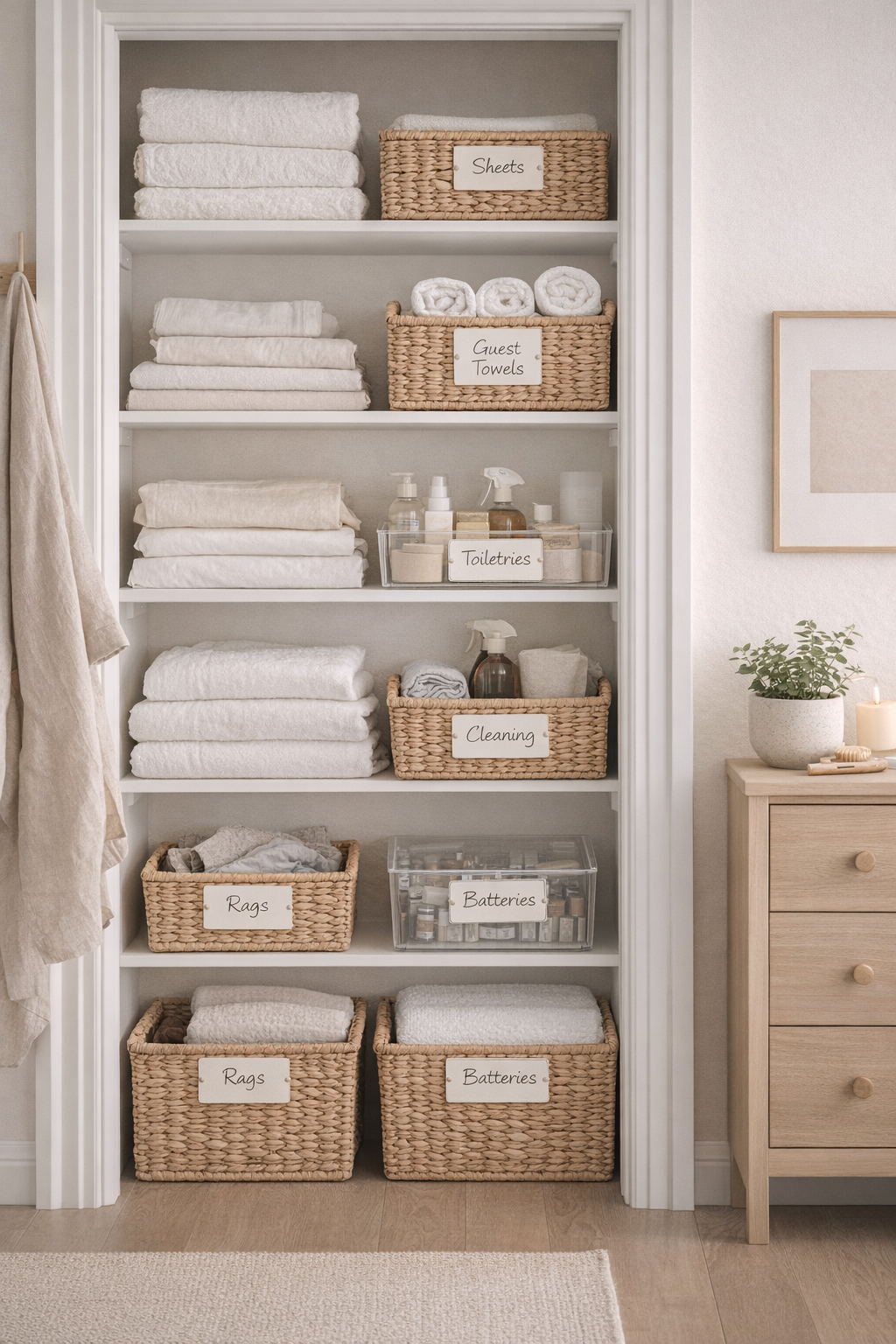
    Step 4: Use Baskets Strategically (Not Everywhere)

    Baskets are most helpful for:

    • Washcloths
    • Guest towels
    • Sheet sets
    • Small or slippery items

    They create instant containment and make it easy to pull one category without disturbing the rest.

    Not everything needs a basket—but the right things do.


    Step 5: Give Each Shelf a Job

    A linen closet stays calm when each shelf has a clear role.

    Examples:

    • Top shelf: guest items or extras
    • Eye-level shelves: everyday towels
    • Lower shelves: heavier or bulk items

    When each shelf has a purpose, items naturally return to their place.


    Step 6: Set a “Full Is Full” Rule

    This is what keeps towels from multiplying.

    Decide:

    • How many towels fit comfortably per shelf
    • How many backups you actually need

    When the shelf is full, something has to go before something new comes in.

    This one rule prevents future overwhelm.


    What to Skip (On Purpose)

    You can skip:

    • Perfectly matched sets
    • Over-labeling
    • Pinterest-level folding
    • Refolding everything weekly

    A linen closet should be forgiving, not fussy.


    A Simple Linen Closet Reset Checklist

    Use this when you’re short on time:

    •  Define what belongs here
    •  Simplify towel categories
    •  Choose one folding style
    •  Add baskets where helpful
    •  Assign each shelf a role
    •  Stop when it feels calmer

    That’s enough.


    Why This Works Long-Term

    This reset works because:

    • It limits decision-making
    • It creates natural boundaries
    • It’s easy to maintain
    • It supports daily routines

    A linen closet that doesn’t eat towels quietly supports your whole home.


    Calm Closets Create Calm Days

    You don’t open your linen closet to be inspired.
    You open it to grab what you need—quickly and without frustration.

    When that happens smoothly, it’s a tiny win.
    And tiny wins add up.

    Calmer closets.
    Easier routines.
    Support where you least expect it.


    💛 Want to Make This Stick?

    Simple labels can help maintain these categories without overthinking. Pair this reset with the Bedroom Reset Printable to create calm, supportive storage that works together—not against you.


    💬 Join the Conversation

    Join the conversation—share your tiny wins with me. 💛 Hit reply or drop a comment and tell me one small thing you did today that made your home feel lighter.

    Tiny wins matter here.


    Leave a comment

  • Bedroom Reset That Supports Better Sleep

    The Reset you need

    Your bedroom doesn’t need to be perfect to support good sleep.
    It needs to be calm, intentional, and kind to your nervous system.

    If your bedroom feels cluttered, loud, or unfinished, it quietly asks your brain to stay alert—when what you really need is rest. This reset isn’t about aesthetics or doing more. It’s about removing friction so your body can actually exhale at the end of the day.

    Better sleep starts with a gentler space.


    Why Bedrooms Get Overlooked

    Bedrooms are deeply personal, which makes them easy to avoid.

    They often collect:

    • Laundry piles
    • Unfinished projects
    • Random clutter with nowhere else to land
    • “I’ll deal with this later” energy

    Because no one else sees it, the bedroom becomes the last priority. But the truth is simple:

    The space where you rest deserves the most care.


    The Goal of a Sleep-Supportive Bedroom

    This reset is not about minimalism or strict rules.
    The goal is to create a room that tells your body:

    • You’re safe
    • You’re done for the day
    • You can let go

    That message comes from simplicity, softness, and intention.


    Step 1: Clear the Visual Noise First

    Sleep is visual as much as it is physical.

    Start with:

    • Nightstands
    • The top of your dresser
    • The floor next to the bed

    Remove anything that:

    • Belongs somewhere else
    • Feels unfinished
    • Reminds you of tasks or stress

    Even clearing one surface can make a noticeable difference.

    Tiny win, big impact.


    Step 2: Reset the Bed Area (This Matters More Than You Think)

    Your bed is the anchor of the room.

    A supportive reset looks like:

    • Fresh or neatly made sheets
    • Pillows that feel intentional, not excessive
    • A blanket setup that’s easy to adjust at night

    You don’t need hotel-level perfection.
    You need a bed that feels like a place you want to land.


    Step 3: Create a Calm Nightstand Setup

    What you see before sleep affects how quickly you settle.

    Keep nightstands simple:

    • A lamp with warm light
    • One or two personal, calming items
    • Room to set things down without clutter

    Remove:

    • Paper piles
    • Random cords
    • Anything that sparks mental noise

    If it doesn’t support rest, it doesn’t belong here.


    Step 4: Tame the Clothing Chaos

    Clothes are one of the biggest sleep disruptors.

    Choose one:

    • A laundry basket that stays out of sight
    • A small chair with a strict limit
    • Hooks for tomorrow’s outfit

    The key is containment, not elimination.
    When clothes have a home, your brain relaxes.


    Step 5: Soften the Lighting

    Harsh lighting tells your body to stay awake.

    If possible:

    • Add a warm bedside lamp
    • Use lower-watt bulbs
    • Avoid overhead lighting at night

    Light is one of the fastest ways to shift how a room feels—especially in winter.


    Step 6: Stop Early (Sleep Loves Boundaries)

    This reset works best when you don’t overdo it.

    Once the room feels calmer:

    • Stop
    • Dim the lights
    • Enjoy the shift

    A bedroom reset should give you energy, not take it.


    Tiny Wins That Support Better Sleep

    You don’t need a full overhaul. Try one tonight:

    • Clear your nightstand
    • Make the bed
    • Put clothes in one contained spot
    • Turn on a lamp instead of overhead light

    Each tiny win sends a clear signal:

    This space supports me.


    What This Reset Is Not

    Let’s be clear:

    ❌ Not a deep clean
    ❌ Not a full declutter
    ❌ Not a makeover
    ❌ Not a perfection project

    This is about care, not control.


    A Bedroom That Respects Your Rest

    Better sleep doesn’t start with supplements or routines.
    It starts with a space that doesn’t ask anything of you.

    A calmer bedroom helps your body do what it already knows how to do—rest.

    Tiny wins.
    Softer nights.
    A room that supports you back.


    💛 Want Gentle Structure?

    The Bedroom Reset Printable was designed to help you create a sleep-supportive space without overwhelm—one small step at a time.

    Optional labels are available if you want to make the calm last.


    💬 Join the Conversation

    Join the conversation—share your tiny wins with me. 💛 Hit reply or drop a comment and tell me one small thing you did today that made your home feel lighter.

    Tiny wins matter here.


    Leave a comment

  • Organizing as an Act of Self-Respect

    Organizing isn’t about being tidy.
    It’s not about perfection, discipline, or finally “getting it together.”

    At its core, organizing is something much quieter—and much more powerful:

    Self-respect made visible.

    February is a beautiful time to explore this idea. The rush of January has passed. Winter is still present. Energy is softer. And that makes this the perfect season to shift how we organize—not just what we organize.


    What Self-Respect Looks Like at Home

    Self-respect doesn’t show up as a perfectly styled room.

    It shows up as:

    • Clearing a surface so your eyes can rest
    • Making your bed because you deserve a calm place to land
    • Letting go of something that no longer supports who you are now
    • Creating systems that don’t exhaust you

    Self-respect says:
    I deserve a home that helps me, not one that constantly asks more of me.


    Why Our Homes Reflect How We Treat Ourselves

    Your home quietly mirrors your internal state.

    When you’re stretched thin, your space often carries:

    • Overflow
    • Avoided corners
    • Piles that whisper guilt
    • Rooms that feel heavy instead of supportive

    This isn’t a failure. It’s feedback.

    Organizing from a place of self-respect doesn’t ask,
    “What’s wrong with me?”

    It asks,
    “What would make this easier?”


    Tiny Wins Are Acts of Self-Respect

    This matters: self-respect grows through tiny wins, not big transformations.

    A tiny win might be:

    • Clearing your nightstand
    • Folding towels instead of stuffing them
    • Putting one category back where it belongs
    • Removing one item that creates stress

    Each small action sends a message:

    I matter enough to make this easier.

    Tiny wins are how trust with yourself is built—and how calm starts to stick.


    Respecting Your Energy Is Part of the Work

    Organizing with self-respect means honoring your capacity.

    You are allowed to:

    • Organize in short bursts
    • Stop before you’re tired
    • Leave projects unfinished
    • Choose maintenance over overhaul

    A system that drains you is not respectful—it’s demanding.

    The goal isn’t more effort.
    The goal is more support.


    Why This Shows Up So Strongly in the Bedroom

    The bedroom is one of the clearest reflections of self-respect.

    It’s where you:

    • Begin your day
    • End your day
    • Rest your nervous system

    When the bedroom feels cluttered, ignored, or chaotic, it quietly communicates that you come last.

    February is an ideal time to gently shift that story.

    Not by doing everything—but by doing something kind.


    What Organizing as Self-Respect Is Not

    Let’s be clear about what we’re leaving behind:

    ❌ Perfection
    ❌ Comparison
    ❌ Punishment
    ❌ All-or-nothing thinking

    Organizing as self-respect is:
    ✔ Care
    ✔ Boundaries
    ✔ Kindness
    ✔ Sustainability


    A Gentle Self-Respect Reset (Pick One)

    If you want to practice this today, choose just one:

    • Clear one surface you use daily
    • Let go of one item that no longer fits your life
    • Make one space easier to maintain
    • Stop early and notice the relief

    That’s enough. Truly.


    You Don’t Need to Earn a Calm Home

    You don’t need to try harder.
    You don’t need to become someone new.
    You don’t need to be “better at organizing.”

    You deserve a home that supports you as you are.

    Organizing isn’t about control.
    It’s about care.

    And care—real care—is always an act of self-respect.


    💛 Ready to Take This One Step Further?

    Your bedroom is one of the most powerful places to practice self-respect.

    If you’d like gentle structure without overwhelm, the Bedroom Reset Printable was designed to help you create a calmer, more supportive sleep space—one tiny win at a time.
    Optional labels are available if you want to make it easy to maintain.


    💬 Join the Conversation

    Join the conversation—share your tiny wins with me. 💛 Hit reply or drop a comment and tell me one small thing you did today that made your home feel lighter.

    Tiny wins matter here.


    Leave a comment

  • Why Homes Feel Heavier in Winter

    Why Your Home Feels Heavy in Winter—and How to Lighten It

    If your home feels heavier in winter, you’re not imagining it.
    And you’re not doing anything wrong.

    Winter changes how we live inside our spaces—how we move, what we use, what we see, and how much energy we have to manage it all. When your home hasn’t shifted with the season, it starts to feel dense, crowded, and exhausting.

    The good news?
    You don’t need a full reset to feel lighter again.

    You just need a few intentional adjustments that work with winter—not against it.


    Why Homes Feel Heavier in Winter

    Let’s name what’s actually happening.

    1. We Bring More Stuff Inside

    Winter adds layers:

    • Coats, boots, scarves, gloves
    • Extra blankets and throws
    • Holiday leftovers
    • Gear for cold, snow, and dark days

    Even tidy homes gain bulk this time of year. More stuff = more visual weight.


    2. We Spend More Time Indoors

    When we’re home more, we use our homes more.

    That means:

    • Surfaces fill faster
    • Rooms stay “in use” longer
    • There’s less natural reset happening

    A space that worked in summer can feel overwhelmed in winter simply because it’s working harder.


    3. There’s Less Natural Light

    Short days and low light change everything.

    Clutter feels heavier when:

    • Corners are dim
    • Shadows linger
    • Visual contrast is higher

    Even small amounts of mess feel louder in winter light.


    4. Energy Is Lower—But Expectations Aren’t

    This one matters.

    Winter is a naturally slower season, but many of us still expect:

    • The same productivity
    • The same routines
    • The same level of upkeep

    That mismatch creates tension—not just in our minds, but in our homes.


    How to Lighten Your Home (Gently)

    This isn’t about doing more.
    It’s about doing less, on purpose.


    1. Reduce Visual Noise First

    You don’t need to declutter everything—just what your eyes trip over.

    Start with:

    • One countertop
    • One table
    • One shelf

    Clear what doesn’t need to be out right now.

    Instant relief often comes from removing just 10–15% of what you see.


    2. Swap “Decorative” for “Supportive”

    Winter calls for support, not styling.

    Ask of each visible item:

    “Does this help me feel calmer right now?”

    If the answer is no, consider storing it until spring.

    Supportive winter items include:

    • Soft lighting
    • Cozy textures
    • Easy-access storage
    • Fewer, larger groupings

    3. Contain the Seasonal Mess

    Don’t fight winter clutter—contain it.

    Examples:

    • One basket for winter accessories
    • One tray for daily-use items
    • One bin for holiday leftovers

    Containment reduces mental load without requiring constant cleanup.


    4. Lighten the Load on Surfaces

    Surfaces carry emotional weight.

    In winter, aim for:

    • Fewer items out
    • More breathing room
    • Clear “landing spots”

    A mostly-clear surface feels like permission to rest.


    5. Add Light Where the Sun Can’t

    Lighting is a winter reset tool.

    Simple additions:

    • Table lamps
    • Floor lamps
    • Warm bulbs
    • Candles (real or flameless)

    Light doesn’t just brighten rooms—it lifts mood and reduces the feeling of heaviness.


    6. Adjust Your Standards (This Is Key)

    Winter homes don’t need to be:

    • Minimal
    • Perfect
    • Always tidy

    They need to be:

    • Forgiving
    • Functional
    • Kind to low energy days

    Lowering the bar is not failure—it’s seasonal wisdom.


    What to Stop Doing in Winter

    Give yourself permission to pause:

    • Big decluttering projects
    • Emotional decision-making
    • Perfection-based resets
    • Constant re-organizing

    Winter is about maintenance and comfort, not transformation.


    A Simple “Lighten the Home” Reset

    Use this anytime your space feels heavy:

    •  Clear one surface
    •  Put away one unused item
    •  Add one light source
    •  Contain one messy category
    •  Stop early

    Tiny actions. Real relief.


    Your Home Isn’t Heavy—It’s Asking for Support

    When a home feels heavy, it’s usually saying:

    “I’m carrying too much for this season.”

    Listening—rather than pushing through—is how things start to feel lighter again.

    You don’t need to overhaul your home to feel better in it this winter.

    You just need to meet it where it is.

    Tiny shifts.
    Calmer rooms.
    A lighter season—one gentle reset at a time. 💛


    💛 Want a Rhythm That Keeps This Feeling?

    The Daily 5 / Weekly 20 / Monthly 60 Method helps keep your home light and livable through winter—without burnout or starting over.

    Your home can feel better this week.


    Leave a comment

  • What to Let Go of in January (Mentally + Physically)

    January doesn’t ask you to become a new person.
    It asks you to set things down.

    Not everything needs fixing.
    Not everything needs improving.
    Some things just need to be released—quietly, without ceremony.

    This is a January reset for mind and home, designed to feel lighter, not demanding.


    First: Let Go of the Pressure to “Start Fresh”

    The biggest thing to release in January is the idea that you need a dramatic beginning.

    You don’t need:

    • A perfect plan
    • A complete overhaul
    • A new version of yourself

    Progress doesn’t come from pressure.
    It comes from relief.


    What to Let Go of Mentally

    These are the invisible weights that make January feel heavier than it needs to be.

    1. Unrealistic Expectations

    January is cold, dark, and slow for a reason.

    Let go of expecting:

    • Peak productivity
    • Constant motivation
    • Big leaps forward

    This is a season for steady, not spectacular.


    2. The Need to Catch Up

    You are not behind.

    Let go of:

    • Guilt about last year
    • The urge to “make up for lost time”
    • Comparison to anyone else’s timeline

    You are allowed to begin from exactly where you are.


    3. All-or-Nothing Thinking

    If it can’t be done perfectly, it’s still worth doing partially.

    Let go of:

    • “If I can’t do it right, why start?”
    • Waiting for ideal conditions
    • Abandoning small wins

    Tiny progress counts.


    4. Old Narratives About Yourself

    January is a great time to retire labels.

    Let go of:

    • “I’m bad at organizing”
    • “I never follow through”
    • “This always falls apart”

    These are stories—not facts.


    What to Let Go of Physically

    Physical clutter holds mental weight. But January is not the time for emotional deep dives.

    We’re releasing what’s neutral and obvious.


    1. Leftover Holiday Excess

    This is low-hanging fruit.

    Let go of:

    • Packaging
    • Broken decor
    • Extra wrapping supplies
    • Unused seasonal items

    You’re not letting go of traditions—just the excess around them.


    2. Duplicates and Extras

    If you have more than you use, you’re carrying unnecessary weight.

    Let go of:

    • Extra mugs
    • Too many utensils
    • Duplicate tools
    • Backups you forget you own

    Keep what supports daily life.


    3. Things That No Longer Match Your Life

    Your home should reflect who you are now.

    Let go of:

    • Items from past versions of yourself
    • Aspirational clutter
    • Projects you’re no longer interested in

    You’re allowed to change.


    4. Broken, Expired, or Unused Items

    This category requires no emotion.

    Let go of:

    • Broken items waiting to be fixed
    • Expired products
    • Things you avoid using

    If it’s draining energy just by existing, it’s time.


    What to Keep (This Matters)

    Let go intentionally—but also keep with intention.

    Keep:

    • What supports your current routines
    • What you use regularly
    • What brings quiet comfort
    • What feels aligned with your life now

    Letting go creates space for ease—not emptiness.


    A Gentle January Let-Go Checklist

    Use this when you feel stuck:

    •  Release one mental expectation
    •  Clear one surface
    •  Toss one obvious no
    •  Notice the relief
    •  Stop early

    That’s enough for today.


    Why January Is About Release, Not Reinvention

    You don’t need to become someone new.
    You need to make room for who you already are.

    Letting go isn’t about loss.
    It’s about lightening your load.

    And January is the perfect time for that.


    Start the Year by Setting Things Down

    You don’t need a grand reset to begin again.
    You just need a little less weight—mentally and physically.

    Tiny releases.
    Calmer rooms.
    A steadier year ahead. 💛


    💛 Want a Gentle Rhythm That Supports This?

    The Daily 5 / Weekly 20 / Monthly 60 Method helps you maintain this lighter feeling without pressure or perfection.

    This year doesn’t need to be rushed.


    Leave a comment