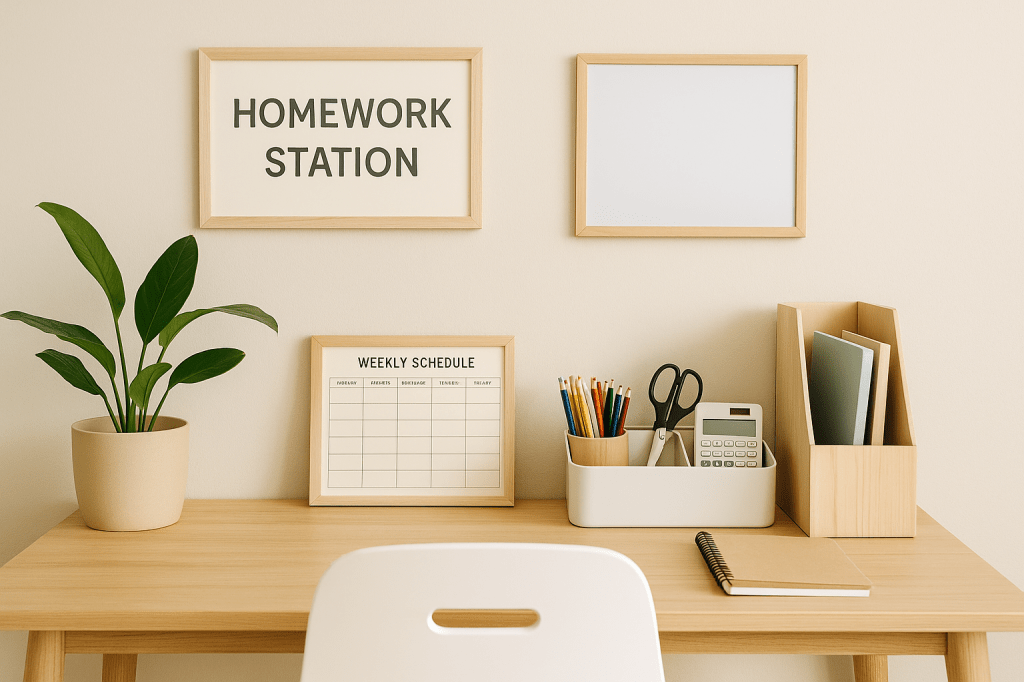
Simple, Age-Friendly Setups That Help Kids Stay on Task (Without Nagging)
Homework time doesn’t have to be a daily battle. Whether you’ve got a kindergartener learning to color inside the lines or a teen juggling deadlines, the right environment can make all the difference.
By creating a focused, flexible space tailored to your child’s age or learning style, you’ll build more than just good habits—you’ll foster confidence and independence.
🧠 Setups by Age or Learning Style
Your child’s stage and learning preferences should guide how you set up their homework space.
✅ Preschool to 1st Grade:
- Use the kitchen table or a low table near you for supervision
- Include crayons, scissors, glue, and a comfy seat
- Keep it short and visual: one task at a time
📝 Tip: Use a picture-based checklist so they can “see” their progress
✅ Grades 2–5:
- Small desk or dedicated spot in a quiet corner
- Include basic supplies, a timer, and room for a water bottle or fidget
- Minimize visual clutter, but keep it inviting with a lamp or fun print
📝 Tip: Use a checklist + reward system (like stickers or screen time bank)
✅ Middle School & Up:
- Private desk or nook—even a corner in their room works
- Tech-friendly: earbuds, charging station, Chromebook area
- Post weekly planner or a whiteboard calendar nearby
📝 Tip: Let them personalize it—it’s about ownership, not perfection
🛒 DIY Portable Homework Caddies
Not everyone has space for a full desk—and that’s OK. A portable caddy is a game-changer, especially for ADHD kids or multi-use spaces.
✅ What to Include:
- Pencils, markers, scissors, glue
- Post-its, highlighters, ruler
- Headphones, calculator, index cards
- A checklist or visual routine
- Optional: fidget toy, timer, reward cards
📝 Tip: Use a rolling cart, craft box, or divided bin. Label everything clearly!
🚫 How to Reduce Distractions & Encourage Independence
Helping your child stay focused doesn’t mean hovering. It’s about creating the right system and then letting them practice responsibility within it.
✅ Action Steps:
- Use a visual timer (Time Timer, sand timer, or Pomodoro app)
- Break tasks into smaller steps
- Allow short brain breaks between assignments
- Set up “start + finish” trays so they can manage their own workflow
- Praise effort, not just results
📝 Tip: Avoid multitasking spaces (TV room, kitchen during dinner). Quiet + light = better focus.
✨ Final Thoughts
You don’t need a Pinterest-perfect study room—just a thoughtful space that helps your child feel capable and in control. The best homework station is the one that works for your family.
Structure supports freedom. Routines reduce stress. And a few small shifts can lead to big results.
👉 Call to Action
Want a free Homework Station Setup Checklist by Age?
📩 Comment below and help your child focus with more confidence and less chaos.

Leave a comment