Help Kids Unwind, Reset, and Reconnect After a Long Day
School is exhausting—mentally, emotionally, and physically. And for neurodiverse kids or those with ADHD, that overwhelm can come home with them. The solution? An intentional after-school decompression zone.
It doesn’t have to be fancy. You just need a space that invites calm, comfort, and connection—without defaulting to screen time.
Let’s create a system that helps your child transition peacefully from school mode to home mode.
🧘♂️ How to Set Up a Calming Decompression Space
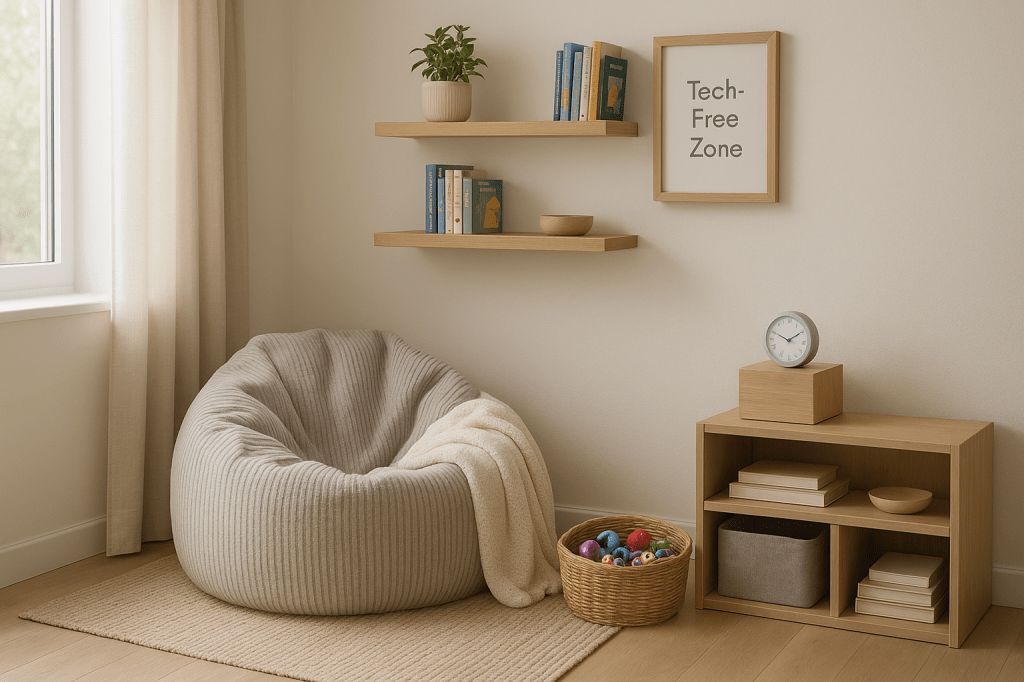
A decompression zone doesn’t require a whole room—just a cozy corner that’s intentional.
✅ What to Include:
- Soft lighting (lamps, string lights, or natural light)
- Comfy seating (bean bag, soft chair, floor mat)
- Weighted blanket or cozy throw
- Calm-down jar, sensory bottles, or fidget tools
- Headphones with soothing music or nature sounds
- Books, sketch pads, puzzles, or quiet play bins
📝 Tip: Avoid direct questions right after school. Give them space to just “be” first.
🌈 Sensory-Friendly Options for Neurodiverse Learners
Kids with sensory sensitivities may need different setups to truly reset.
✅ Sensory Considerations:
- Noise-canceling headphones or white noise machine
- Tent, nook, or pop-up canopy to block out visual chaos
- Sensory bins (kinetic sand, water beads, rice)
- Aromatherapy (lavender or peppermint essential oils)
- Soft, non-scratchy textures for blankets and pillows
- Option for movement: small trampoline, swing, or yoga mat
📝 Tip: Let your child help design their zone. Ownership increases success.
🎲 Screen-Free but Fun Decompression Ideas
You don’t need to ban screens entirely—but building a habit of intentional downtime creates lasting benefits.
✅ Screen-Free Options:
- Calming LEGO or magnetic tile build
- Audiobooks while laying down with a weighted blanket
- Journaling or doodling
- Mindfulness coloring pages
- Solo play: dollhouse, pretend play figures, puzzles
- Outdoor time: swing, trampoline, backyard digging bin
📝 Tip: Create a visual “decompression menu” your child can choose from.
✨ Final Thoughts
A well-designed decompression zone is like a soft landing pad for your child’s overstimulated brain. It helps them recharge, reconnect, and approach the rest of the day with more peace and self-regulation.
It’s a gift you’re giving to your child—and your future self.
👉 Call to Action
Want a free Decompression Zone Setup Checklist + Sensory-Friendly Ideas Sheet?
📩 Visit HappyOrganized.me or comment below and get everything you need to create a calming after-school routine that sticks.

Leave a comment