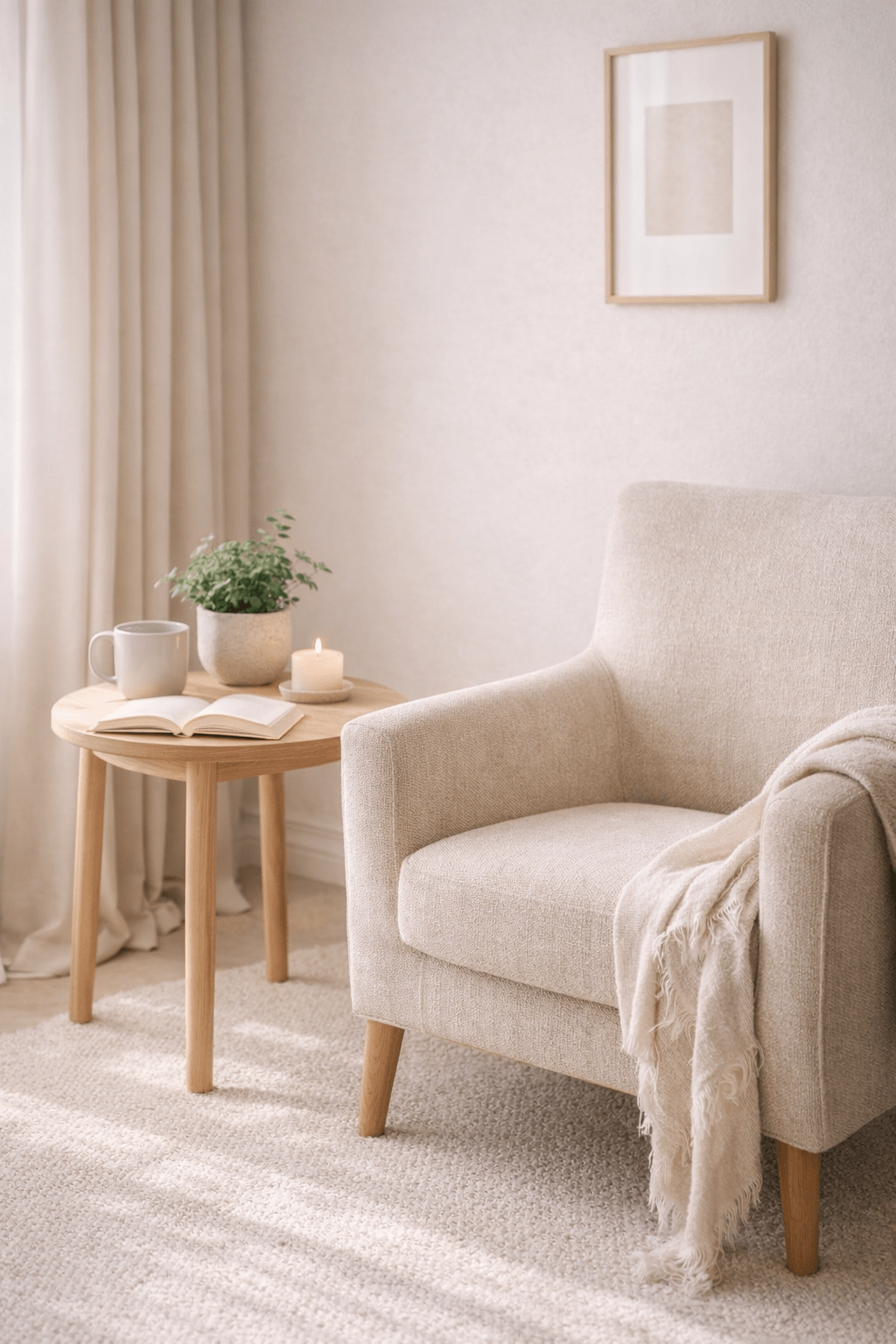
You don’t need an entire room to feel calmer.
You don’t even need much space.
Sometimes, what you need most is one small corner that belongs to you.
A personal reset corner isn’t about aesthetics or productivity. It’s a place your nervous system recognizes as safe—a spot that quietly says, you can pause here.
And in the middle of winter, that kind of space matters more than ever.
What a Personal Reset Corner Is (and Isn’t)
A reset corner is not:
- A meditation shrine
- A perfectly styled nook
- Another project to maintain
It is:
- A place to sit, stand, or breathe
- A space that feels intentional
- A visual cue to slow down
This corner exists to support real life, not ideal life.
Why Small Spaces Can Have Big Impact
Our brains respond to environment quickly.
When you repeatedly use the same small space for rest or grounding, your body learns:
This is where I exhale.
That’s powerful.
A reset corner doesn’t need to be large to be effective—it just needs to be consistent.
Step 1: Choose a Spot That Feels Neutral (or Slightly Pleasant)
You’re not looking for perfection. You’re looking for availability.
Good options:
- A chair near a window
- A corner of your bedroom
- A spot at the end of the couch
- A quiet section of your office
If the space already feels a little calmer than the rest of the house, that’s enough.
Step 2: Remove What Distracts
Before adding anything, subtract.
Clear:
- Visual clutter
- Task-related items
- Anything that reminds you of what you should be doing
A reset corner should not feel like a to-do list.
Even removing one distracting item is a tiny win.
Step 3: Add One Anchoring Item
Choose one thing that helps your body settle.
Examples:
- A comfortable chair or cushion
- A soft blanket
- A lamp with warm light
- A plant or natural texture
This item anchors the space emotionally—not decoratively.
Step 4: Keep It Intentionally Sparse
More items don’t equal more calm.
A supportive reset corner usually includes:
- One place to sit or lean
- One grounding object
- One source of soft light
That’s it.
The goal is ease, not stimulation.
Step 5: Decide How You’ll Use It (Loosely)
This is not a rigid rule—just a gentle intention.
You might use your reset corner to:
- Drink your morning coffee
- Sit quietly before bed
- Take three deep breaths
- Read a page or two
- Do absolutely nothing
No timers. No expectations.
Tiny Wins That Count
You don’t need to finish the whole corner at once.
Any of these are wins:
- Clearing the space
- Adding a lamp
- Moving a chair
- Sitting there once
Tiny wins teach your nervous system that rest is allowed.
What to Skip (On Purpose)
You can skip:
- Buying new furniture
- Styling for photos
- Making it perfect
- Explaining it to anyone else
This space is for you. It doesn’t need approval.
Why This Matters for the Rest of Your Home
When you have a place to reset emotionally, you:
- React less
- Carry less tension
- Move through your home more gently
A personal reset corner supports every other room—quietly, without effort.
A Gentle Reminder
You don’t need to earn rest.
You don’t need to justify calm.
You don’t need to wait for life to slow down first.
You’re allowed to create small spaces that support you—right now.
💛 Want to Make This Sustainable?
If your home still feels heavy in winter, the next step is understanding why—and how to gently lighten it.
👉 Read next: Why Your Home Feels Heavy in Winter—and How to Lighten It
Small shifts create real relief.
💬 Join the Conversation
Join the conversation—share your tiny wins with me. 💛 Hit reply or drop a comment and tell me one small thing you did today that made your home feel lighter.

Leave a comment