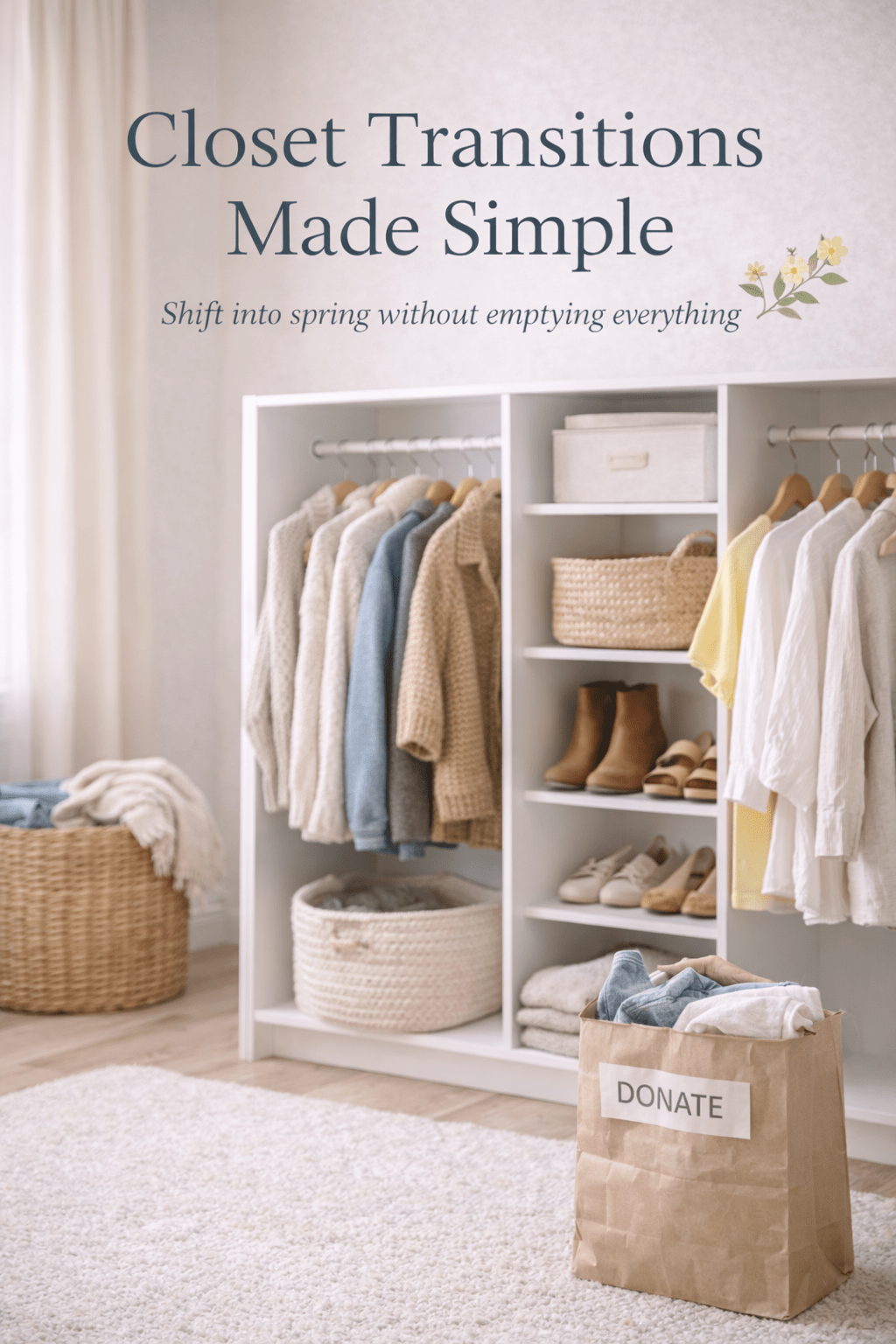
Seasonal closet transitions don’t need to be dramatic.
They don’t require pulling everything out.
And they definitely don’t require trying on every single item you own.
A closet transition is not a purge.
It’s an adjustment.
Spring asks for lighter layers, easier access, and less friction when you get dressed. That’s it.
Why Closet Transitions Feel Overwhelming
Most closet overwhelm comes from trying to do too much at once:
- Swapping every item
- Decluttering emotionally
- Reorganizing the entire space
- Making big decisions about identity
But you don’t need a full transformation.
You need your closet to reflect the next 90 days — not your whole life.
The 3-Phase Closet Transition Method
This keeps things simple and finishable.
Phase 1: Pull Forward (Don’t Pull Out)
Instead of emptying your closet, just:
- Pull spring items forward.
- Move heavy winter coats to the far end.
- Relocate bulky sweaters to the back or top shelf.
You are rearranging access — not starting over.
Tiny win.
Phase 2: Remove What’s Clearly Done
Without deep reflection, remove only:
- Worn-out items
- Things that no longer fit comfortably
- Pieces you actively avoid wearing
No emotional sorting.
No “someday” decisions.
Just the obvious ones.
Put them in a donation bag and move on.
Phase 3: Create Breathing Room
Closets feel calmer when there’s visible space.
You can create breathing room by:
- Leaving 1–2 inches between hangers
- Limiting how many shoes stay out
- Reducing visible piles
- Keeping only this season’s bags accessible
Space signals clarity.
What to Store (Without Overcomplicating It)
Store:
- Heavy coats
- Thick sweaters
- Snow gear
- Winter boots
You don’t need vacuum-seal systems or labeled bins unless you want them.
A simple bin on a high shelf works.
This is about ease — not aesthetics.
What to Leave Alone
You can skip:
❌ Sentimental clothing
❌ Special occasion outfits
❌ Identity-level decisions
❌ “Goal weight” clothing (for now)
Spring closet transitions should feel light — not emotionally loaded.
Reset One Small Section
If you want extra momentum, reset just one:
- Shoe area
- Handbag shelf
- Top drawer
- Workout clothes
One contained zone often creates enough clarity to carry you through the rest of the season.
The Closet Test
When you’re done, ask:
- Can I see what I need?
- Can I grab an outfit quickly?
- Does this feel lighter than yesterday?
If yes — stop.
That’s success.
Tiny Wins That Count
- Pulling forward 5 items
- Storing 1 coat
- Removing 1 pair of shoes
- Leaving visible space
Closet transitions aren’t about dramatic before-and-afters.
They’re about reducing friction in your morning.
Why This Works
This approach works because it:
- Respects seasonal energy
- Avoids emotional overwhelm
- Creates quick relief
- Supports daily life immediately
Closets don’t need reinvention.
They need alignment with the season.
💛 Ready for Structure?
If you want a simple guide to keep this momentum going, download the Spring Reset Checklist — designed to help you finish without burnout.
👉 Follow Through: The One-Bag Declutter Method
If your closet transition revealed more than expected, the next gentle step is learning how to declutter without spiraling.
Read next: Spring Reset ≠ Spring Cleaning
💬 Join the Conversation
Join the conversation—share your tiny wins with me. 💛 Hit reply or drop a comment and tell me one small thing you did today that made your home feel lighter.
Next up:
Mudroom Reset for Real Families
Would you like an image for this one in the same serene, light Scandinavian spring style? 🌿

Leave a comment