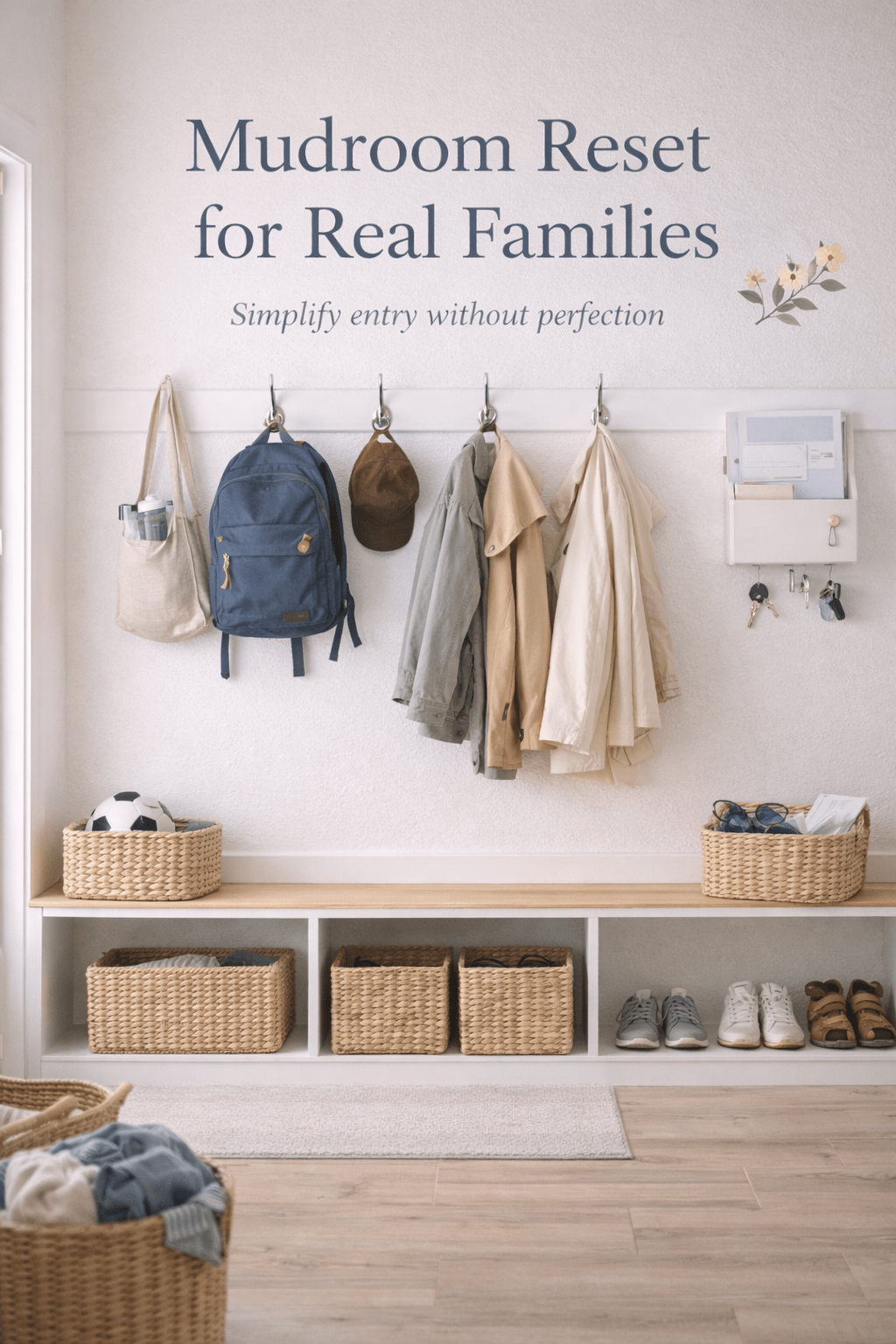
Mudrooms are not supposed to be pretty.
They are supposed to work.
Shoes land there. Backpacks explode there. Jackets pile up there. It’s the drop zone of real life.
If your mudroom feels chaotic, it doesn’t mean you’re failing. It means it’s being used.
This reset is about making it functional again — not flawless.
Why Mudrooms Spiral So Fast
Mudrooms collect:
- Every pair of shoes
- Every jacket for every temperature
- Sports gear
- School bags
- Random things that don’t belong anywhere else
They are high-traffic, high-volume, and low-patience spaces.
That means they need simple systems — not complicated ones.
The Goal: Fewer Decisions at the Door
A successful mudroom reset does one thing:
It reduces friction when coming and going.
You should be able to:
- Drop items quickly
- Grab what you need
- Leave without searching
If that works, the mudroom is doing its job.
Step 1: Remove the Off-Season First
Before organizing anything, pull out:
- Winter gear that’s no longer needed
- Extra coats
- Outgrown shoes
- Sports equipment not currently in use
This alone often creates visible breathing room.
Tiny win.
Step 2: Limit Each Person’s “Active” Items
This is where most mudrooms get stuck.
Instead of storing everything, decide:
- 2–3 active pairs of shoes per person
- 1–2 current jackets
- One active bag
Everything else goes to a closet or storage bin.
The mudroom should hold what’s happening now, not every possibility.
Step 3: Assign a Clear Landing Spot
Every frequent item needs a visible home:
- Hooks for backpacks
- Bins for sports gear
- A tray or mat for shoes
- One basket for stray items
Containment prevents spread.
And simple containment works better than perfect labels.
Step 4: Add One “Catch-All” Basket
This is a real-family essential.
Instead of fighting small clutter, give it a home.
A single basket can hold:
- Gloves
- Sunglasses
- Random papers
- Items waiting to be returned
You empty it once a week. Not daily.
This one shift reduces daily tension dramatically.
Step 5: Reset the Floor
The floor sets the tone.
Clear it fully.
Shake out mats.
Return only what belongs.
If the floor is clear, the whole space feels calmer — even if shelves aren’t perfect.
What to Skip (On Purpose)
You can skip:
❌ Matching bins
❌ Over-labeling
❌ Deep decluttering sentimental items
❌ Expecting kids to follow complex systems
Real families need systems that work on rushed mornings.
The 10-Minute Mudroom Reset
When things start slipping:
- Clear the floor
- Hang what belongs
- Toss trash
- Put 5 items away
Stop.
Small resets prevent big meltdowns.
Tiny Wins That Count
- Removing one extra coat
- Clearing the floor
- Adding one basket
- Limiting shoes
Mudrooms don’t need to be styled.
They need to be sustainable.
Why This Works
This reset works because it:
- Reflects real life
- Accepts volume
- Reduces decisions
- Supports busy transitions
A calm entry supports the entire day.
💛 Want to Keep the Momentum?
Pair this reset with the Spring Reset Checklist to simplify the rest of your home — one manageable shift at a time.
👉 Follow Through: Closet Transitions Made Simple
If outerwear and shoes need adjusting next, start with your closet.
Read next: Closet Transitions Made Simple
💬 Join the Conversation
Join the conversation—share your tiny wins with me. 💛 Hit reply or drop a comment and tell me one small thing you did today that made your home feel lighter.


Leave a comment