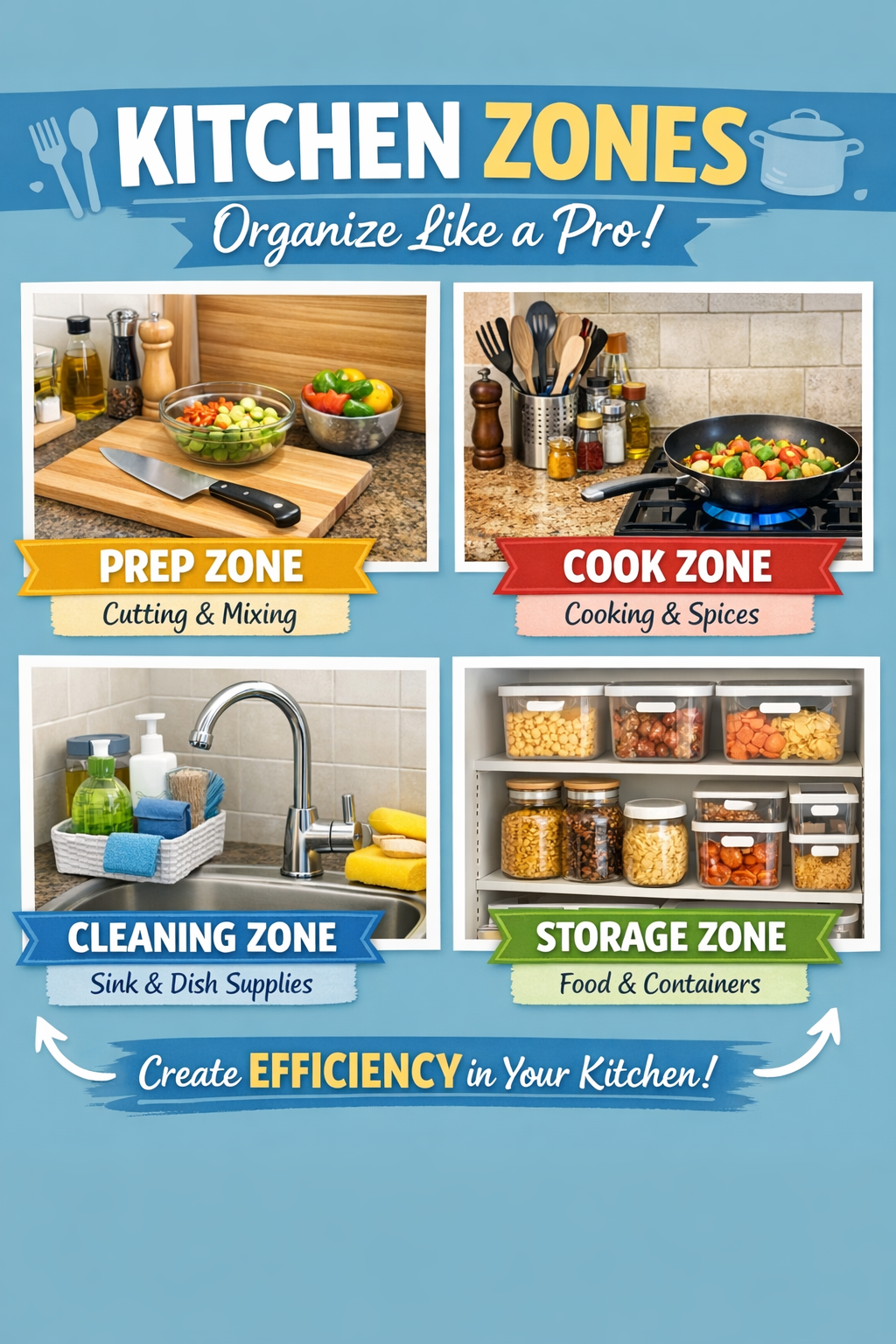
Most kitchens don’t need more space.
They need better flow.
If your kitchen feels frustrating, it’s usually not because you don’t have enough storage — it’s because things aren’t where you use them.
That’s where zones come in.
Not complicated systems.
Not Pinterest perfection.
Just simple groupings that make daily life easier.
Buy Kitchen Rest on Amazon $19.99 paperback or buy directly from here and download your PDF copy $14.99 available instantly
What Is a Kitchen Zone (Really)?
A kitchen zone is just:
A group of items stored where you actually use them.
That’s it.
No labels required.
No bins required (unless you want them).
Just function.
Why Most Kitchen Setups Don’t Work
Most kitchens are organized by:
- Category
- Cabinet type
- What “looks right”
Instead of:
- How you move
- Where you reach
- What you use together
That disconnect creates friction.
And friction slows everything down.
The Goal: Fewer Steps, Less Thinking
A working kitchen lets you:
- Grab what you need quickly
- Move naturally from one step to the next
- Clean up without overthinking
If you have to walk across the kitchen for something you use every day — that’s a broken zone.
The 5 Kitchen Zones That Cover Most Homes
You don’t need 20 zones.
You need a few that actually support your day.
1. Prep Zone
This is where most of the work happens.
Keep here:
- Cutting boards
- Knives
- Mixing bowls
- Measuring tools
- Frequently used oils/spices
This zone should be near your main counter space.
2. Cooking Zone
This stays close to your stove.
Keep here:
- Pots and pans
- Cooking utensils
- Spices
- Oven mitts
You shouldn’t have to leave the stove to find what you need.
3. Cleaning Zone
Centered around your sink.
Keep here:
- Dish soap
- Sponges
- Cleaning cloths
- Dishwasher pods
- Trash bags
Make cleanup easy to start — and easy to finish.
4. Daily Use Zone
This is what you reach for every day.
Keep here:
- Plates
- Bowls
- Cups
- Silverware
Store these where they are easiest to grab — not necessarily where they “look best.”
5. Grab-and-Go Zone
This is your quick access area.
Keep here:
- Snacks
- Water bottles
- Lunch containers
- Coffee/tea setup
Especially helpful for busy mornings and families.
How to Reset Your Kitchen Zones
You don’t need to empty your entire kitchen.
Start small.
Step 1: Choose One Zone
Pick the one that feels most frustrating.
Not the whole kitchen.
Just one.
Step 2: Pull Everything Out of That Zone Only
- Clear the space
- Group similar items
- Remove anything that doesn’t belong
Keep it contained.
Step 3: Return Only What Supports That Zone
Ask:
- Do I use this here?
- Do I reach for this often?
- Does this belong in this step of my workflow?
If not — move it.
What to Stop Doing
You can stop:
❌ Organizing by how it looks
❌ Keeping rarely used items in prime spaces
❌ Overfilling cabinets
❌ Creating overly complicated systems
Your kitchen doesn’t need to impress.
It needs to support you.
The Kitchen Test
When your zones work, you’ll notice:
- You move less
- You think less
- You clean faster
- You feel less frustrated
That’s how you know it’s working.
Tiny Wins That Count
- Moving one item closer to where you use it
- Clearing one drawer
- Resetting one zone
- Removing one duplicate
You don’t need a full kitchen overhaul.
You need better placement.
Why This Works
When your kitchen matches your movement:
- Tasks feel easier
- Time feels shorter
- Friction disappears
Function creates calm.
Not perfection.
💛 Ready to Reset Your Kitchen?
Use your Room Reset Printables to simplify your kitchen one zone at a time — without overwhelm.
👉 Follow Through: The One-Bag Declutter Method
Once your kitchen flows, keep the flow going and use the
Read next: The One-Bag Declutter Method
💬 Join the Conversation
Join the conversation—share your tiny wins with me. 💛 Hit reply or drop a comment and tell me one small thing you did today that made your home feel lighter.

Share your tiny win