Create a Home That Feels Calm, Clear, and livable

Gentle home organizing for real people, busy minds, and messy seasons of life.

Why Consistency Beats Motivation

Motivation feels wonderful when it shows up.

You wake up with energy.
You feel ready to tackle the pantry.
You finally want to clear the counter.
You have a burst of momentum.
You can see the finished result in your mind, and for a moment, the whole house feels possible.

But motivation is not always available.

Some days you are tired.
Some days the house feels heavy.
Some days there are too many demands.
Some days you do not want to clean, organize, reset, sort, or decide anything.

That is why consistency matters.

Consistency does not wait for the perfect mood.

It does not require a big burst of energy.

It does not ask you to overhaul your whole home in one weekend.

Consistency simply says:

Do the small thing you can repeat.

And over time, that small thing changes the way your home feels.


Motivation Starts Strong, But Consistency Stays

Motivation is often loud at the beginning.

It says:

“Let’s redo the whole closet.”
“Let’s finally organize the garage.”
“Let’s clean the entire kitchen.”
“Let’s make everything perfect.”

And sometimes that energy is useful.

But motivation can fade quickly.

Then the project is half-finished, the bins are still out, the donations are still by the door, and the house feels worse than before.

Consistency is quieter.

It says:

“Clear the counter after dinner.”
“Put the shoes in the basket.”
“Move leftovers to the front.”
“Reset the sink before bed.”
“Take out the trash when it is full.”
“Put one item in the donation bag.”

These actions may not feel dramatic, but they are the ones that keep your home moving.

A calm home is rarely built from one giant effort.

It is built from small actions repeated often enough to matter.


Why Motivation Is Not a System

Motivation can help you start, but it cannot be the whole plan.

If your home only gets attention when you feel motivated, then your systems depend on your mood, your energy, your schedule, and your stress level.

That is a lot of pressure.

Real life needs something more dependable.

A home system should be easy enough to use even when you are not excited about it.

That is why simple systems work better than complicated ones.

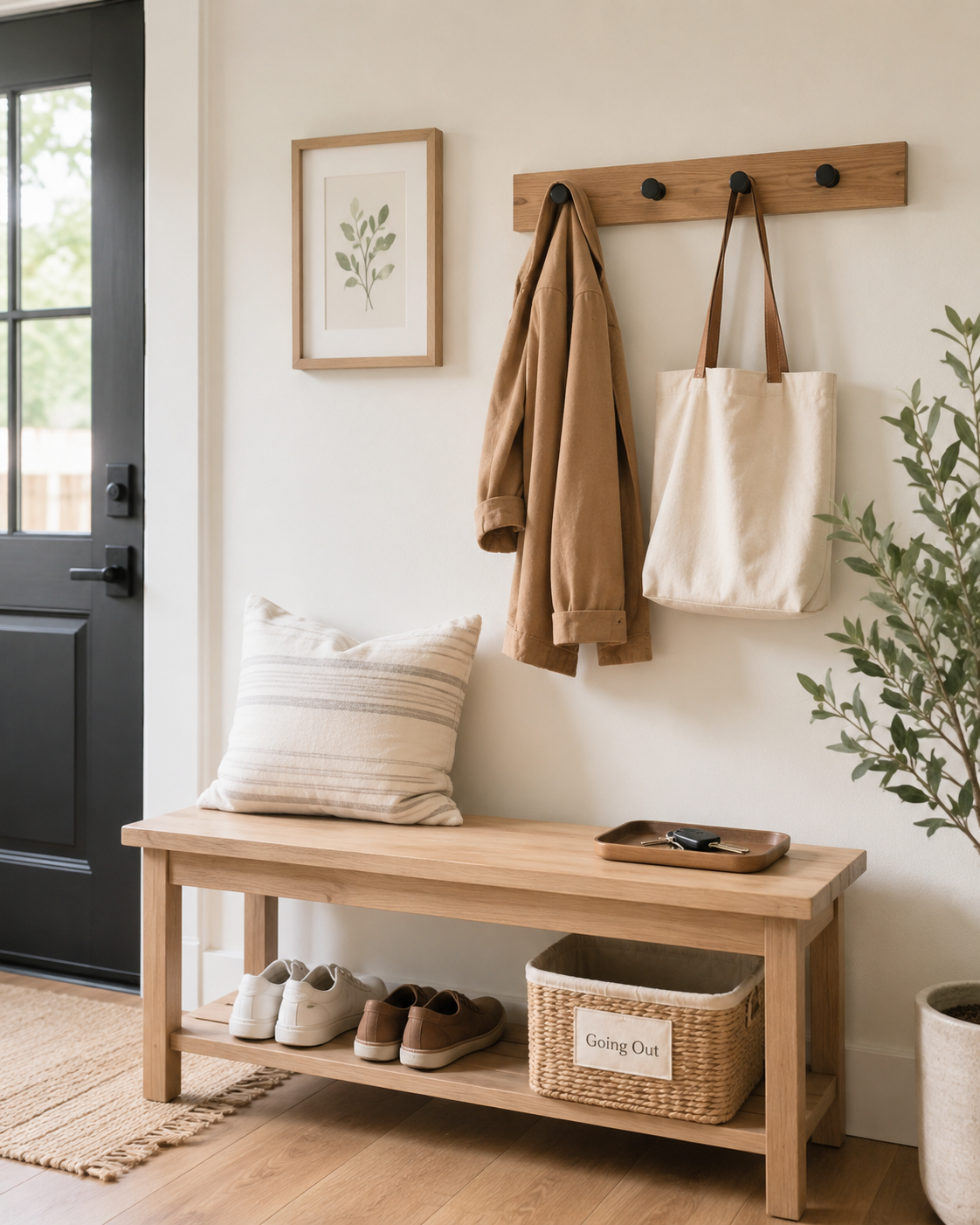
A basket by the door works because it does not require a mood.

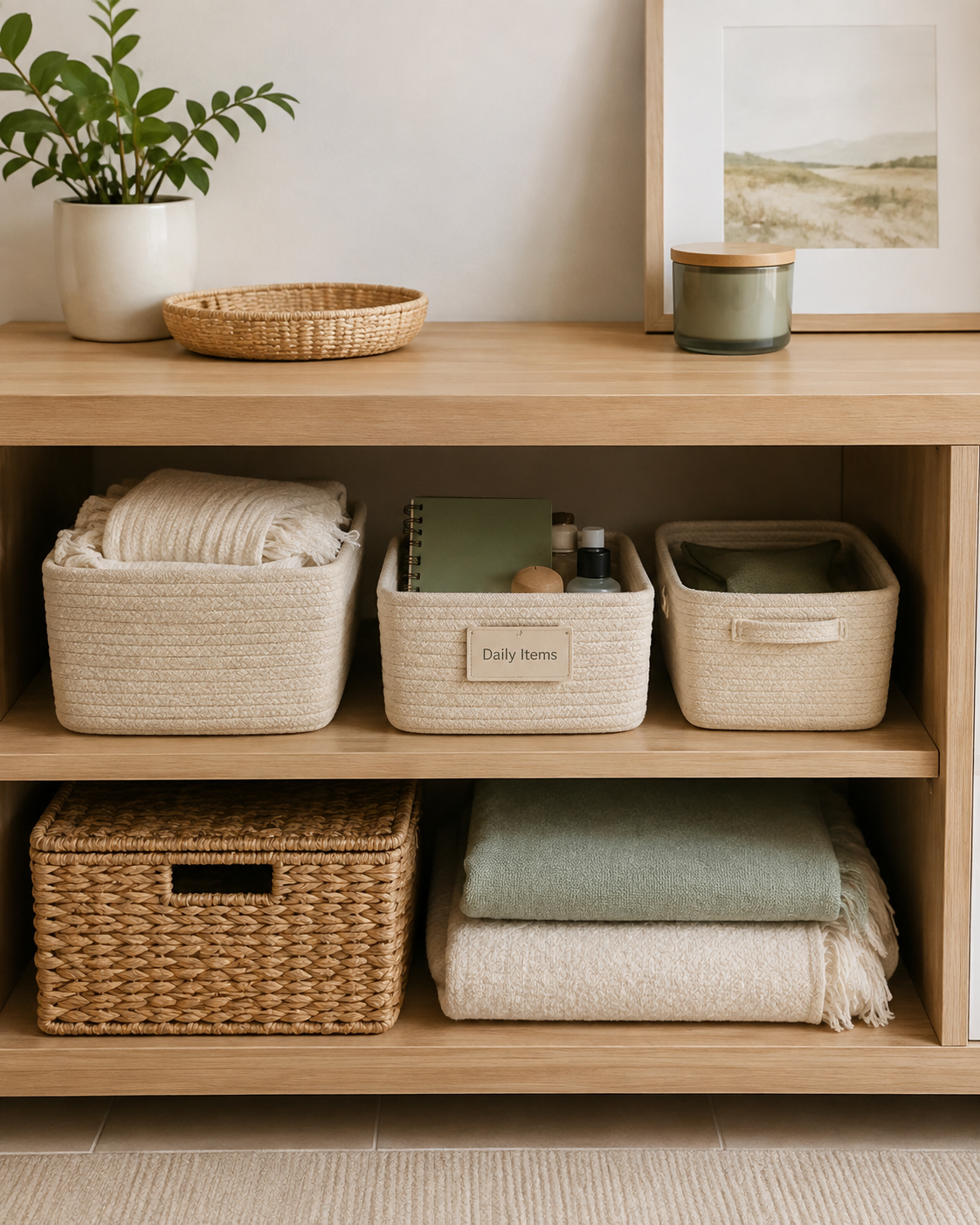
A label works because it quietly tells everyone what belongs there.

A cleaning caddy works because the supplies are already together.

A weekly reset works because the time is already chosen.

An Eat Me First fridge bin works because the food that needs attention is already visible.

These systems do not need motivation to function.

They need to be simple, visible, and repeatable.


Consistency Does Not Mean Doing Everything Every Day

This is important.

Consistency is not perfection.

It does not mean your house is always clean.

It does not mean you never skip a day.

It does not mean you keep every routine perfectly.

Consistency simply means you return.

You come back to the system.
You come back to the basket.
You come back to the reset.
You come back to the tiny habit that helps.

Some days you may do the full kitchen reset.

Some days you may only gather the water bottles.

Some days you may clear the whole table.

Some days you may only toss the obvious trash.

That still counts.

The power is not in doing everything.

The power is in not needing to start over every time life gets messy.


Small Habits Reduce Big Overwhelm

When small habits are ignored for too long, the home starts asking for bigger projects.

A few dishes become a sink full.
A few shoes become an entry pile.
A few papers become a paper mountain.
A few snacks become a pantry mess.
A few towels become a laundry problem.
A few items with no home become visual clutter everywhere.

Consistency catches things earlier.

It keeps small messes small.

That does not mean your home will never get messy.

It means the mess is easier to come back from.

That is the difference.

A home that resets easily feels very different from a home that always needs a full rescue.


The Best Consistent Habits Are Tiny

If a habit is too big, you probably will not repeat it.

Especially on tired days.

So make the habit smaller.

Instead of:

“I need to clean the kitchen every night.”

Try:

“I will reset the sink.”

Instead of:

“I need to keep the whole entryway perfect.”

Try:

“Shoes go in the basket.”

Instead of:

“I need to declutter the whole house.”

Try:

“One item goes in the donation bag.”

Instead of:

“I need a full meal plan.”

Try:

“Write down three easy dinners.”

Instead of:

“I need to organize all the papers.”

Try:

“Mail goes in one tray.”

Tiny habits are easier to repeat.

And repeated tiny habits become systems.


Choose Anchor Habits

An anchor habit is a small action attached to something you already do.

This makes consistency easier because you are not trying to remember a brand-new routine out of nowhere.

Examples:

After dinner, reset the sink.
Before grocery shopping, check the fridge.
When you walk in the door, put keys in the tray.
Before bed, gather water bottles.
After laundry, refill the towel basket.
On trash day, empty one small bin.
On Sunday evening, clear the command center.

The anchor helps the habit stick.

You are not relying on motivation.

You are connecting the reset to something that already happens.

That is how systems become part of normal life.


Pick One “Minimum Standard”

A minimum standard is the smallest version of a habit that still helps.

It gives you a way to keep going on low-energy days.

For example:

Kitchen minimum: food away, dishes gathered, sink usable.
Entry minimum: shoes in basket, bags on hooks.
Laundry minimum: wet items separated, one load moved forward.
Paper minimum: mail in tray, trash recycled.
Bedroom minimum: clothes off the floor, nightstand cleared.
Bathroom minimum: counter wiped, towels hung.

Minimum standards are not about lowering your expectations in a bad way.

They are about creating a system you can actually maintain.

A minimum standard keeps the home from sliding too far, even when life is busy.


Make the Right Action Easy

Consistency is much easier when the right action is also the easiest action.

If you want shoes put away, put the basket where shoes already land.

If you want keys put away, place the tray near the door.

If you want towels hung up, add hooks where towels are dropped.

If you want snacks contained, make the snack bin easy to reach.

If you want papers handled, create one obvious paper tray.

If you want the kitchen reset, keep the cloth and spray easy to grab.

Do not make the system depend on willpower.

Make it easy.

The more steps a system requires, the more motivation it needs.

The fewer steps it requires, the more likely it will become consistent.


Let Good Enough Count

One reason consistency breaks down is because we think it has to look perfect.

But real homes are not maintained by perfect resets.

They are maintained by good-enough resets.

A good-enough kitchen reset might leave one pan soaking.

A good-enough entry reset might mean shoes are in the basket, even if they are not lined up.

A good-enough laundry reset might mean clean towels are folded, even if clothes are still waiting.

A good-enough paper reset might mean everything is in one tray, not fully filed.

Good enough keeps the system moving.

Perfect often makes you avoid starting.

Let the small reset count.


When You Miss a Day, Just Return

Consistency does not mean you never miss.

You will miss days.

The kitchen will get messy.
The laundry will pile up.
The basket will overflow.
The paper tray will get too full.
The command center will need updating.
The fridge will collect forgotten food.

That is normal.

The win is returning without making it mean something about you.

You do not need to say:

“I failed.”

You can say:

“The system needs a reset.”

That is much kinder.

And much more useful.


The 10-Minute Consistency Reset

When your home feels like it has slipped, try this:

Minutes 1–2: Choose one area

Pick the place that would give you the most relief.

Minutes 3–4: Remove obvious trash

Start with easy decisions.

Minutes 5–6: Return the repeated items

Shoes to basket, cups to sink, papers to tray, towels to hooks.

Minutes 7–8: Make the next step easier

Move a basket, add a label, clear one landing spot, or put supplies closer.

Minutes 9–10: Choose the repeatable habit

Decide what small action will keep this from becoming a project again.

That is enough.

You are not starting over.

You are returning to consistency.


What Done Looks Like

Consistency is working when:

  • small messes are easier to reset
  • repeated items have clear homes
  • you need fewer reminders
  • the kitchen does not feel impossible every night
  • the entryway is easier to recover
  • your routines feel supportive instead of strict
  • you return to systems without guilt
  • your home feels lighter over time

Done does not mean every day is perfect.

Done means you have simple places to come back to.

That is what creates calm.


Keep Exploring: Maintenance, Not Overhaul

If this post helped, these are good next reads:

Systems That Run on Autopilot
A helpful follow-up if you want simple systems that reduce repeated decisions.

Resetting Without Starting Over
Perfect if a system has slipped and you need a gentle way to come back.

What to Fix Before It Becomes a Project
Read this if small home annoyances are starting to become bigger jobs.

Decluttering When You’re Already Tired
Helpful if your energy is low but you still want to make progress.

The Summer Maintenance Reset
A strong next step, if your summer systems need a mid-season refresh.

Choose the post that matches what your home needs most today.


Try This Before You Leave

Choose one consistency tiny win:

  • Put one basket where clutter lands.
  • Reset the sink tonight.
  • Add one hook where bags pile up.
  • Create one paper tray.
  • Gather water bottles before bed.
  • Move leftovers to the front of the fridge.
  • Put one item in the donation bag.
  • Choose one weekly reset time.
  • Write down your minimum standard for one room.

One small repeatable action is more powerful than a big plan you never start.


Join the Tiny Wins Club Newsletter

Want more simple home systems like this?

Join the Tiny Wins Club Newsletter for gentle organizing ideas, seasonal resets, printable guides, and tiny steps that help your home feel lighter without relying on motivation or all-day projects.

Real homes need repeatable systems.

Not perfection.


Final Thought

Motivation is nice when it comes.

But consistency is what carries you when motivation is gone.

The small reset.
The basket by the door.
The sink before bed.
The label on the bin.
The paper tray.
The weekly check-in.
The good-enough version.

These are the things that quietly change a home.

Not overnight.

But steadily.

You do not need to feel motivated every day to have a home that supports you.

You just need one small habit you can return to.

Real life. Simple systems. Tiny wins.


Join the conversation—share your tiny wins with me. 💛 Hit reply or drop a comment and tell me one small thing you did today that made your home feel lighter.


Leave a Reply

Discover more from Create a Home That Feels Calm, Clear, and livable

Subscribe now to keep reading and get access to the full archive.

Continue reading