Some seasons ask more from a home.
More laundry.
More meals.
More papers.
More schedules.
More shoes by the door.
More groceries.
More coats.
More guests.
More errands.
More school demands.
More work demands.
More clutter trying to sneak in through the side door of everyday life.
And when life gets fuller, the home feels it.
The counters fill faster.
The entry gets crowded.
The pantry feels tighter.
The calendar gets heavier.
The laundry gets behind more easily.
The storage areas start working harder.
The little things that were manageable in a lighter season suddenly become the things that slow everything down.
That is why it helps to prepare your home before the busiest months arrive.
Not by trying to do a perfect reset.
Not by overhauling every room.
Not by exhausting yourself with a full-house organizing project.
But by noticing where your home will be asked to carry more — and giving those spaces a little support now.
Because busy months feel very different when the home is ready to help.
Busy Months Are Harder When the Home Is Already Full
When life gets busier, clutter gets heavier.
Not necessarily because there is more of it.
But because there is less energy available to deal with it.
A pile of papers on a quiet week is one thing.
A pile of papers during school events, appointments, work deadlines, meal planning, errands, seasonal activities, and holiday prep is something else.
A crowded entryway on a free Saturday may feel manageable.
A crowded entryway on a rushed Monday morning feels like friction.
This is why preparing your home matters.
You are not trying to create a perfect house.
You are trying to reduce the small obstacles that become bigger when your time, attention, and energy are stretched.
A supportive home does not remove busy seasons.
But it can make them feel less chaotic.
Start With the Pressure Points
Before you reset anything, ask:
Where does the home usually feel busiest first?
That is where to begin.
For many homes, the pressure points are:
- the entryway
- the kitchen counters
- the pantry
- the fridge
- the laundry area
- the bathroom
- the family calendar or command center
- the closet
- the car
- the dining table
- the home office or paper spot
You do not need to prepare every area at once.
Choose the spaces that tend to feel strained when life gets full.
Those are the areas most likely to help you later if you support them now.
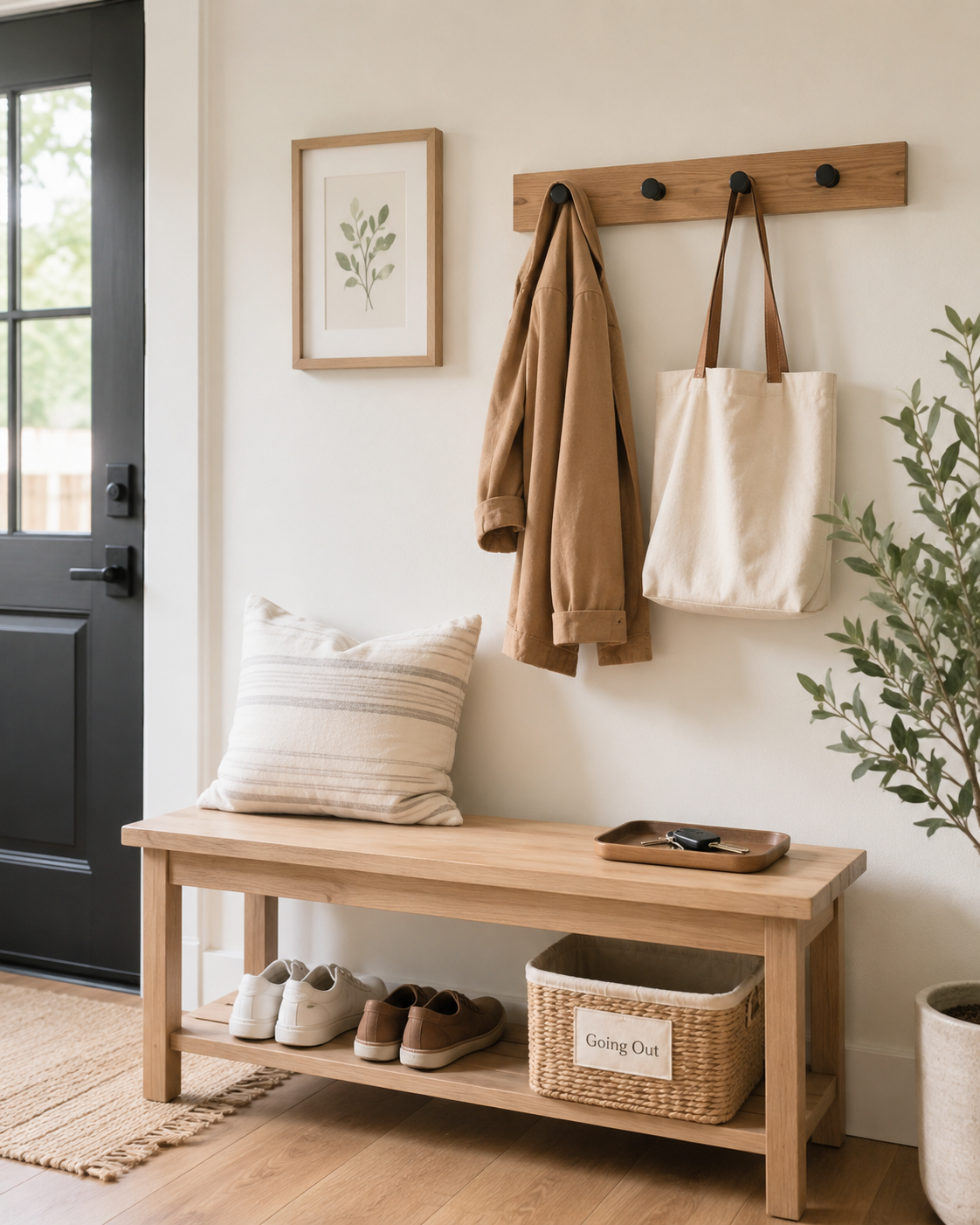
Prepare the Entry for More Coming and Going
Busy months often show up first at the door.
Shoes.
Backpacks.
Coats.
Keys.
Lunch bags.
Packages.
Returns.
Sports gear.
Umbrellas.
Mail.
Extra bags.
Guest coats later in the season.
The entry does not need to be fancy.
It needs to be functional.
Ask:
Do daily shoes have a home?
Do coats have room?
Do bags have a place to land?
Is there a spot for keys?
Is there a basket or tray for going-out items?
Is there breathing room for what is about to increase?
A simple entry reset can make the whole day feel easier.
One hook.
One basket.
One tray.
One shoe zone.
That is enough to support a busy season better.
Clear the Kitchen Before You Need It More
Busy months often ask more from the kitchen.
More meals at home.
More lunch prep.
More snacks.
More dishes.
More grocery turnover.
More baking.
More quick cleanups.
More people in the space.
That is why one of the best ways to prepare your home is to make the kitchen easier to use.
You do not need a perfect kitchen.
You need a kitchen with less friction.
Try asking:
Which counter gets overwhelmed first?
What always lands here that is not kitchen-related?
Do lunch items have a clear zone?
Is there room for groceries?
Is the sink reset rhythm working?
What part of meal cleanup gets stuck?
A clear prep counter, a simple lunch zone, a water bottle spot, or an Eat Me First area can make a busy season feel much more manageable.
Make Space in the Pantry Before More Comes In
Busy seasons often bring more pantry pressure.
More snacks.
More convenience foods.
More baking supplies.
More backup items.
More holiday ingredients later on.
More “I grabbed this because we might need it.”
Before the pantry gets fuller, do a simple reset.
Look for:
- expired items
- duplicates
- half-used packages
- food nobody is eating
- seasonal leftovers from last time
- items that should be used first
Create a Use First zone.
Even a small one helps.
This gives older foods a chance to move forward and creates room for what is about to come in.
A pantry with breathing room is a gift during busy months.
Reset Paper Before Paper Season Gets Bigger
Busy months almost always mean more paper.
School papers.
Receipts.
Bills.
Schedules.
Mail.
Invitations.
Lists.
Flyers.
Permission slips.
To-do notes.
Shopping reminders.
Holiday planning later on.
If paper already floats from counter to table to purse to desk, a busy season will make that harder.
This is a good time to create one paper path.
You do not need a complicated command center.
Try something simple:
- a tray
- a basket
- a folder
- a clipboard
- a wall pocket
- one “This Week” section
Paper needs a next step.
That is what keeps it from becoming visual noise.
Support the Laundry Before It Becomes a Bottleneck
Busy months usually mean heavier laundry.
More layers.
More socks.
More towels.
More sports clothes.
More school clothes.
More work clothes.
More bedding when weather shifts.
More piles when schedules tighten.
If laundry is already close to the edge, give it help now.
Ask:
Where does it get stuck?
Do dirty clothes have a clear place to land?
Do towels need a separate system?
Are clean clothes hard to put away?
Do daily basics like socks and pajamas need a reset?
Would one donation bag make drawers easier to use?
You do not have to solve all of laundry.
Just find the friction point.
A small laundry improvement can make the whole season run smoother.
Check the Closets for the Life You Are Actually Living
Busy months are harder when getting dressed becomes a problem.
If the closet is full of off-season items, clothes that no longer fit, shoes that are worn out, or pieces you keep skipping, the morning gets heavier than it needs to.
Ask:
What will we actually wear most in the next two months?
What needs to come forward?
What needs to move back?
What no longer fits or no longer works?
Do jackets, shoes, socks, and layers have room?
What could leave now and make daily life easier?
Preparing your closet is not about fashion perfection.
It is about reducing decision fatigue and making real mornings easier.
Create a “Going Out” Spot
One of the simplest ways to prepare for busy months is to create a place for the things that need to leave the house.
Returns.
Library books.
Packages.
Forms.
Items for work.
Things for errands.
Donation drop-offs.
Activity bags.
Things to hand to someone else.
If those items do not have a home, they land all over the house and are easy to forget.
A Going Out basket, tote, or bin near the door can prevent a lot of last-minute stress.
If it needs to leave, it goes there.
This is such a small system — but it supports a very busy part of life.
Think Ahead to Guests, Gatherings, and Extra Activity
Even if you are not hosting often, the busier months usually bring more people, more plans, or more movement through the home.
That might mean:
- playdates
- family visits
- school friends
- work drop-ins
- neighbors
- holiday guests later on
- more shared meals
- more indoor gathering
Preparing your home does not mean making it guest-perfect.
It means making it usable.
Ask:
Is the guest bathroom stocked?
Is there one clear surface where people can gather?
Is there a place for coats or bags?
Do I know where clean guest towels are?
Is the living room carrying too much clutter already?
A few small supportive steps now can make future hospitality feel much easier.
Busy Months Need Easier Storage, Not More Stuff Hidden Away
When life gets busy, storage matters more.
Not because you need to buy more bins.
But because you need the storage you already have to work better.
Daily items should be easy to reach.
Seasonal items should be clear and easy to rotate.
Holiday items should not require digging through six mystery boxes.
Cleaning supplies should not be buried behind products you never use.
Guest supplies should not be lost under random backups.
Ask:
What storage area fights me every time I use it?
What daily items are too hard to return?
What seasonal items need a clearer home?
What category is too full?
What could be edited before it becomes a storage problem later?
Supportive storage reduces stress during busy months because it cuts down on searching, re-deciding, and moving things around.
Prepare One Calm Spot
Not every preparation has to be practical in the obvious way.
Busy months are easier when there is one place in the home that feels calmer.
A chair with a blanket.
A tidy bedside table.
A clear kitchen corner.
A clean bathroom counter.
A quiet reading nook.
A soft lamp and a tray.
One room that feels a little more settled.
This is not a luxury.
It is support.
When life gets full, a small calm spot can help you breathe, think, pause, or simply feel like the house is not asking for more from you.
A busy season needs function.
But it also benefits from comfort.
The 30-Minute Busy-Month Prep Reset
Set a timer for 30 minutes.
Minutes 1–5: Walk through the main pressure points
Entry, kitchen, pantry, paper, laundry, closet, bathroom, storage.
Minutes 6–10: Choose the space that will matter most later
Pick the one area where support would bring the most relief.
Minutes 11–15: Remove the obvious
Trash, expired items, summer leftovers, things that belong elsewhere, duplicates.
Minutes 16–20: Create breathing room
Clear one shelf, one surface, one basket, one hook, one drawer, or one small zone.
Minutes 21–25: Add one support system
A tray, a bin, a paper spot, a donation bag, a label, a towel basket, a lunch zone, or a Going Out basket.
Minutes 26–30: Choose one repeatable rule
Examples:
“Daily shoes go here.”
“Use First food goes here.”
“Returns live in this basket.”
“Papers land in this tray.”
“Guest towels stay on this shelf.”
Then stop.
That is enough.
One space better prepared.
One future stress point softened.
One tiny win.
What Done Looks Like
Preparing your home for busy months is working when:
- the entry has more breathing room
- the kitchen is easier to use
- the pantry has room for what is coming
- paper has a path
- laundry has more support
- the closet reflects the season you are entering
- going-out items have a place
- storage feels more usable
- one guest-ready area feels easier
- the home feels a little more ready and a little less reactive
Done does not mean the house is perfect.
Done means the home is better prepared to carry more without making everything feel harder.
That is the goal.
Keep Exploring: Prepare Without Pressure
If this post helped, these related posts can support your seasonal reset:
Declutter Before the Holidays
A helpful next read if you want to make room before gifts, food, decor, and guests add more to the home.
Storage That Supports Your Life
Perfect if your shelves, bins, baskets, and storage areas need to work harder for your real routines.
Closet Reset for Cooler Weather
A good read if clothing, jackets, shoes, and layers are about to become a bigger part of daily life.
Letting Go of “Someday” Items
Helpful if the home feels full because too much space is being held for possible futures instead of present needs.
Why Fall Is the Best Reset Season
A great companion if you want to understand why this season is such a natural time to make small, helpful changes.
Choose the post that matches the part of your home that feels like it will be under the most pressure soon.
Try This Before You Leave
Choose one busy-month tiny win:
- Clear one entry hook.
- Create one Going Out basket.
- Start one donation bag.
- Make one Use First shelf in the pantry.
- Put papers in one tray.
- Bring daily jackets forward.
- Clear one kitchen counter.
- Reset one bathroom surface.
- Give towels or laundry a better landing spot.
- Prepare one calm corner in your home.
One small step now can make the busier season feel more supported later.
Join the Tiny Wins Club Newsletter
Want more simple seasonal resets like this?
Join the Tiny Wins Club Newsletter for free organizing ideas, seasonal resets, blog updates, and tiny steps that help your home feel lighter without turning every busy season into a full-home overhaul.
The free version is a simple way to stay encouraged and keep building small habits.
For readers who want more structure, the paid version includes deeper support such as printable guides, extended reset plans, step-by-step worksheets, seasonal checklists, and more detailed HOMe systems you can work through at your own pace.
Start with the free version if you want encouragement and ideas.
Upgrade to the paid version when you want the printables, deeper guides, and extra tools to help you follow through.
Busy months feel different when your home is ready to help.
Final Thought
Preparing your home for busy months is not about trying to get ahead of life perfectly.
It is about giving your future self a little support.
A little room in the pantry.
A little order at the door.
A little calm in the kitchen.
A little help for the laundry.
A little space in the closet.
A little clarity for paper.
A little storage that works better.
A little calm spot to land.
These are small things.
But small things change the feeling of a season.
Your home does not need to be flawless before life gets busy.
It just needs a little more support where the pressure will land.
Real life. Simple systems. Tiny wins.
Join the conversation—share your tiny wins with me. 💛 Hit reply or drop a comment and tell me one small thing you did today that made your home feel lighter.
Leave a Reply