Outdoor gear has a way of sneaking into the house.
One pair of sandals by the door turns into five.
A pool towel lands on a chair.
A scooter helmet gets dropped on the floor.
A soccer ball rolls under the bench.
Sunscreen ends up on the kitchen counter.
Bug spray disappears right when you need it.
Water bottles multiply.
And suddenly the entry, garage, back door, laundry room, or mudroom feels like one big summer pile.
This is one of the most common summer home problems.
Not because your family is doing anything wrong.
Because outdoor life creates a lot of in-and-out movement. People leave, come back, grab things, drop things, switch shoes, refill bottles, change plans, and head out again.
So the answer is not to pretend outdoor gear will stay perfectly put away.
The answer is to give it a place to land.
A simple outdoor gear system helps your home hold real summer life without letting every towel, ball, shoe, and bag take over.
Why Outdoor Gear Turns Into a Pile
Outdoor gear usually becomes a pile for one of three reasons.
First, the items are used often, so they never make it all the way back to a closet or garage shelf.
Second, the storage is too far away from where people actually enter and exit.
Third, there are too many different categories mixed together: shoes, towels, sports gear, sunscreen, toys, hats, bags, and water bottles all landing in one place.
When everything shares one messy spot, nothing really has a home.
That is why outdoor gear needs zones.
Not complicated zones.
Just simple, obvious places for the things your family grabs most.
Start Where the Gear Already Lands
Before you create a new system, look at where the outdoor gear naturally piles up.
Is it by the garage door?
The back door?
The laundry room?
The mudroom bench?
The entryway?
The patio?
The car?
The kitchen counter?
That spot tells you where the system needs to live.
Real-life placement matters more than perfect placement.
If everyone comes in through the garage, create the system there.
If wet towels always land by the back door, put hooks or a towel basket there.
If sunscreen always ends up in the kitchen, give it a nearby summer basket.
The best system is the one people will actually use.
Separate Gear by Type
The biggest shift comes from separating outdoor gear into clear categories.
Try simple zones like:
Shoes and sandals: Flip-flops, slides, sneakers, water shoes.
Towels and swim gear: Pool towels, goggles, swim bags, coverups.
Sun and bug protection: Sunscreen, bug spray, hats, sunglasses, lip balm.
Sports and play gear: Balls, gloves, helmets, jump ropes, chalk, bubbles, outdoor toys.
Grab-and-go items: Water bottles, snacks, picnic blanket, park bag, small first-aid pouch.
Once each category has a place, the pile starts to calm down.
The goal is not to hide everything.
The goal is to stop everything from blending into one overwhelming mess.
Use Baskets, Hooks, and Bins That Make Sense
Outdoor gear does not need delicate storage.
It needs sturdy storage.
This is where simple containers work beautifully.
Use:
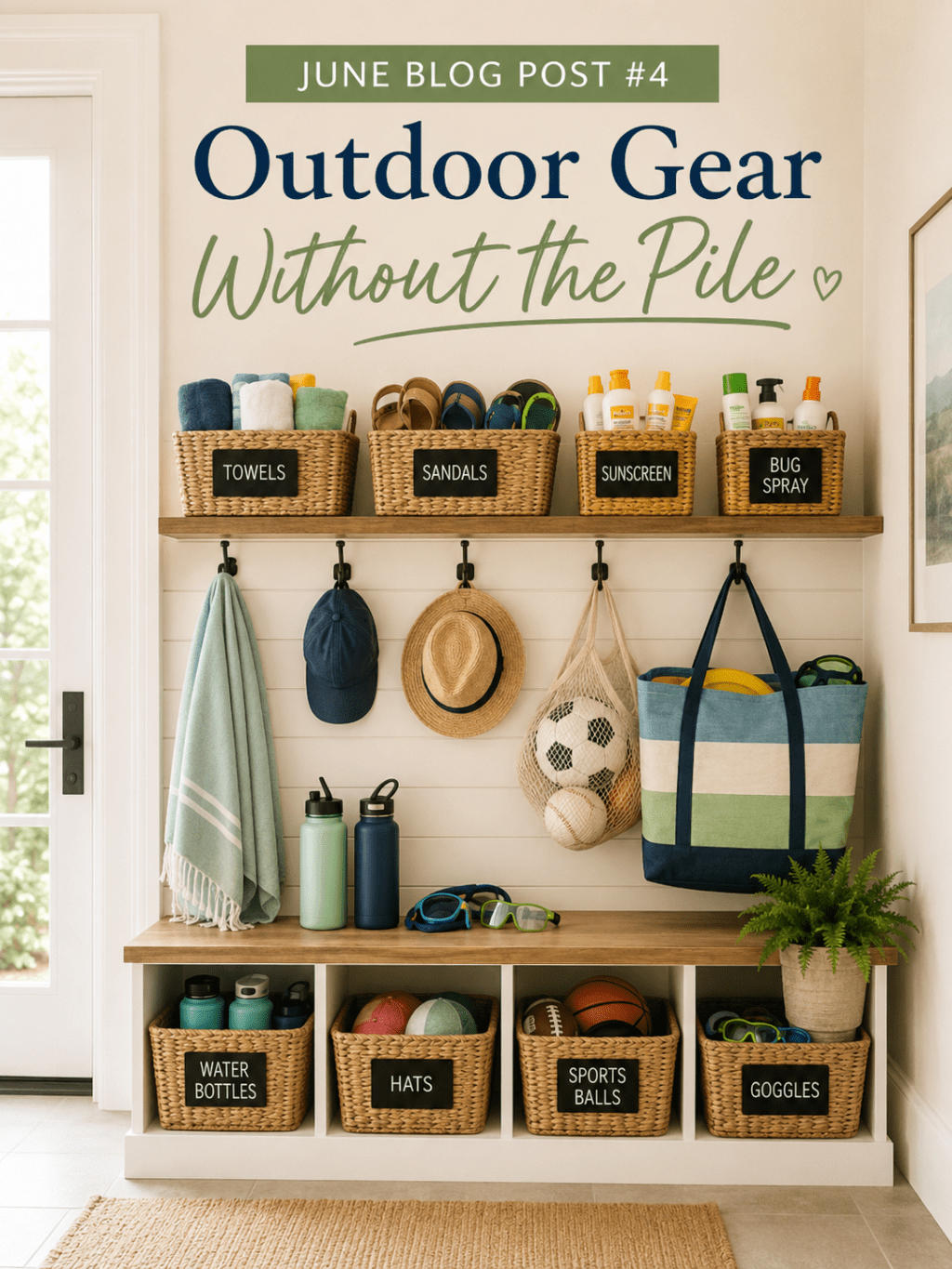
- Hooks for bags, hats, towels, and light jackets
- Open baskets for sandals or flip-flops
- Labeled bins for balls, toys, and sports gear
- A tray for sunscreen and bug spray
- A cubby for each child if needed
- A laundry basket for wet towels
- A shelf for pool or park bags
Open storage usually works best for summer because people are moving quickly.
If the system requires lids, stacking, or too many steps, the pile will come back.
Make it easy to drop things in the right place.
Give Wet Items Their Own Plan
Wet gear needs a different kind of system.
If wet towels, swimsuits, and water shoes do not have a clear place to dry, they will end up on floors, furniture, beds, and random chairs.
Try one of these:
- A row of hooks near the door
- A towel ladder
- A drying rack
- Outdoor hooks
- A laundry basket labeled “Wet Towels”
- A mesh bag for swim items
- A small mat or tray for water shoes
The goal is simple:
Wet items should not have to travel through the house.
If someone comes in from swimming, sprinklers, or a lake day, the wet items need an obvious first stop.
Make a Summer Grab-and-Go Basket
A summer grab-and-go basket keeps the little things from spreading everywhere.
This can sit near the door, in the mudroom, in the laundry room, or on a garage shelf.
Add items like:
- Sunscreen
- Bug spray
- Sunglasses
- Hair ties
- Lip balm
- Hand wipes
- Small first-aid kit
- Tissues
- Water flavor packets
- Extra phone charger
- Snack bars
This basket is not meant to hold everything.
It is meant to hold the things you are always looking for right before you leave.
That one basket can save a lot of last-minute scrambling.
Create a Return Spot
Outdoor gear is not always coming into the house to stay.
Sometimes it needs to go back to the car, return to a friend, head to practice, or be taken to the garage.
Create one small “going back out” spot.
This could be a bin, basket, hook, or shelf labeled:
Return
Car
Practice
Back Outside
Take With You
Use this for:
- Library books
- Sports bags
- Pool bags
- Items to return
- Shoes that belong in the car
- Park toys
- Water bottles
- Outdoor supplies that need refilling
This helps stop the “I put it by the door so I would remember” pile from becoming permanent clutter.
Do a Weekly Outdoor Gear Reset
Outdoor gear needs regular resetting because it is used hard.
Pick one day a week for a quick check.
Maybe Friday before the weekend.
Maybe Sunday evening.
Maybe the day before trash pickup.
Maybe laundry day.
A weekly reset can include:
- Tossing trash from bags and bins
- Washing towels
- Refilling sunscreen or wipes
- Returning shoes to their spot
- Putting balls and toys back in bins
- Checking water bottles
- Moving items back to the car or garage
- Removing anything that does not belong
This does not need to take long.
Ten minutes can keep the pile from turning into a full project.
Keep the System Visible
Outdoor gear systems work better when people can see them.
A hidden shelf may look cleaner, but if nobody uses it, it is not helping.
For busy summer homes, visible storage is often more realistic.
That might mean:
- labeled baskets
- hooks in plain sight
- open cubbies
- a low shelf for kids
- a clear bin for small items
- a basket by the back door
You can still make it look beautiful.
But the first job is function.
Pretty storage that does not get used is just another thing to maintain.
Encourage Your Family With One-Sentence Rules
Long explanations rarely stick.
Simple rules do.
Try:
“Wet towels go on the hooks.”
“Outdoor shoes stay in this basket.”
“Sunscreen goes back in the tray.”
“Balls go in this bin.”
“Water bottles go in the sink at night.”
“Pool bags hang here.”
Choose one rule at a time.
Once that habit starts working, add another.
That is how family systems become part of daily life without turning into constant reminders.
Tiny Win: The 15-Minute Outdoor Gear Reset
Choose one outdoor gear pile.
Set a timer for 15 minutes.
Minutes 1–3: Gather
Collect the outdoor items from that area.
Minutes 4–6: Sort
Group them into shoes, towels, sports, toys, sun care, trash, and return items.
Minutes 7–11: Create one home
Pick the category that causes the biggest mess and give it a basket, hook, bin, or tray.
Minutes 12–15: Label and reset
Add a simple label if needed and put the items in their new home.
That is enough.
You do not need to organize every garage shelf or summer activity bin today.
Start with the pile that bothers you most.
What Done Looks Like
Your outdoor gear system is working when:
- shoes and sandals have one main place to land
- wet towels are not ending up on furniture
- sunscreen and bug spray are easy to find
- outdoor toys and sports gear have simple bins
- grab-and-go items are grouped together
- kids can help put things away
- the entry or garage feels easier to reset
- the pile does not spread through the whole house
Done does not mean every outdoor item is hidden.
Done means outdoor gear has a place to return to.
Keep Exploring: Build Your Summer Systems
If outdoor gear is only one part of your summer chaos, keep going with these related posts:
Read Next: Drop Zones That Actually Work
This is the best next step if your outdoor gear pile starts the second everyone walks in the door. You will learn how to create landing spots for shoes, bags, keys, mail, summer items, and everyday clutter.
Also Helpful: Summer Organization for Real Life Chaos
This post gives you the bigger picture for managing summer snacks, towels, water bottles, sunscreen, and the general in-and-out rhythm of the season.
For Families: Kid Stuff Without Kid Takeover
If the outdoor gear pile is mostly kid-related, this one helps you create kid-friendly baskets, hooks, treasure boxes, and simple reset routines.
You can also search the blog for kitchen resets, drop zones, summer organization, and tiny wins to keep building systems that fit your real life.
Try This Before You Leave
Before you click away, choose one tiny outdoor gear win:
- Put a basket by the door for sandals.
- Add one hook for wet towels.
- Gather sunscreen into one tray.
- Put balls into one bin.
- Clear one shelf in the garage.
- Create a “return to car” basket.
- Label one container.
One small action today will make the next outdoor day easier.
Join the Tiny Wins Club Newsletter
Want more simple seasonal systems like this?
Join the Tiny Wins Club Newsletter for gentle home organizing ideas, printable guides, seasonal resets, and tiny steps that help your home feel lighter without adding more overwhelm.
It is all about real life, simple systems, and one doable win at a time.
Final Thought
Outdoor gear does not have to take over your entry, garage, mudroom, or laundry room.
It just needs a clear place to land.
A basket for sandals.
Hooks for towels.
A bin for balls.
A tray for sunscreen.
A grab-and-go basket for summer basics.
A return spot for anything heading back out.
These small systems help your home hold the season instead of fighting it.
You do not need a perfect setup.
You need one that works when people are hot, tired, sandy, wet, busy, and heading back outside again.
That is real-life organization.
Simple systems. Tiny wins. A calmer home.
Join the conversation—share your tiny wins with me. 💛 Hit reply or drop a comment and tell me one small thing you did today that made your home feel lighter.

Share your tiny win