Decorating can make a home feel warm, personal, and alive.
A candle on the table.
A wreath on the door.
A cozy throw over a chair.
A bowl of seasonal fruit.
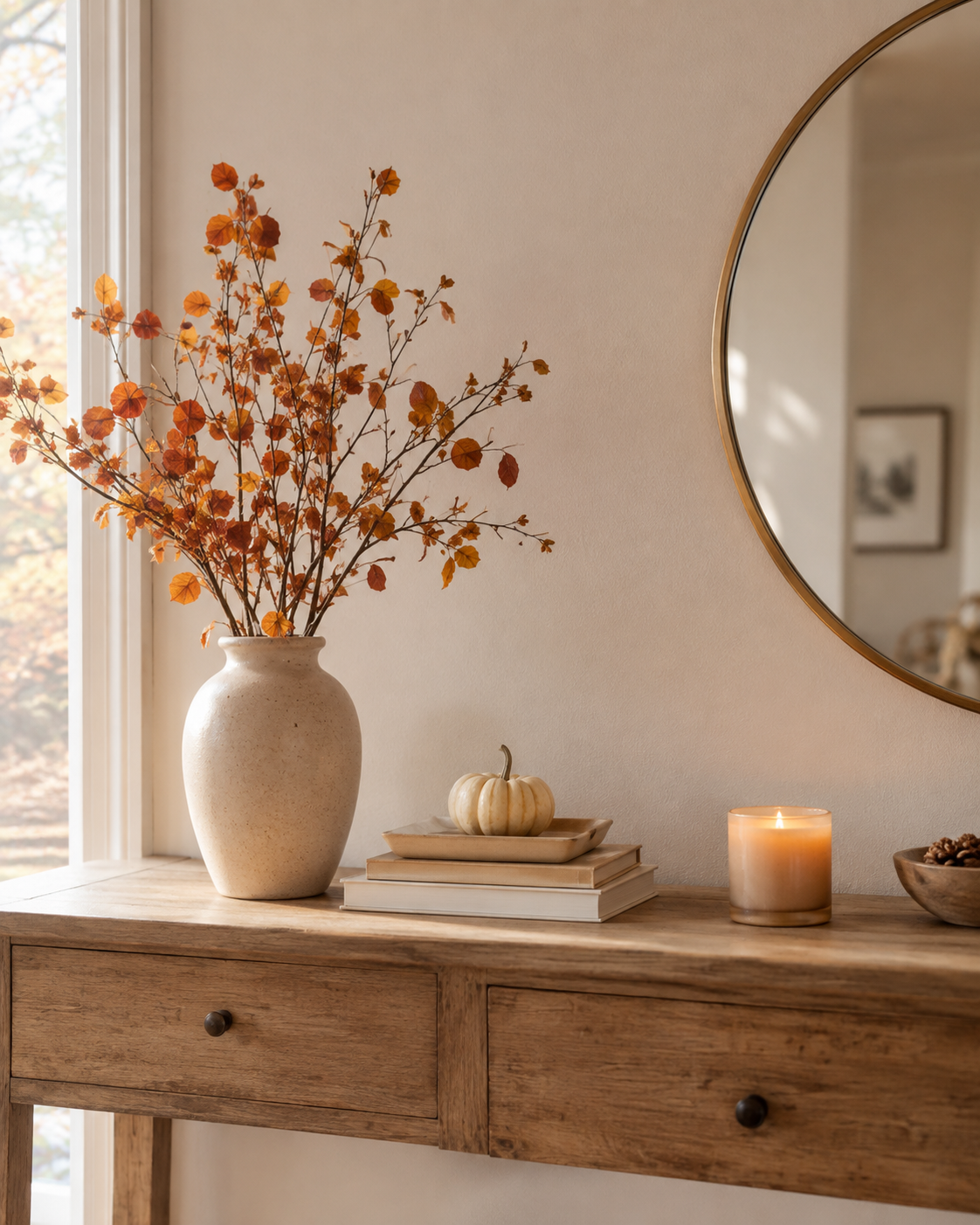
A vase of branches.
A soft lamp in the corner.
A few favorite pieces that make the season feel welcome.
But decorating can also go too far.
Not because the decor is bad.
Not because you chose the wrong things.
But because too many good things in one space can start to compete.
The table becomes too full to use.
The couch has too many pillows to sit down.
The entry table has no room for keys.
The kitchen counter has no room for food prep.
The shelves feel visually busy.
The room feels decorated, but not restful.
That is overcrowding.
And it can make a home feel heavier instead of cozier.
Decorating without overcrowding is about choosing what matters, leaving breathing room, and letting a few pieces do their job well.
Because a beautiful home does not need every surface filled.
It needs enough space for real life to happen.
Why Decorating Gets Overcrowded
Decorating often becomes overcrowded slowly.
You add one seasonal piece.
Then another.
Then something from last year.
Then something new you found.
Then a candle.
Then a tray.
Then a pillow.
Then a small sign, basket, vase, garland, wreath, or bowl.
Each piece may be lovely on its own.
But together, they can make the room feel visually loud.
This happens especially during cozy season and holiday season because the home already has more happening.
More blankets.
More food.
More guests.
More packages.
More coats.
More paper.
More dishes.
More movement through the house.
When decor is added on top of that, the home can start to feel crowded.
The goal is not to stop decorating.
The goal is to decorate in a way that leaves the home easier to live in.
Start With the Surface
Before decorating any area, start with the surface itself.
Is it clear?
Is it useful?
Does it already have a job?
A dining table needs room for meals.
A kitchen counter needs room for prep.
A coffee table needs room for drinks, remotes, books, or feet.
An entry table may need room for keys, mail, or a bag.
A bathroom counter needs room for daily routines.
Decor should not take over the function of the surface.
Before adding anything, clear the surface first.
Then ask:
What does this space need to do every day?
That answer helps decide how much decor belongs there.
A surface that works hard should hold less.
A surface that is mostly decorative can hold a little more.
Choose One Main Moment
One of the easiest ways to avoid overcrowding is to choose one main decorating moment in a room.
Not five.
One.
A main moment might be:
- a mantel
- an entry table
- a dining centerpiece
- a coffee table tray
- a front door wreath
- a cozy chair with a throw
- a shelf with a few favorite pieces
- a kitchen counter vignette
Let that be the place where the season shows up.
When every surface is decorated equally, the room can feel busy.
When one area is the focus, the room feels more intentional.
A main moment gives your eyes somewhere to land.
That creates calm.
Use Fewer Pieces With More Impact
More pieces do not always create more beauty.
Sometimes one larger piece works better than several small ones.
Instead of five small decorations scattered across a table, try:
- one vase with branches
- one large bowl
- one tray with two or three items
- one folded throw
- one wreath
- one lamp
- one seasonal arrangement
Larger, simpler pieces often feel calmer because they reduce visual clutter.
They also make decorating easier to maintain.
You do not have to dust, move, store, and rearrange ten little items when one thoughtful piece creates the feeling.
Leave Breathing Room
Breathing room is what keeps decorating from becoming clutter.
Breathing room is the empty space around the decor.
It lets the pieces stand out.
It lets the surface still function.
It lets the room feel calm instead of crowded.
A helpful rule:
Decorate part of the surface, not the whole surface.
Leave open space on the table.
Leave room on the counter.
Leave the chair usable.
Leave the shelf with some blank areas.
Leave space around the candle, vase, tray, or basket.
The empty space is not wasted.
It is part of the design.
It is also what makes the home easier to live in.
Decorate With Purpose
Before placing an item, ask:
Why am I putting this here?
Maybe the answer is:
It adds warmth.
It makes the entry feel welcoming.
It supports the season.
It gives the room softness.
It brings in texture.
It creates a cozy light.
It makes me smile every time I pass it.
Those are good reasons.
But if the answer is:
Because I own it.
Because I always put it out.
Because I feel guilty leaving it in the bin.
Because the space looked empty.
Because I bought it and need to use it.
Pause.
Decorating is not about proving every item deserves to stay.
It is about choosing what supports the feeling of the home now.
Watch the Daily Friction
Decor that creates daily friction is usually overcrowding in disguise.
You know it is happening when:
- you move decor every time you cook
- pillows are always on the floor
- blankets have no home
- the table has to be cleared before every meal
- the entry table has no room for keys
- the coffee table cannot hold a drink
- the bathroom counter feels harder to clean
- the room looks pretty but does not work well
That friction matters.
A home can look decorated and still feel frustrating.
When decor keeps getting in the way, do not blame the people living there.
Adjust the decor.
Real life is giving you feedback.
Use Trays to Contain Small Decor
Small decor can feel cluttered quickly.
A tray helps create a boundary.
Instead of scattering small items across a surface, gather them together.
A tray might hold:
- a candle
- a small bowl
- a vase
- a seasonal piece
- a stack of coasters
- a small plant
- a favorite mug
The tray makes the arrangement feel intentional.
It also makes cleaning easier because you can move the whole group at once.
This works well on:
- coffee tables
- kitchen counters
- bathroom counters
- entry tables
- nightstands
- dining tables
- dressers
A tray says, “This is the decor zone.”
That boundary helps prevent overcrowding.
Limit Repeating Categories
Overcrowding often happens when one category multiplies.
Too many pillows.
Too many blankets.
Too many candles.
Too many small pumpkins.
Too many signs.
Too many baskets.
Too many mugs.
Too many little seasonal objects.
Try choosing a limit.
For example:
- two pillows on the couch
- one throw per chair or sofa
- one candle per surface
- one seasonal tray
- one basket for blankets
- one main wreath
- one decorative bowl
Limits do not make the home less cozy.
They make the cozy pieces easier to enjoy.
When everything is special, nothing gets to stand out.
Let Function Be Part of the Beauty
Some of the best decorating is also useful.
A basket for blankets.
A bowl of apples.
A tray for mugs.
A lamp beside the chair.
A hook for a cozy scarf.
A folded towel in the bathroom.
A pitcher on the table.
A cutting board left out neatly.
A stack of napkins for meals.
Functional decor is less likely to feel overcrowded because it earns its place.
It supports the way the room is used.
This kind of decorating is especially helpful in real homes because it brings beauty and function together.
The home feels cared for, but not staged.
Edit as You Decorate
Decorating and editing can happen at the same time.
As you pull items out, ask:
Do I still love this?
Does this fit my home now?
Do I want to store it again later?
Does it make the room feel better?
Is it broken, faded, or tired?
Would I buy this again today?
You do not have to make every decision.
Start with the easy ones.
Let go of the pieces you already know you do not want to use.
Create a Not This Year box for the pieces you are unsure about.
Decorating without overcrowding becomes easier when you are not trying to use everything you own.
Try the Step-Back Test
After decorating a space, step back.
Look at the whole room, not just the one surface.
Ask:
Where does my eye go first?
Does the room feel calm or crowded?
Can the surface still be used?
Is there enough empty space?
Is anything competing for attention?
Would removing one thing make it feel better?
This is one of the simplest decorating tools.
Often, the last piece you added is the first piece that needs to come back off.
That does not mean it is a bad item.
It may just not belong in that spot this year.
Use Light Instead of More Decor
When a room does not feel cozy enough, the answer may not be more decor.
It may be light.
Try:
- turning on a lamp
- opening curtains
- lighting one candle
- using warmer bulbs
- moving a lamp closer to where people sit
- adding a small light to a dark corner
- using soft evening lighting instead of bright overhead lights
Light changes the feeling of a room without taking up much space.
Before adding more items, try changing the light.
The room may already have enough.
Let Seasonal Touches Be Small
Seasonal decorating does not have to take over the house.
A small seasonal touch can be enough.
Try:
- branches in a vase
- one pumpkin on a tray
- a bowl of pears or apples
- a cozy blanket
- a wreath on the door
- a candle with a warm scent
- a seasonal towel
- a simple centerpiece
- a mug station
- a natural texture like wood, linen, or woven baskets
Small does not mean boring.
Small can feel intentional, calm, and beautiful.
It also leaves room for daily life.
The 20-Minute Decorating Reset
Set a timer for 20 minutes.
Minutes 1–4: Choose one surface
Entry table, coffee table, dining table, mantel, bathroom counter, kitchen counter, or shelf.
Minutes 5–8: Clear the surface
Remove papers, random items, old decor, and anything that does not belong.
Minutes 9–12: Choose one main moment
Pick one anchor piece: vase, tray, bowl, candle, wreath, lamp, or folded throw.
Minutes 13–16: Add only one or two supporting pieces
Keep the surface useful and leave breathing room.
Minutes 17–20: Step back and remove one thing if needed
Let the space breathe.
Then stop.
One decorated area that still works is better than five crowded surfaces.
What Done Looks Like
Decorating without overcrowding is working when:
- surfaces are still usable
- decor has breathing room
- one main moment stands out
- the room feels warmer, not heavier
- daily routines still work
- pillows and blankets have limits
- small decor is contained
- you are not decorating out of guilt
- the home feels intentional, not crowded
Done does not mean the room is bare.
Done means the decor supports the space instead of taking it over.
That is the win.
Keep Exploring: Prepare Without Pressure
If this post helped, these related posts can support your November home reset:
Cozy Homes Don’t Have More Stuff
A helpful companion if you want warmth and comfort without adding clutter.
Decluttering Before Decorating
Perfect if seasonal decor is coming out and you want to clear space first.
Seasonal Decor Without the Stress
A good next read if decorating usually feels like another project to manage.
Calm Storage Zones
Helpful if decor, baskets, blankets, and seasonal pieces need clearer homes.
Resetting Expectations at Home
Read this if decorating pressure is tied to what you think your home should look like.
Choose the post that matches the part of decorating that feels most crowded right now.
Try This Before You Leave
Choose one decorating tiny win:
- Remove one extra pillow.
- Clear one decorated surface.
- Use one tray to contain small decor.
- Choose one main decorating moment.
- Light one lamp instead of adding more pieces.
- Put one unused decor item in a Not This Year box.
- Leave part of the table empty.
- Fold blankets into one basket.
- Decorate one surface, not the whole room.
- Step back and remove one thing.
One less thing can make the whole room feel better.
Join the Tiny Wins Club Newsletter
Want more simple seasonal home systems like this?
Join the Tiny Wins Club Newsletter for free organizing ideas, seasonal resets, blog updates, and tiny steps that help your home feel lighter without turning decorating into another full-home project.
The free version is a simple way to stay encouraged and keep building small habits.
For readers who want more structure, the paid version includes deeper support such as printable guides, extended reset plans, step-by-step worksheets, seasonal checklists, and more detailed HOMe systems you can work through at your own pace.
Start with the free version if you want encouragement and ideas.
Upgrade to the paid version when you want the printables, deeper guides, and extra tools to help you follow through.
A cozy home does not need every surface filled.
It needs room to breathe.
Final Thought
Decorating without overcrowding is not about using less because you have to.
It is about using less so what you choose can matter more.
One vase.
One candle.
One tray.
One blanket.
One wreath.
One warm light.
One clear surface.
These small choices can make a room feel beautiful without making it feel busy.
The goal is not empty.
The goal is enough.
Enough warmth.
Enough comfort.
Enough space.
Enough room for real life.
That is where decorating starts to feel calm again.
Real life. Simple systems. Tiny wins.
Join the conversation—share your tiny wins with me. 💛 Hit reply or drop a comment and tell me one small thing you did today that made your home feel lighter.
Leave a Reply