Create a Home That Feels Calm, Clear, and livable

Gentle home organizing for real people, busy minds, and messy seasons of life.

What to Fix Before It Becomes a Project

Most home projects do not begin as projects.

They begin as one small thing.

A drawer that sticks.
A basket that is too full.
A towel pile that never quite gets put away.
A shelf where things keep tipping over.
A paper stack that started with one envelope.
A snack bin that used to work.
A drop zone that has slowly become a dumping ground.
A cabinet you avoid because everything falls out when you open it.

At first, it is just a small annoyance.

You notice it, but you move on.

Then you notice it again.

And again.

And again.

Before long, that tiny annoyance has become a full project. Now it needs time, energy, decisions, and maybe even a whole afternoon you do not have.

That is why July is a perfect time to ask:

What can I fix now before it becomes a project?

Not overhaul.
Not reorganize the whole house.
Not pull everything out.

Just notice the small things that are starting to slip and give them a little attention before they turn into something bigger.

This is maintenance.

And maintenance is one of the quietest forms of home organization.


The Difference Between a Fix and a Project

A fix is small.

A project is bigger.

A fix might take 5 to 15 minutes.
A project might take an afternoon.

A fix solves one point of friction.
A project often requires sorting, decision-making, cleaning, shopping, and rebuilding a system.

A fix sounds like:

“Move the basket closer.”
“Add one hook.”
“Label this bin.”
“Toss the empty packaging.”
“Put the towels back in one place.”
“Clear the top layer.”
“Make this easier to reach.”

A project sounds like:

“I need to reorganize the whole closet.”
“I need to redo the garage.”
“I need to completely fix the pantry.”
“I need a new system for everything.”

Projects are not bad.

But if you can catch a problem while it is still a fix, you save yourself a lot of stress.


Start With the Annoyance List

Walk through your home and look for the small things that keep bothering you.

Not the big dream projects.

The tiny repeated frustrations.

Ask:

What do I keep moving out of the way?
What keeps falling over?
What keeps getting left on the counter?
What do I avoid opening?
What area makes me sigh?
What basket is always overflowing?
What item does nobody put away?
What takes too many steps?
What system used to work but does not anymore?

These little annoyances are clues.

They show you where your home is asking for a small adjustment.

The goal is not to make a giant to-do list.

The goal is to notice what is beginning to break down before it becomes overwhelming.


Fix #1: The Basket That Is Always Too Full

A full basket is not a failure.

It is feedback.

If a basket is always overflowing, one of three things is probably happening:

  1. Too much is in the category.
  2. The basket is too small.
  3. The basket is not being reset often enough.

Before buying a bigger basket, edit what is inside.

Pull out anything that does not belong.

Toss trash.

Return random items to their real homes.

Then ask:

Does this category need less stuff, more space, or a better reset rhythm?

For example:

If the shoe basket is always overflowing, maybe each person only keeps one or two pairs there.

If the towel basket is always full, maybe clean towels and wet towels need separate homes.

If the snack bin is constantly messy, maybe it needs fewer categories and more visible options.

The fix is not always more storage.

Sometimes the fix is a clearer limit.


Fix #2: The Hook That Needs to Exist

Some piles exist because there is no hook.

Backpacks on the floor.
Purses on chairs.
Hats on counters.
Towels on doorknobs.
Dog leashes on the table.
Reusable bags in a pile.

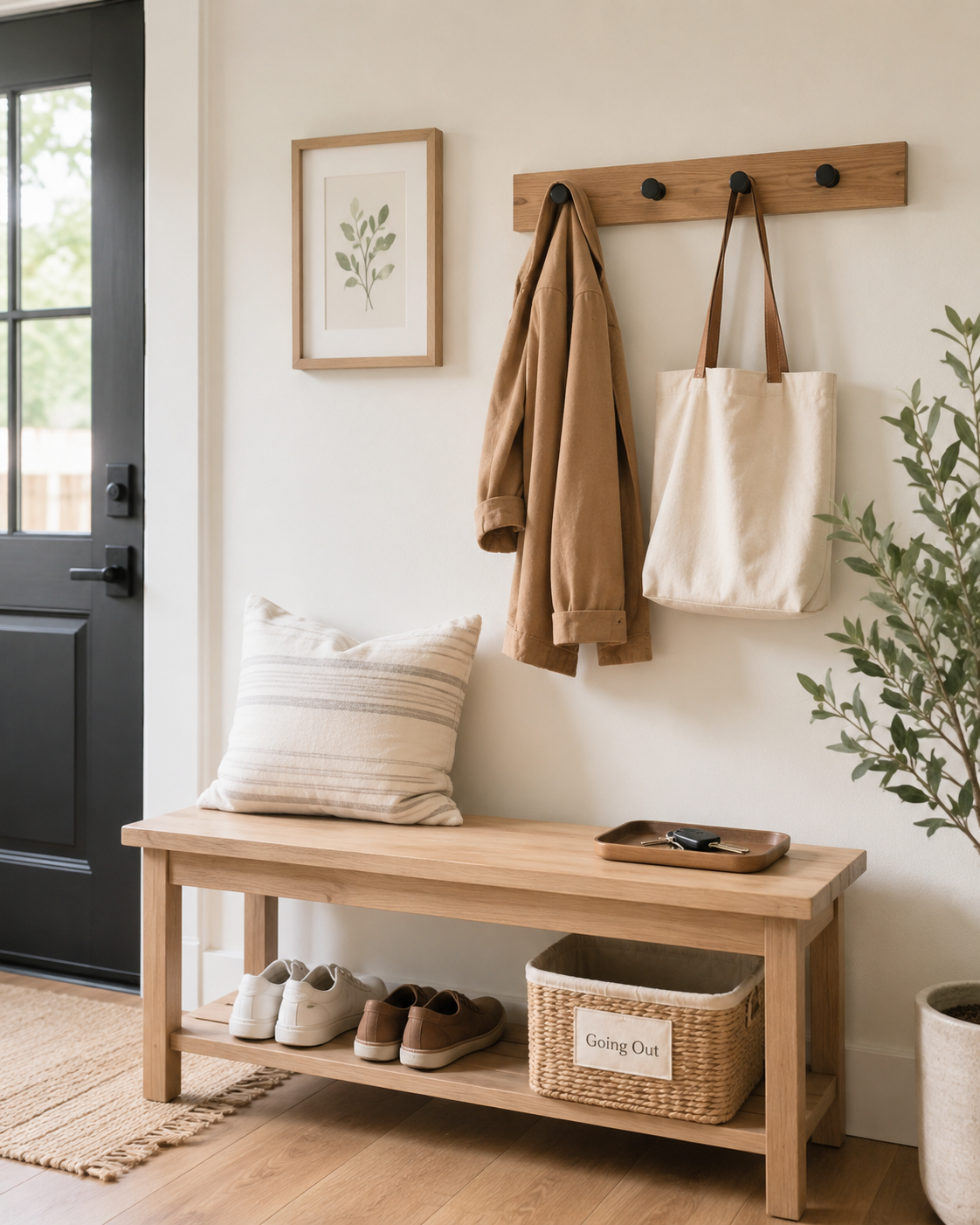
Hooks are one of the simplest fixes because they reduce steps.

Instead of opening a closet, finding a hanger, and putting something away perfectly, you just hang it.

Ask:

What keeps landing on the floor that could hang instead?

Then add one hook where the item already lands.

Not where you wish it landed.

Where it really lands.

That one small fix can prevent a daily pile.


Fix #3: The Counter That Became a Waiting Room

Counters often become waiting rooms for unfinished decisions.

Mail waiting to be opened.
Receipts waiting to be checked.
Returns waiting to go out.
Snacks waiting to be put away.
Items waiting for someone else.
Random things waiting because nobody knows where they belong.

If a counter keeps collecting the same kind of item, it probably needs a nearby landing spot.

Try:

  • a mail tray
  • a returns bin
  • a small dish or hook for keys
  • a basket for library books
  • a clipboard for papers to sign
  • a tray for sunscreen and sunglasses
  • a “going out” basket near the door

The fix is not to clear the counter once.

The fix is to give the repeated item a better place to wait.


Fix #4: The Drawer That Fights Back

You know the drawer.

It jams.
It catches.
It is too full.
Something inside is always blocking it.
You open it carefully because you know it might be annoying.

That drawer is asking for a small fix before it becomes a full cleanout.

Do not empty every drawer.

Just open the one that fights back.

Remove anything obvious:

  • broken items
  • duplicates
  • trash
  • things that belong somewhere else
  • bulky items that do not fit
  • anything you avoid using

Then put the daily items back first.

A drawer does not need to be perfect.

It needs to open and close without arguing with you.

That is a win.


Fix #5: The Shelf That Keeps Sliding

Sometimes the problem is not too much stuff.

Sometimes it is unstable stuff.

Stacks fall over.
Bottles tip.
Lids slide.
Papers slump.
Towels topple.
Small items disappear behind bigger ones.

This is where one simple container can help.

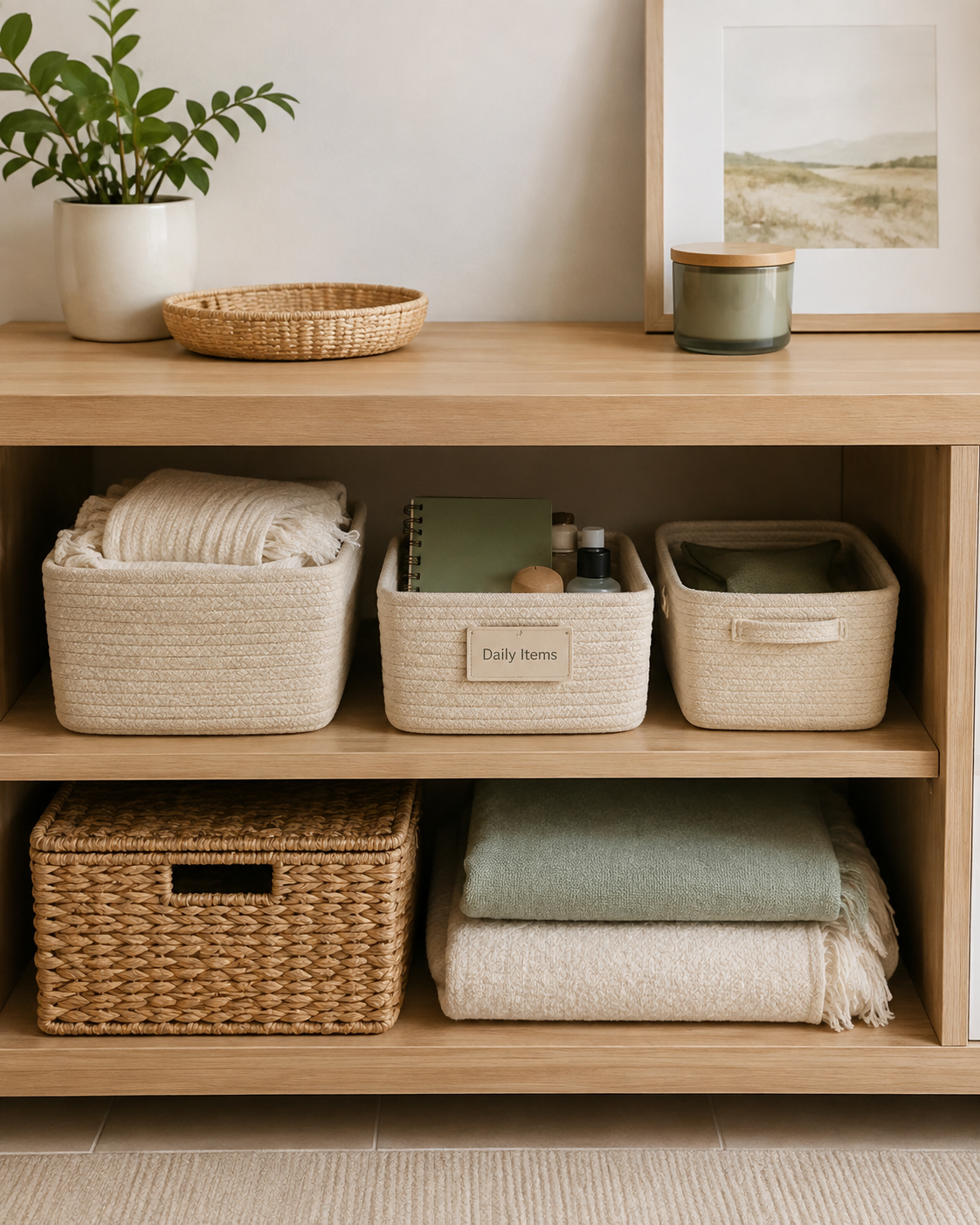
Use a bin, basket, tray, file holder, or divider to give the category a boundary.

Good examples:

  • a tray for oils and vinegars
  • a bin for water bottles
  • a basket for sunscreen
  • a file holder for papers
  • a small container for lids
  • a divider for cutting boards
  • a basket for folded towels

The fix is not always decluttering.

Sometimes the fix is giving things a wall to lean against.


Fix #6: The System That Is Too Complicated

Some systems fail because they ask too much from real life.

Too many categories.
Too many lids.
Too many steps.
Too many labels.
Too many rules.
Too much sorting.

If nobody is using the system, ask:

Is this too complicated?

A snack zone with seven categories may need three.

A paper system with six folders may need two.

A toy system with tiny categories may need one broad bin.

A drop zone with hidden storage may need open baskets.

A kitchen reset routine with ten steps may need three.

Simpler systems are often stronger systems.

The goal is not to impress anyone.

The goal is to make the system easy enough to use when everyone is tired.


Fix #7: The Item That Has No Home

If something is always floating around, it may not have a real home.

This is common with:

  • sunglasses
  • chargers
  • water bottles
  • library books
  • returns
  • sunscreen
  • hats
  • keys
  • mail
  • receipts
  • lunch boxes
  • sports gear
  • reusable bags

Choose one floating item and give it one home.

Use something you already have.

A bowl.
A hook.
A basket.
A tray.
A drawer.
A shelf.
A clipboard.
A zip pouch.

A home does not have to be fancy.

It just has to answer the question:

Where does this go?

Once the answer is clear, the item stops traveling all over the house.


Fix #8: The “Almost Empty” Problem

Almost-empty things create clutter.

Almost-empty shampoo.
Almost-empty snack bags.
Almost-empty sunscreen.
Almost-empty cereal boxes.
Almost-empty condiments.
Almost-empty cleaning sprays.
Almost-empty pantry items.

They take up space, but they do not always get finished.

Do a quick almost-empty check in one area.

Choose:

  • fridge
  • pantry
  • bathroom
  • cleaning supplies
  • summer basket
  • laundry shelf
  • snack zone

Finish, combine, toss, or move forward anything that is almost done.

This is a small fix that makes shelves feel clearer without a full reset.


Fix #9: The Label That Would Save Repeating Yourself

If people keep asking where something goes, the system may need a label.

Labels are not just for pretty pantries.

They reduce repeated decisions.

Useful labels might be:

  • Towels
  • Sunscreen
  • Snacks
  • Returns
  • Library Books
  • Water Bottles
  • Shoes
  • Art Supplies
  • Dog Walk
  • Mail
  • Going Out

You do not need to label everything.

Just label the thing that keeps getting mixed up.

A label is a quiet instruction that keeps working even when you are not standing there.


Fix #10: The Reset You Keep Skipping

Some areas do not need a better bin.

They need a reset rhythm.

The drop zone needs to be cleared.
The snack bin needs to be restocked.
The fridge needs old food moved forward.
The towels need to be washed.
The command center needs old papers removed.
The water bottles need to be gathered.

Ask:

Is this a storage problem or a rhythm problem?

If the system works when it is reset, then the system may be fine.

It just needs a regular check-in.

Choose one reset rhythm:

  • every evening
  • every Sunday
  • before grocery shopping
  • before trash day
  • after laundry
  • before the weekend
  • when the basket is full

A system does not have to stay perfect.

It just needs a way to come back.


The 15-Minute “Before It Becomes a Project” Reset

Choose one small annoyance.

Set a timer for 15 minutes.

Minutes 1–3: Notice the problem

What keeps happening here?

Minutes 4–6: Remove what does not belong

Trash, duplicates, random items, or things that belong elsewhere.

Minutes 7–10: Make one adjustment

Add a hook, move a basket, create a tray, label a bin, or simplify the category.

Minutes 11–13: Put the most-used items back first

Make the daily items easiest to reach.

Minutes 14–15: Decide the reset rhythm

When will you check this again?

That is it.

You fixed the friction before it became a project.


What Done Looks Like

A small fix is working when:

  • the drawer opens more easily
  • the basket has breathing room
  • the counter stays clearer
  • the item has a home
  • the shelf stops tipping over
  • the system is easier to use
  • people know where things go
  • one repeated annoyance feels less annoying

Done does not mean the whole area is finished forever.

Done means the problem is smaller than it was.

That counts.


Keep Exploring: Maintenance, Not Overhaul

If this post helped you notice where your home is starting to slip, these posts can help you keep going:

The Summer Maintenance Reset
A great next step if multiple summer systems need a mid-season refresh.

Drop Zones That Actually Work
Helpful if your biggest repeated problem is shoes, bags, keys, mail, and daily items landing everywhere.

Lower-Energy Organizing Wins
Perfect for days when you want relief without starting a big project.

When Your Kitchen Feels Like a Chore
Read this if the kitchen feels heavy and you need to make it easier, not perfect.

Choose the one that matches the area that keeps asking for attention.


Try This Before You Leave

Choose one small fix today:

  • Add one hook.
  • Empty one basket.
  • Label one bin.
  • Clear one drawer that jams.
  • Move one item closer to where you use it.
  • Toss almost-empty packaging.
  • Create one tray for a repeated pile.
  • Put the most-used item at the front.
  • Set one weekly reset reminder.

One small fix today can prevent a full project later.


Join the Tiny Wins Club Newsletter

Want more simple home systems like this?

Join the Tiny Wins Club Newsletter for gentle organizing ideas, seasonal resets, printable guides, and tiny steps that help your home feel lighter without turning everything into a big project.

This is organizing for real life.

Small fixes.
Simple systems.
Tiny wins.


Final Thought

Not every home problem needs a full overhaul.

Sometimes it needs one hook.
One label.
One basket emptied.
One drawer adjusted.
One item moved closer.
One reset rhythm.

The earlier you catch the friction, the easier it is to fix.

That is how you keep your home from becoming one long list of projects.

You do not have to do everything.

Just fix the small thing that keeps asking for your attention.

Real life. Simple systems. Tiny wins.


Join the conversation—share your tiny wins with me. 💛 Hit reply or drop a comment and tell me one small thing you did today that made your home feel lighter.


Leave a Reply

Discover more from Create a Home That Feels Calm, Clear, and livable

Subscribe now to keep reading and get access to the full archive.

Continue reading