Some home systems only work when you are thinking about them.
You have to remind everyone.
You have to reset the space constantly.
You have to make every decision.
You have to notice what is missing.
You have to move things back where they belong.
You have to carry the whole system in your head.
That kind of system may look organized, but it does not feel supportive.
A truly helpful home system should reduce the amount of thinking you have to do.
It should make the next step obvious.
It should work even when you are busy, tired, distracted, or halfway out the door.
That is what I call a system that runs on autopilot.
Not because the house magically maintains itself.
But because the system is simple enough, visible enough, and repeatable enough that it does not require constant decision-making.
And in the middle of summer, when routines are loose and everyone is moving in and out, autopilot systems can make your home feel so much lighter.
What Is an Autopilot System?
An autopilot system is a home system that answers a repeated question before you have to think about it.
Where do the keys go?
Where do wet towels go?
Where do library books live?
Where do water bottles land?
Where do snacks belong?
Where do papers that need attention go?
Where do shoes go when we walk in?
Where do things go when they need to leave the house?
When these questions already have clear answers, your home runs more smoothly.
You are not solving the same tiny problem twenty times a week.
You are letting the system answer for you.
That is the magic of autopilot.
Why Autopilot Matters
Most home overwhelm does not come from one giant mess.
It comes from repeated little decisions.
Where should I put this?
Do we have more of that?
What needs to be done next?
Who moved this?
Why is this on the counter again?
What am I forgetting?
Those questions add up.
A good system removes some of those questions from your day.
For example:
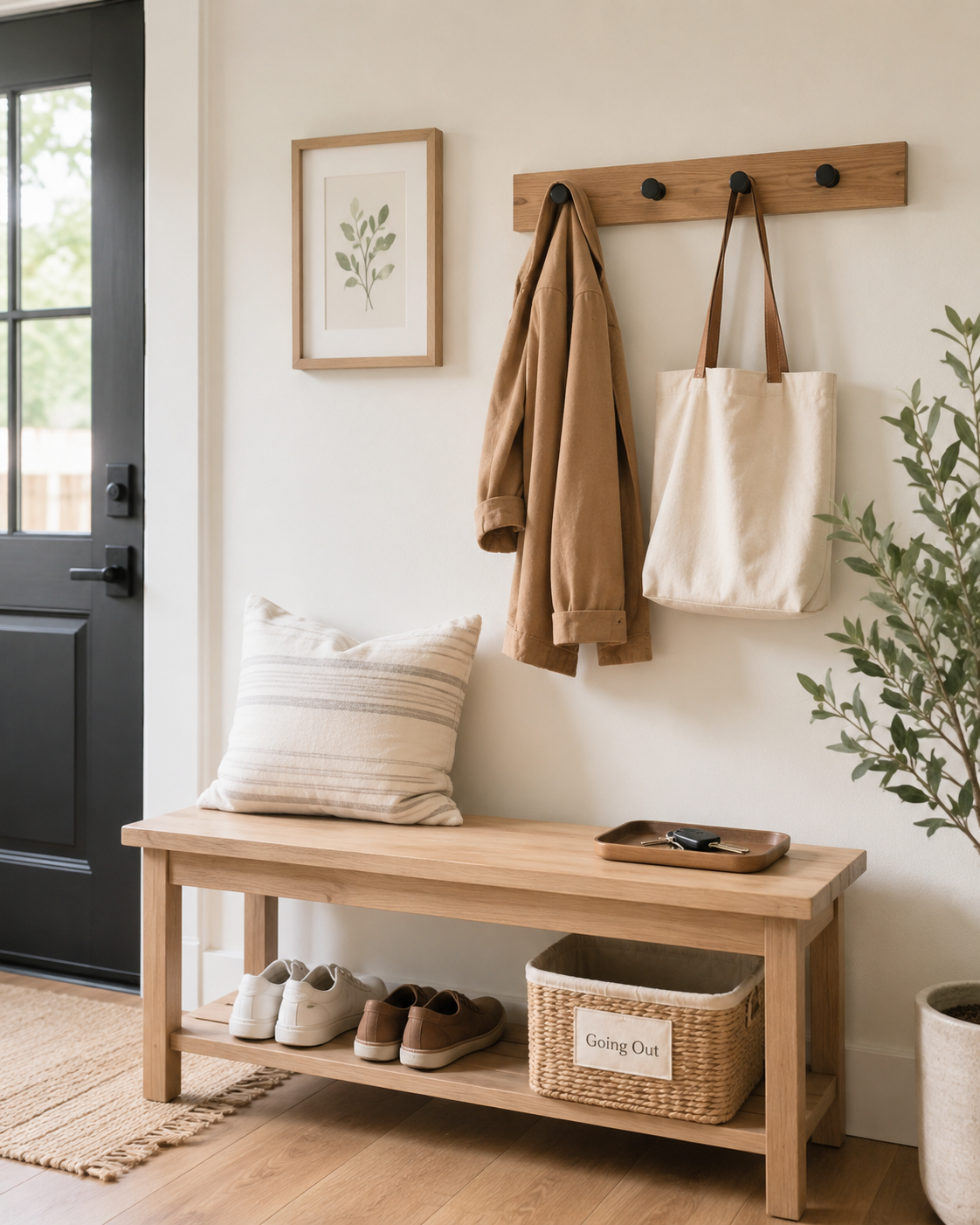
A basket by the door means shoes do not need a new decision every afternoon.
A “Going Out” bin means returns, library books, and items for the car have one place to wait.
A snack zone means everyone knows where to look.
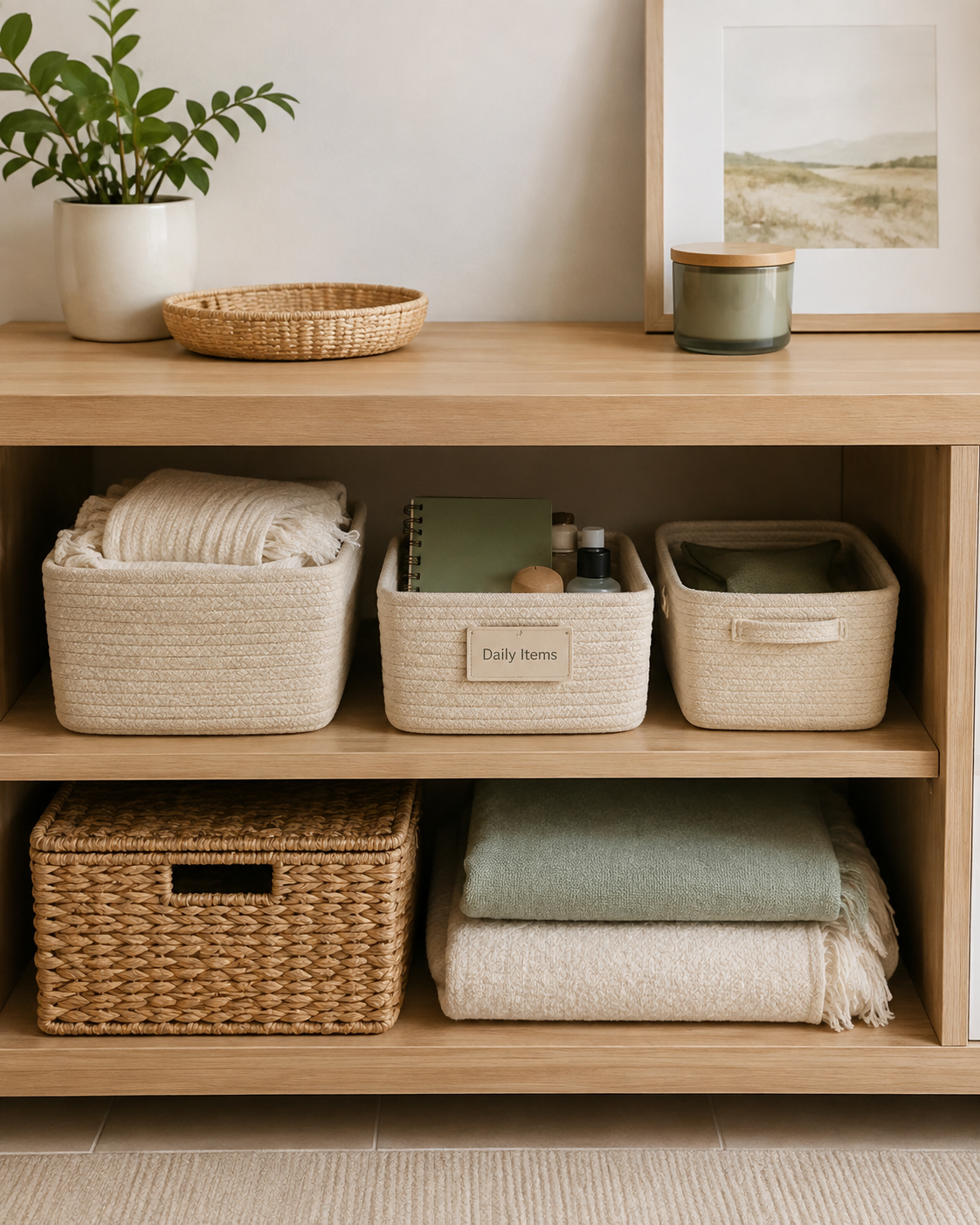
A labeled towel basket means wet towels are not a mystery.
A simple command center means papers and reminders are not spread across the kitchen.
Autopilot systems are not about being strict.
They are about giving everyday life a path to follow.
Start With What You Repeat
If you want to create an autopilot system, start by noticing what you repeat.
What do you say over and over?
“Put your shoes away.”
“Where are your water bottles?”
“Don’t leave towels on the floor.”
“Did you pack your bag?”
“Where is the sunscreen?”
“Don’t put mail on the counter.”
“Take that back to the car.”
“Use the leftovers first.”
“Please clear your dishes.”
Those repeated reminders are clues.
They show you where your home needs a system that speaks for you.
Instead of asking, “Why does this keep happening?” ask:
What would make the right action easier?
That question changes everything.
Autopilot System #1: A Drop Zone That Answers “Where Does This Go?”
A drop zone is one of the best autopilot systems because it catches things at the moment they enter the house.
A good drop zone might include:
- hooks for bags, hats, and jackets
- a basket for shoes
- a tray for keys and sunglasses
- a bin for returns
- a place for water bottles
- a small paper tray for mail or forms
The goal is not to create a perfect mudroom.
The goal is to create clear landing places for the items that keep spreading.
If you walk in the door with your hands full, the system should make it easy to put things where they belong.
One step is best.
Hang the bag.
Drop the shoes.
Place keys in the tray.
Put returns in the bin.
The fewer steps it takes, the more likely the system will run without reminders.
Autopilot System #2: A “Going Out” Bin
A “Going Out” bin is a simple container for anything that needs to leave the house.
This might include:
- library books
- returns
- packages to mail
- sports gear
- things to take back to the car
- items to give to someone
- paperwork that needs to go with you
- borrowed items
- donation drop-off items
This one bin can prevent a lot of counter clutter.
It also helps you leave the house with fewer forgotten items.
The rule is simple:
If it needs to leave, it goes here.
That is an autopilot system.
It gives your home a clear answer before the item becomes another pile.
Autopilot System #3: A Water Bottle Home
Water bottles can take over a kitchen fast, especially in summer.
They end up on counters, in bedrooms, in the car, beside the couch, near the sink, and somehow under furniture.
A water bottle home makes the routine easier.
Choose one place for clean bottles.
Then choose one place for dirty bottles.
This could be:
- a cabinet shelf for clean bottles
- a bin in the pantry
- a basket near the door
- a drying rack near the sink
- a dishwasher zone
- one assigned bottle per person
The rule might be:
“One bottle per person per day.”
Or:
“Dirty bottles go by the sink before bed.”
Or:
“Clean bottles live in this bin.”
The exact rule matters less than making the answer clear.
When the answer is clear, you do not have to keep solving the same problem.
Autopilot System #4: A Snack Zone
Summer snacks can become a full-time job.
A snack zone helps because it gives food a clear home and gives family members a clear place to look.
You can create:
- one pantry snack bin
- one fridge snack bin
- a “yes snack” basket
- a lunch add-in shelf
- an after-swim snack bin
- a road-trip snack box
Keep the categories simple.
A system with too many snack categories can become hard to maintain.
Try simple labels like:
Fruit
Protein
Crunchy
Sweet
Yes Snacks
Lunch Add-Ins
When snacks have a home, the pantry stays calmer and everyone stops digging through everything.
That is the goal.
Autopilot System #5: An “Eat Me First” Fridge Spot
Food waste often happens because we forget what is already there.
An “Eat Me First” spot helps your fridge speak clearly.
Use one bin, tray, or shelf section for foods that need to be eaten soon.
Add:
- leftovers
- cut fruit
- open lunch meat
- washed berries
- yogurt nearing its date
- sliced vegetables
- small containers
- anything that should be used before opening something new
This system works because it removes the need to search.
Before someone grabs a new snack, they know where to look first.
Before grocery shopping, you know what needs attention.
Before lunch, leftovers are easy to find.
This is a small system with a big payoff.
Autopilot System #6: A Cleaning Caddy
A cleaning caddy helps because it removes the search.
Instead of hunting for sprays, cloths, gloves, and scrubbers, your basic supplies live together.
A simple cleaning caddy might include:
- all-purpose cleaner
- microfiber cloths
- dish soap
- baking soda
- scrub brush
- sponge
- gloves
- glass cloth
- small trash bags
You can keep one main caddy or create smaller caddies by area, such as bathroom, kitchen, or laundry.
The point is simple:
If the supplies are together, the reset is easier to start.
And when something is easier to start, it is more likely to happen.
Autopilot System #7: A Weekly Reset Rhythm
Some systems do not need more storage.
They need a rhythm.
A drop zone needs clearing.
A snack zone needs restocking.
A fridge needs old food moved forward.
A command center needs old papers removed.
A laundry basket needs emptying.
A summer basket needs refilling.
Choose one reset rhythm.
It might be:
- Sunday evening
- Monday morning
- before grocery shopping
- before trash day
- Friday before the weekend
- after laundry
- when the basket is full
A rhythm turns maintenance into something expected instead of something urgent.
That is what keeps small messes from becoming big projects.
Autopilot System #8: A “One-Touch” Evening Reset
A one-touch evening reset helps your home start the next day with less friction.
Keep it short.
Try:
- dishes handled
- food put away
- water bottles gathered
- one surface cleared
- bags or items set by the door
- one thing prepared for tomorrow
That last step matters.
Set out the coffee mug.
Move tomorrow’s dinner from freezer to fridge.
Put library books in the going-out bin.
Refill water bottles.
Write tomorrow’s reminder on a sticky note.
You are not cleaning the whole house.
You are setting up tomorrow to be a little easier.
That is autopilot thinking.
How to Know If a System Is Too Complicated
A system that looks good but does not get used is usually too complicated.
Signs your system may need simplifying:
- people ignore it
- items pile up next to it instead of inside it
- the labels are too specific
- the container has a lid no one opens
- the location is too far away
- it takes too many steps
- you have to remind everyone constantly
- it only works when you are the one maintaining it
If that is happening, do not blame yourself or your family.
Simplify the system.
Move it closer.
Remove the lid.
Use a bigger basket.
Reduce the categories.
Make the label clearer.
Put the most-used items at eye level.
Turn a hidden system into a visible one.
The easier the system, the more likely it will run on autopilot.
The Autopilot Test
Before creating or changing a system, ask these questions:
Can everyone see it?
Can everyone reach it?
Can the item go back in one step?
Is the label clear?
Is the container big enough?
Does this system live where the mess already happens?
Can it be reset in less than five minutes?
Would I still use this on a tired day?
If the answer is no, adjust the system.
A system that requires too much effort will not run by itself.
A system that matches your real life has a much better chance.
Tiny Win: Create One Autopilot System Today
Choose one repeated problem.
Just one.
Maybe it is:
- keys on the counter
- shoes by the door
- water bottles everywhere
- snacks scattered in the pantry
- towels on the floor
- papers on the kitchen island
- returns getting forgotten
- leftovers disappearing in the fridge
Now create one simple answer.
Use something you already have:
- a basket
- a tray
- a bowl
- a hook
- a bin
- a shelf
- a clipboard
- a caddy
Then create one short rule:
“Keys go in this bowl.”
“Water bottles go here at night.”
“Returns go in this bin.”
“Wet towels go on these hooks.”
“Use the Eat Me First bin before opening something new.”
That is enough.
One repeated problem.
One clear home.
One simple rule.
That is how autopilot systems begin.
What Done Looks Like
Your autopilot system is working when:
- the next step is obvious
- the item has a clear home
- the system is easy to use
- reminders decrease
- the area is easier to reset
- everyday items stop spreading
- your home feels less mentally demanding
- the system works even when the day is busy
Done does not mean the house runs perfectly.
Done means one thing requires less thought than it did before.
That counts.
Keep Exploring: Maintenance, Not Overhaul
If this post helped, these posts will help you keep building systems that support real life:
Drop Zones That Actually Work
A great next step if your everyday items need a clear place to land.
Cleaning Supplies That Earn Their Spot
Helpful if your cleaning supplies need to be simplified into a kit you actually use.
What to Fix Before It Becomes a Project
Perfect if you are noticing small home problems before they turn into bigger ones.
The Summer Maintenance Reset
A good follow-up if multiple summer systems need a mid-season tune-up.
Choose the system that would give you the most relief today.
Try This Before You Leave
Choose one autopilot tiny win:
- Put a bowl by the door for keys.
- Create a “Going Out” bin.
- Give water bottles one home.
- Move snacks into one basket.
- Put leftovers in an Eat Me First spot.
- Add one hook where bags land.
- Put cleaning supplies into one caddy.
- Set a weekly reset reminder.
- Label one bin that keeps getting mixed up.
One tiny system can save you from making the same decision over and over.
Join the Tiny Wins Club Newsletter
Want more simple systems like this?
Join the Tiny Wins Club Newsletter for gentle organizing ideas, seasonal resets, printable guides, and small steps that help your home feel lighter without turning everything into a project.
Real homes need systems that work on tired days too.
Final Thought
The best home systems do not require constant attention.
They quietly answer the repeated questions.
Where does this go?
What needs to leave?
What should we use first?
Where do the bottles live?
What needs to be reset?
When those answers are simple and visible, your home starts to feel easier.
Not perfect.
Easier.
And easier matters.
Start with one repeated problem.
Create one clear home.
Add one simple rule.
That is how a system begins to run on autopilot.
Real life. Simple systems. Tiny wins.
Join the conversation—share your tiny wins with me. 💛 Hit reply or drop a comment and tell me one small thing you did today that made your home feel lighter.

Leave a Reply