Create a Home That Feels Calm, Clear, and livable

Gentle home organizing for real people, busy minds, and messy seasons of life.

Drop Zones That Actually Work


A drop zone sounds simple.

You create one spot for the things that keep getting dropped.

Shoes.
Keys.
Bags.
Mail.
Sunglasses.
Water bottles.
Sunscreen.
Backpacks.
Towels.
Sports gear.
Returns.
Library books.
All the little things that somehow end up on the kitchen counter, dining table, stairs, entry bench, or floor.

But here is the problem:

A lot of drop zones look cute for about three days.

Then they turn into clutter piles.

The basket overflows.
The hooks get ignored.
The mail stack grows.
The shoes multiply.
The “temporary” pile becomes a permanent feature.

That does not mean drop zones do not work.

It means the drop zone was probably not built for the way your real life actually moves.

A drop zone that works is not just a pretty basket by the door.

It is a simple landing system that answers this question:

Where does this go when I walk in the door?

When that question has an easy answer, your home feels calmer almost immediately.


Why Drop Zones Matter

Most clutter starts as a decision you do not have time to make.

You walk in carrying groceries, mail, keys, a water bottle, your purse, a kid’s backpack, a sweatshirt, and maybe three random things from the car.

You do not want to “organize.”

You just want to put it down.

That is why drop zones matter.

They catch life in motion.

A good drop zone gives everyday items a short-term home so they do not spread through the house.

The goal is not to store everything there forever.

The goal is to stop clutter from scattering.


Start Where Things Already Land

The best drop zone is usually not where you think it should be.

It is where things already land.

Look around your home and notice:

Where do keys end up?
Where does mail pile up?
Where do shoes get kicked off?
Where do bags land?
Where do jackets or hats get dropped?
Where do kids empty their hands?
Where do water bottles collect?
Where does summer gear get abandoned?

Those spots are clues.

If shoes always land by the garage door, do not create a shoe system across the house.

If mail always lands on the kitchen counter, create a paper landing spot nearby.

If backpacks pile up by the hallway, put hooks or bins there.

Work with the pattern instead of fighting it.

That is the difference between a system that looks good and a system that actually gets used.


A Working Drop Zone Needs Three Things

A drop zone does not need to be fancy.

But it does need three basic parts.

1. A Place to Hang

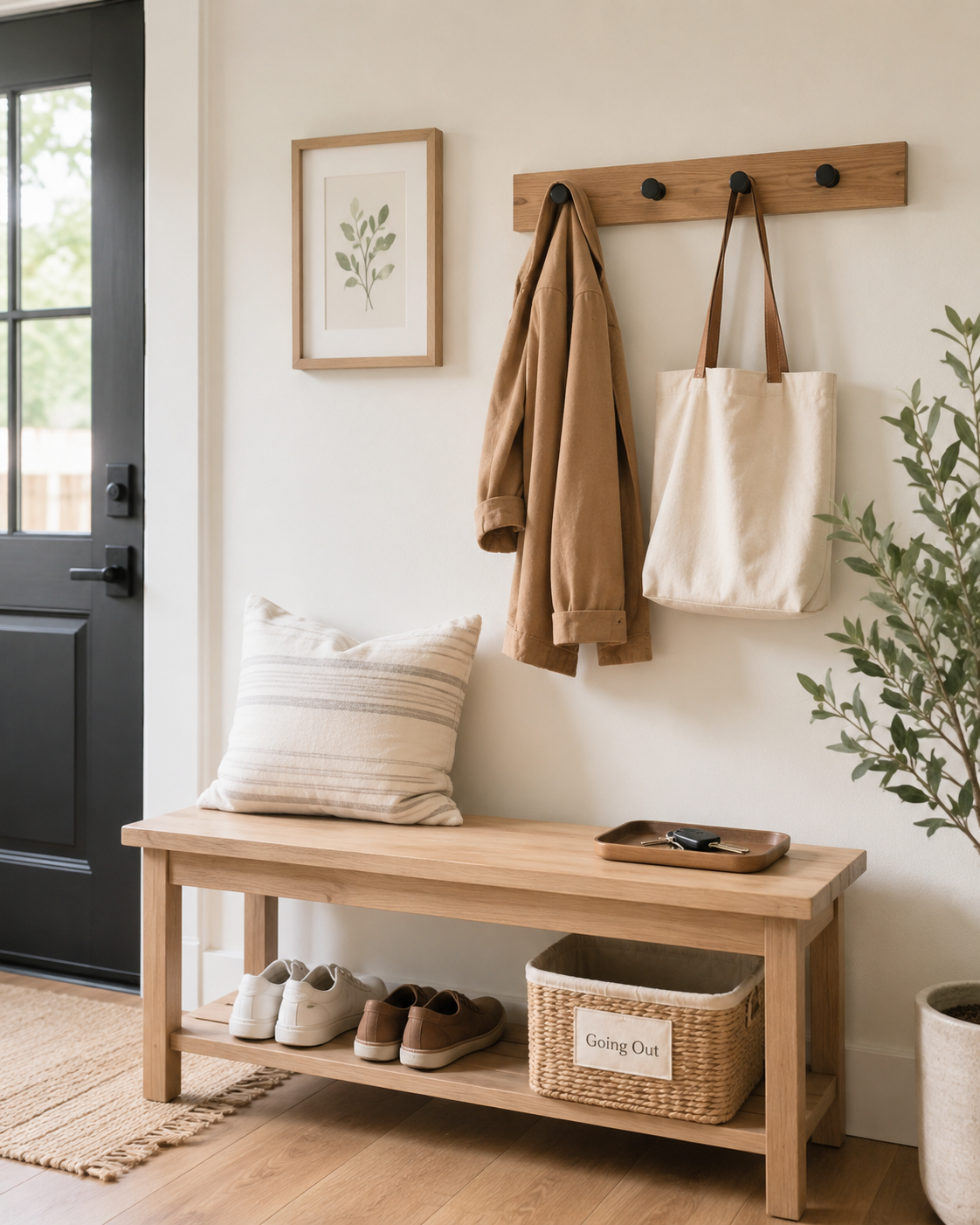
Hooks are usually better than hangers for daily life.

Most people will hang a bag or jacket on a hook faster than they will open a closet, find a hanger, and hang it neatly.

Use hooks for:

  • Backpacks
  • Purses
  • Jackets
  • Hats
  • Dog leashes
  • Tote bags
  • Pool bags
  • Reusable grocery bags

Keep hooks low enough for the people using them.

Kid hooks should be kid-height.

Adult hooks should be easy to reach without thinking.

The easier it is, the more likely it will happen.


2. A Place to Contain

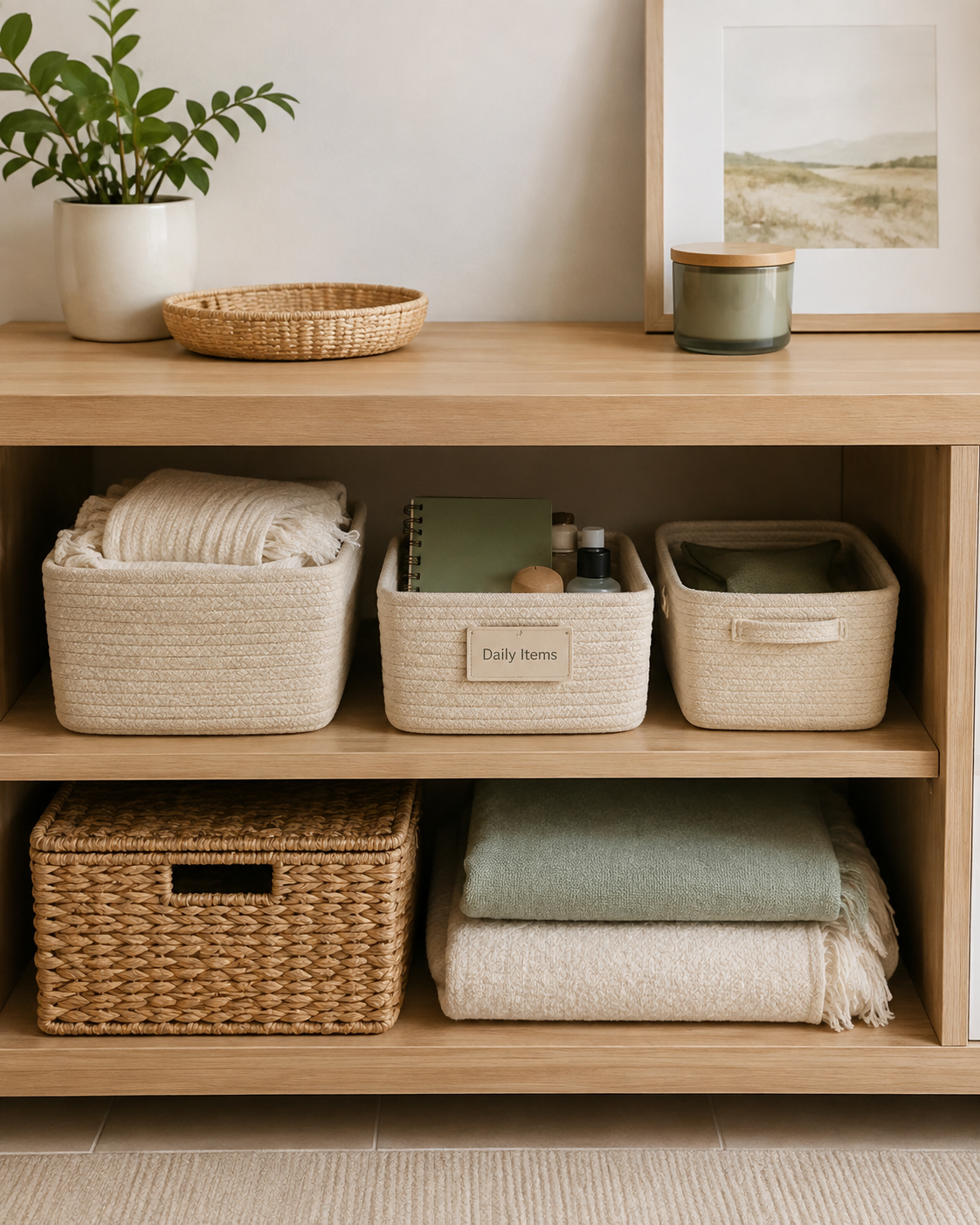
Some items need a basket, tray, bin, or cubby.

Use containers for:

  • Shoes
  • Sunscreen
  • Water bottles
  • Sunglasses
  • Gloves
  • Sports gear
  • Library books
  • Returns
  • Small outdoor items
  • Tiny kid treasures

The container creates a boundary.

Without a boundary, a drop zone becomes a pile.

The rule is simple:

If the bin is full, it is time to reset it.

That makes the container do part of the decision-making for you.


3. A Place to Clear

Every drop zone needs a reset rhythm.

Otherwise, it becomes long-term storage.

Decide when you will clear it.

That might be:

  • Every evening
  • Every Sunday
  • Before grocery day
  • Before trash day
  • When the basket is full
  • Before guests come over

This does not have to be complicated.

Your drop zone is allowed to hold life temporarily.

It just cannot hold everything forever.


What Belongs in a Drop Zone?

A drop zone should hold the things that come and go often.

Good drop zone items include:

  • Keys
  • Wallets
  • Sunglasses
  • Purses
  • Backpacks
  • Shoes
  • Hats
  • Jackets
  • Sunscreen
  • Bug spray
  • Water bottles
  • Sports gear
  • Library books
  • Items to return
  • Packages going out
  • Dog walking supplies

What does not belong?

Anything that should actually live somewhere else long-term.

A drop zone should not become storage for random papers, broken items, old receipts, forgotten toys, laundry, or everything that does not have a home.

If something keeps showing up in the drop zone, ask:

Does this need a real home?

That one question can solve a lot of clutter.


The Drop Zone Mistake Most People Make

The biggest mistake is making the drop zone too broad.

A basket labeled “stuff” will become a mess.

A drawer labeled “miscellaneous” will hide decisions.

A bench with no boundaries will collect everything.

Specific labels work better.

Try:

  • Keys
  • Mail
  • Shoes
  • Returns
  • Library Books
  • Sports Gear
  • Pool Bag
  • Dog Walk
  • Sunglasses
  • Water Bottles

A clear label makes the next action obvious.

The more obvious the system, the less you have to remind everyone.


Create a Summer Drop Zone

Summer is one of the best times to create a drop zone because summer items move in and out of the house constantly.

Your summer drop zone might include:

  • Sunscreen
  • Bug spray
  • Swim goggles
  • Towels
  • Flip-flops
  • Hats
  • Water bottles
  • Snacks
  • Pool bag
  • Sports items
  • Park toys
  • Picnic blanket

Keep it close to the door your family uses most.

Not the “prettiest” door.

The real door.

If everyone enters through the garage, that is where the system needs to live.

If the back door is where towels and flip-flops land, put the towel basket there.

Real-life placement beats perfect placement every time.


Make It Easy for Kids to Use

A drop zone works better when kids can use it without help.

Ask:

Can they reach the hook?
Can they open the bin?
Can they understand the label?
Can they put the item away in one step?
Is the system close to where they naturally drop things?

If the answer is no, simplify.

For kids, open bins usually work better than lidded bins.

Low hooks usually work better than closets.

Picture labels may work better than words for younger kids.

The goal is not to create a system that impresses adults.

The goal is to create a system your real family can actually repeat.


Protect the Kitchen Counter

In many homes, the kitchen counter becomes the accidental drop zone.

That is not because the counter is bad.

It is because the counter is convenient.

But if the counter is always holding mail, keys, school papers, bags, and random items, cooking becomes harder.

A good drop zone protects your kitchen counter by giving those items somewhere else to land.

Try placing a small tray, basket, or wall pocket near the entry point instead.

For example:

Mail goes in the paper tray.
Keys go in the small dish.
Bags go on hooks.
Shoes go in the basket.
Returns go in one labeled bin.

The kitchen should not have to hold every unfinished decision.

Give those decisions a place to wait.


The “One-Step Rule”

A drop zone should be as close to one step as possible.

Not five steps.

Not hidden behind a door.

Not inside a container inside another container.

One step.

Hang the bag.
Drop shoes in the basket.
Place keys in the dish.
Put mail in the tray.
Set returns in the bin.

If the system takes too much effort, people will default to the easiest surface.

Usually the counter.

Or the floor.

So make the right action easier than the wrong one.


Try the “Coming In / Going Out” Method

A helpful drop zone has two directions:

Coming In: Things that enter the house and need a temporary landing spot.
Going Out: Things that need to leave the house again.

This is especially useful for busy families.

Your “coming in” area might hold shoes, bags, mail, and water bottles.

Your “going out” area might hold returns, library books, sports bags, packages, school forms, or things that need to go back to the car.

This keeps your drop zone from becoming one mixed-up pile.

It also helps you leave the house with fewer forgotten items.


Small Space Drop Zone Ideas

You do not need a mudroom to have a working drop zone.

A small space can still work beautifully.

Try:

  • A narrow wall shelf with hooks underneath
  • A small entry table with a tray
  • A basket under a bench
  • A wall-mounted mail pocket
  • A shoe basket by the door
  • A hook rack behind a door
  • A small rolling cart near the garage entry
  • A labeled tote in the laundry room
  • A single basket for “things going upstairs”

The size of the system matters less than the clarity of the system.

A tiny drop zone that works is better than a large one that becomes clutter.


Tiny Win: Build One Mini Drop Zone Today

Choose one item that keeps landing in the wrong place.

Just one.

Maybe it is keys.
Shoes.
Backpacks.
Mail.
Water bottles.
Sunscreen.
Library books.
Returns.

Now create one tiny home for it.

Use something you already have:

  • A bowl
  • A basket
  • A tray
  • A hook
  • A bin
  • A small shelf
  • A drawer divider

Then tell your family the new rule in one sentence:

“Keys go in this dish.”
“Shoes go in this basket.”
“Library books live here.”
“Sunscreen goes in this bin.”
“Backpacks hang on these hooks.”

That is enough.

You do not need to build a full mudroom today.

One working drop zone is better than ten pretty ideas you never use.


What Done Looks Like

Your drop zone is working when:

  • The most common items have a clear landing spot
  • Shoes, bags, and papers are not spreading everywhere
  • Your kitchen counter stays clearer
  • Kids can use the system without constant reminders
  • The bin or basket creates a clear limit
  • The area is easy to reset
  • You know when it is time to clear it
  • The system matches your real entry habits

Done does not mean the drop zone is always empty.

A drop zone is supposed to catch things.

Done means it catches the right things and can be reset quickly.


Keep Exploring: Build the Whole Summer System

If this post helped, keep going with one of these next:

Kid Stuff Without Kid Takeover
A helpful follow-up if your drop zone needs to handle backpacks, shoes, toys, art supplies, summer gear, or tiny treasures.

Summer Organization for Real Life Chaos
A great next read if your whole home is feeling the shift into summer snacks, towels, water bottles, sunscreen, and in-and-out mess.

Outdoor Gear Without the Pile
Perfect if your biggest drop zone problem is sandals, towels, sports balls, bug spray, pool bags, and everything that comes in from outside.

You can also search the blog for summer organization, kitchen reset, entryway organization, and tiny wins to keep building simple systems that fit your real life.


Try This Before You Leave

Before you click away, choose one drop zone tiny win:

  • Put a bowl by the door for keys.
  • Add one basket for shoes.
  • Hang one hook for bags.
  • Start one “returns” bin.
  • Create a tray for sunscreen and sunglasses.
  • Move mail into one paper spot.
  • Clear one small entry surface.

One small home for one repeated item can make your whole house feel lighter.


Join the Tiny Wins Club Newsletter

Want more simple home systems like this?

Join the Tiny Wins Club Newsletter for gentle organizing ideas, seasonal resets, printable guides, and small steps that help your home feel lighter without the overwhelm.

No perfection pressure. No massive weekend overhaul.

Just real-life systems and tiny wins you can actually use.


Final Thought

A good drop zone is not about making your entryway look perfect.

It is about giving real life a place to land.

When bags have hooks, shoes have baskets, mail has a tray, and summer gear has a bin, your home can breathe a little easier.

Start where the mess already lands.

Make the system simple.

Keep it specific.

Reset it often enough that it does not become storage.

That is how drop zones actually work.

Real life. Simple systems. Tiny wins.


Join the conversation—share your tiny wins with me. 💛 Hit reply or drop a comment and tell me one small thing you did today that made your home feel lighter.


Share your tiny win