Create a Home That Feels Calm, Clear, and livable

Gentle home organizing for real people, busy minds, and messy seasons of life.

A Summer Command Center

Summer can feel wonderfully open.

But it can also feel strangely scattered.

One day there is a camp pickup.
The next day there is a pool plan.
Then someone needs sunscreen, a permission form, a snack, a library book, a water bottle, or a reminder about what time everyone is leaving.

Summer may look relaxed from the outside, but inside the home, it can create a lot of moving pieces.

Different schedules.
Different activities.
Different meals.
Different drop-off times.
Different people coming and going.

That is where a summer command center can help.

Not a complicated wall of calendars and color-coded systems.

Just one simple place where the important summer details can land.

A summer command center helps your home answer a few basic questions:

What is happening this week?
What do we need to remember?
What needs to leave the house?
What do we already have planned?
What needs to be packed, returned, signed, bought, or handled?

When those answers live in one place, summer feels less like a mental juggling act.


What Is a Summer Command Center?

A summer command center is a small household hub for the season.

It can hold your calendar, lists, papers, reminders, activity plans, meal ideas, and anything your family needs to see often.

It does not have to be big.

It can be:

  • A wall calendar
  • A clipboard station
  • A small counter tray
  • A basket near the kitchen
  • A magnetic board
  • A file folder
  • A notebook
  • A command center drawer
  • A small section of your pantry door
  • A spot near your drop zone

The goal is not to make it look perfect.

The goal is to make your summer easier to manage.

A command center should help your brain stop carrying every detail alone.


Why Summer Needs Its Own System

During the school year, your home may already have a rhythm.

School mornings.
Homework.
Lunches.
Pickup times.
Bedtime routines.
Weekly schedules.

Summer changes that.

Even if summer is less structured, it often has more variation.

There may be camps, vacations, visitors, late nights, lake days, pool days, summer reading, work schedules, appointments, sports practices, family events, and random last-minute plans.

That looseness can be lovely.

But it can also make everyday details harder to track.

A summer command center gives the season a little structure without making it feel overmanaged.

Think of it as a soft landing place for summer information.


Start With One Question: What Keeps Slipping Through the Cracks?

Before you build a command center, ask yourself:

What am I tired of trying to remember?

That answer tells you what your command center needs.

Maybe you are tired of remembering:

  • Camp dates
  • Pool schedules
  • Snack needs
  • Library books
  • Sports gear
  • Appointments
  • Work schedules
  • Chore reminders
  • Summer reading
  • Meal ideas
  • What needs to go back to the car
  • Who needs to be where and when
  • Papers that need to be signed
  • Items that need to be packed

Do not build a system for someone else’s life.

Build one for the details your home keeps dropping.

That is what makes it useful.


Choose One Main Location

A command center works best when it lives where people already pass through.

Good places include:

  • The kitchen
  • The mudroom
  • The garage entry
  • The pantry door
  • A hallway
  • A desk area
  • The laundry room
  • Near your family drop zone

The best location is not always the prettiest one.

It is the place where your family will actually look.

If everyone walks through the kitchen, put it there.

If your family enters through the garage, create it near that door.

If papers always land on the counter, give those papers a nearby command center instead of hoping they will magically stop landing there.

Real-life placement beats perfect placement.


What to Include in a Summer Command Center

You do not need every possible organizing tool.

Start with the basics.

1. A Calendar

A calendar gives everyone one place to see what is happening.

You can use:

  • A paper calendar
  • A dry-erase calendar
  • A printed monthly calendar
  • A weekly planner
  • A shared digital calendar plus a printed weekly view

For summer, a weekly view can be especially helpful because plans change quickly.

Use the calendar for:

  • Camps
  • Appointments
  • Travel days
  • Work schedules
  • Sports
  • Pool days
  • Visitors
  • Events
  • Library days
  • Trash day
  • Grocery day

Keep it simple enough to update.

If the calendar becomes too complicated, people will stop using it.


2. A “This Week” List

A monthly calendar is helpful, but a short weekly list makes summer feel more manageable.

Your “This Week” list might include:

  • Places we need to be
  • Things to pack
  • Food to prep
  • Items to return
  • Errands to run
  • Appointments
  • One fun thing planned
  • One home reset to do

This list helps turn a scattered week into something you can actually see.

It is also a good place to write reminders like:

“Bring towels Tuesday.”
“Return library books.”
“Buy more sunscreen.”
“Pack snacks for Thursday.”
“Wash swim towels.”

The goal is to reduce the number of things floating around in your head.


3. A Paper Landing Spot

Summer still brings paper.

Camp forms.
Receipts.
Coupons.
Schedules.
Invitations.
Activity sheets.
Library slips.
Appointments.
Random notes.

Create one paper landing spot.

This could be:

  • A wall pocket
  • A file folder
  • A clipboard
  • A tray
  • A labeled basket
  • A small magazine holder

Use simple labels like:

To Sign
To Return
This Week
Coupons
Receipts
School/Camp
Important

Do not create too many categories.

The simpler the paper system, the more likely you will use it.


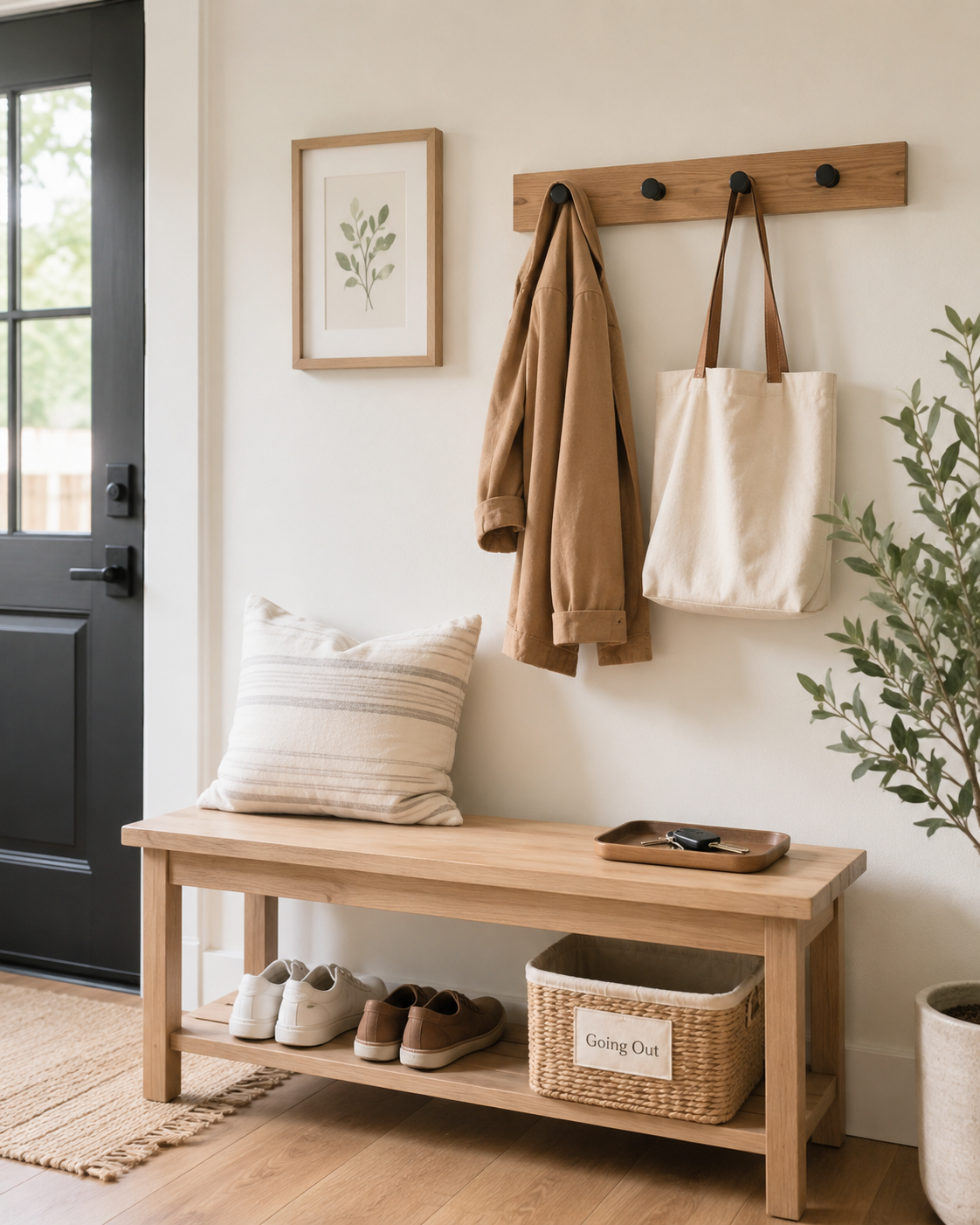
4. A Going-Out Spot

A command center should connect to what needs to leave the house.

This is where a basket or bin can be very helpful.

Use it for:

  • Library books
  • Returns
  • Camp items
  • Sports gear
  • Permission slips
  • Items going back to the car
  • Packages to mail
  • Things to give someone

Label it something simple:

Going Out
Take With You
Returns
Back to Car

This keeps the “don’t forget this” pile from spreading across the counter.

It also helps you leave the house with fewer last-minute scrambles.


5. A Simple Meal or Snack Plan

Summer food can feel constant.

Instead of planning every meal perfectly, use your command center to make food decisions easier.

Add a small list for:

  • Easy lunches
  • Grab-and-go snacks
  • Dinner ideas
  • Foods to use first
  • Grocery needs
  • Picnic or pool snacks

You might write:

Easy Lunches: sandwiches, wraps, snack plates, leftovers, quesadillas.
Dinner Ideas: tacos, burgers, grilled chicken, pasta salad, breakfast for dinner.
Use First: berries, lunch meat, cut vegetables, leftovers.

This is not about creating a strict meal plan.

It is about making the next food decision a little easier.


Keep It Visible, But Not Overcrowded

A command center should be easy to see, but it should not become visual noise.

If everything is posted, nothing stands out.

Try to keep only the current and useful items visible.

That might mean:

  • This week’s schedule
  • Current papers
  • One meal list
  • One going-out bin
  • One reminder list
  • One small basket for supplies

Store older papers somewhere else or toss them when they are no longer needed.

A command center works best when it is current.

Not full.

Current.


Use a Simple Reset Rhythm

Your summer command center will only work if it gets reset.

Choose one regular time to update it.

Good options:

  • Sunday evening
  • Monday morning
  • Friday afternoon
  • Before grocery shopping
  • Before the weekend
  • After dinner once a week

Your reset can be quick.

Ask:

What is happening this week?
What papers can be tossed?
What needs to be signed or returned?
What needs to go out the door?
What food needs to be used first?
What do we need to buy?
What is one thing we can simplify?

This does not need to take more than 10 minutes.

A command center reset is not another chore.

It is a way to stop the week from feeling like it is sneaking up on you.


Make It Kid-Friendly

If kids are part of your summer rhythm, make the command center easy for them to understand.

You can add:

  • A simple picture schedule
  • A “today” card
  • A snack list
  • A chore chart
  • A reading tracker
  • A packing checklist
  • A basket for library books
  • A spot for camp papers

For younger kids, pictures may work better than words.

For older kids, simple checklists may be enough.

The goal is not to make kids responsible for the whole household.

The goal is to help them understand the rhythm of the day and participate in small ways.

A child who knows where the towels go, where the water bottles are, and what day library books are due is learning how a home works.

That matters.


Do Not Make It Too Perfect

This is important.

A command center that is too pretty to use will not help you.

A command center that requires perfect handwriting, matching markers, laminated schedules, and constant upkeep may become one more thing to maintain.

Keep it realistic.

Use what you have.

A clipboard counts.
A basket counts.
A notebook counts.
A sticky note on the fridge counts.
A tray on the counter counts.

The best system is the one you will actually touch.


Tiny Win: Build a 10-Minute Summer Command Center

You can start small today.

Minutes 1–2: Choose the location

Pick the place where papers, plans, or reminders already land.

Minutes 3–4: Add a calendar or weekly list

Use a printed page, notebook, dry-erase board, or planner.

Minutes 5–6: Create one paper spot

Use a tray, folder, basket, or clipboard.

Minutes 7–8: Create one going-out spot

Use a bin, basket, tote, or shelf.

Minutes 9–10: Add one helpful list

Try easy meals, snacks, this week’s plans, or items to remember.

That is enough.

You do not need to build the perfect family hub in one afternoon.

Start with the details that keep slipping through the cracks.


What Done Looks Like

Your summer command center is working when:

  • You know where to look for this week’s plans
  • Papers are not spread across every surface
  • Important forms have one place to land
  • Items that need to leave the house are grouped together
  • Meal and snack decisions feel a little easier
  • Kids can understand part of the system
  • The calendar or list is easy to update
  • The command center helps you feel calmer, not more behind

Done does not mean every plan is perfectly organized.

Done means your summer details have a home.


Keep Exploring: Build Your Summer System

If your command center helps, keep going with one of these related posts:

Drop Zones That Actually Work
This is the best next step if your papers, bags, keys, shoes, and summer items keep landing all over the house. A good drop zone pairs beautifully with a command center because it gives physical items a place to land.

Outdoor Gear Without the Pile
Read this if summer towels, sandals, sunscreen, sports gear, and pool bags are creating clutter by the door, in the garage, or near the laundry room.

Kid Stuff Without Kid Takeover
This is helpful if your command center needs to include kids’ activities, crafts, library books, treasures, toys, or summer routines.

Summer Organization for Real Life Chaos
This is the bigger-picture summer reset that helps you create simple systems for snacks, towels, water bottles, and the everyday mess of real family life.

The goal is not to read everything at once.

Choose the post that matches the part of your home that feels heaviest today.


Try This Before You Leave

Before you close this tab, choose one tiny command center win:

  • Put a basket where papers already land.
  • Print a weekly calendar.
  • Make a “Going Out” bin.
  • Write down five easy summer meals.
  • Create a library book basket.
  • Put camp papers on one clipboard.
  • Add a sticky note for this week’s top three reminders.

One tiny home for one repeated problem can make the whole week feel lighter.


Join the Tiny Wins Club Newsletter

Want more gentle systems like this?

Join the Tiny Wins Club Newsletter for simple home resets, seasonal organizing ideas, printable guides, and tiny steps that help your home feel calmer without the pressure to do everything at once.

Real homes do not need perfect systems.

They need supportive ones.


Final Thought

A summer command center is not about controlling every minute of the season.

It is about giving the important details a place to land.

The calendar.
The papers.
The reminders.
The snacks.
The returns.
The camp forms.
The library books.
The “don’t forget this” items.

When those pieces have a home, your brain gets a little more room to breathe.

Start small.

One calendar.
One basket.
One going-out spot.
One weekly reset.

That is enough to make summer feel more manageable.

Real life. Simple systems. Tiny wins.


Join the conversation—share your tiny wins with me. 💛 Hit reply or drop a comment and tell me one small thing you did today that made your home feel lighter.


Share your tiny win