Transitions can feel bigger than they look from the outside.
The calendar changes.
The mornings shift.
The evenings feel different.
The house starts holding new things.
The routines that worked a few weeks ago suddenly need adjusting.
And before you know it, your home is carrying two seasons at once.
Summer is still here in the towels, sandals, water bottles, sunscreen, late nights, and loose routines.
Fall is beginning to show up in the backpacks, schedules, papers, lunch boxes, jackets, appointments, sports bags, work rhythms, and earlier mornings.
That middle space can feel messy.
Not because you are behind.
Because transition is messy.
A gentle transition guide is not about rushing your home into the next season.
It is about giving yourself and your home permission to shift slowly.
One space.
One routine.
One tiny win at a time.
Why Transitions Feel So Overwhelming
Most seasonal transitions do not happen all at once.
They overlap.
The summer basket is still by the door, but now school papers are arriving.
The pool towels still need a place, but jackets are starting to show up.
The snack zone is still working hard, but lunch packing may be coming back.
The calendar still has summer activities, but fall schedules are beginning to fill in.
The house can start to feel crowded because it is holding what was and what is coming next.
That does not mean your systems failed.
It means they need to stretch, shift, or simplify.
The goal is not to force a perfect fall reset.
The goal is to help your home move through the transition with less friction.
Start by Naming the Season You Are In
Before you reset anything, pause and name what is actually happening.
You might say:
“We are in a transition week.”
“We are moving from summer rhythm to school rhythm.”
“We are not fully in fall yet.”
“We are clearing what summer left behind.”
“We are making room for what comes next.”
This may sound simple, but it matters.
Naming the season helps you stop expecting your home to act like everything is settled when it is not.
A transition season is allowed to feel in-between.
Your systems can be in-between too.
Do Not Change Everything at Once
When a new season begins, it is tempting to change everything.
New morning routine.
New laundry system.
New meal plan.
New paper system.
New calendar system.
New closet setup.
New cleaning rhythm.
New everything.
But too much change at once can make the home feel more stressful.
Instead, choose one routine to support first.
Maybe it is:
- mornings
- lunches
- laundry
- paperwork
- schedules
- after-school clutter
- home office work
- dinner
- bedtime
- getting out the door
Pick the routine that creates the most pressure.
Start there.
A gentle transition begins with the part of life that needs the most support, not the whole house at once.
Clear Before You Add
Before adding fall systems, clear a little summer clutter.
Not everything.
Just the things that are no longer helping.
Look for:
- empty sunscreen bottles
- broken goggles
- old papers
- stale snacks
- extra water bottles
- sandals that no longer fit
- towels that need washing
- summer bags that need unpacking
- car clutter
- activity papers that are no longer current
This is not a deep declutter.
It is a gentle clearing.
You are making room for the next season to land.
Even one basket of summer leftovers moved out of the way can make the transition feel easier.
Choose Your Transition Zones
Some spaces carry transitions more than others.
These are the places to focus first.
The Entry or Landing Zone
This is where bags, shoes, keys, water bottles, jackets, papers, and going-out items collect.
A simple reset here can make the whole routine feel calmer.
The Kitchen
This space carries meals, snacks, lunches, water bottles, dishes, and daily resets.
A small kitchen rhythm can support the whole household.
The Paper Spot
Fall brings forms, schedules, reminders, mail, receipts, and school papers.
Paper needs one clear place to land.
The Laundry System
Laundry shifts when routines change.
Clothes, towels, uniforms, work outfits, and layers all need a way to keep moving.
The Calendar or Command Center
Schedules need to be visible.
Your brain should not have to carry everything alone.
You do not need to reset all of these today.
Choose the zone that would make the next few days easier.
Make One Routine Easier by One Step
This is the heart of a gentle transition.
Do not ask, “How do I make this routine perfect?”
Ask:
How can I make this routine easier by one step?
If mornings are hard, put shoes and bags together the night before.
If lunches are hard, create one lunch bin.
If papers are hard, add one tray.
If laundry is hard, move one load forward each day.
If schedules are hard, make a “This Week” folder.
If after-school clutter is hard, create a basket for bags and papers.
One step may not sound like much.
But one less decision repeated every day can make the whole routine feel lighter.
Build a Soft Landing for the Day
Transitions are not just about getting out the door.
They are also about coming back home.
After school, after work, after errands, after activities — the house needs a place for the day to land.
Think about what usually comes in with everyone:
- shoes
- bags
- papers
- lunch boxes
- water bottles
- jackets
- sports gear
- receipts
- snacks
- emotional energy
Yes, emotional energy counts too.
A soft landing might include:
- a shoe basket
- a backpack hook
- a paper tray
- a lunch box spot
- a water bottle area
- a snack zone
- a 10-minute reset
- a quiet corner
- a simple after-school rhythm
The goal is not to control every item.
The goal is to give the day a way to settle.
Create a “This Week” Focus
During transition seasons, thinking too far ahead can feel overwhelming.
Instead of trying to plan the whole fall, focus on this week.
Ask:
What is happening this week?
What needs to leave the house?
What papers need attention?
What clothes need washing?
What meals need to be easy?
What appointments are coming?
What bags need to be packed?
What would make this week feel calmer?
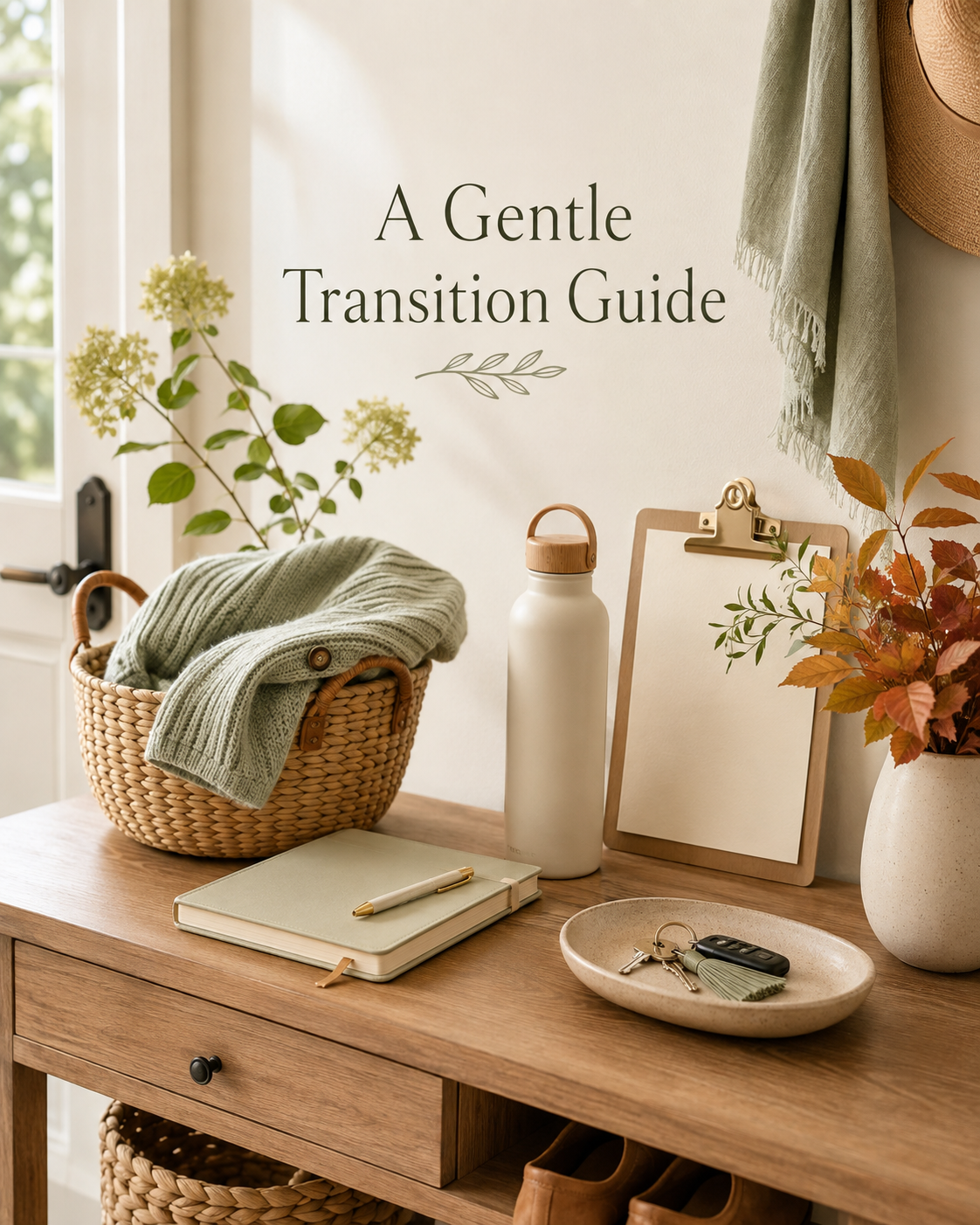
Create one This Week spot.
It can be a clipboard, basket, tray, folder, planner page, or command center section.
This gives the current week a place to land without making your whole life feel like a giant project.
Keep What Worked From Summer
You do not have to abandon summer systems just because fall is coming.
Some of them can be adjusted.
A towel basket can become a sports gear basket.
A sunscreen tray can become a keys-and-wallet tray.
A summer snack bin can become a lunch add-in bin.
A water bottle station can stay exactly where it is.
A command center can shift from camps and pool days to school, work, and activities.
A drop zone can become a morning launch pad.
The question is:
What already worked that can be reused?
This keeps the transition from feeling like starting over.
You are building from what already helped.
Let the First Week Be Practice
The first week of a new routine is not the final version.
It is practice.
You may discover that the backpack hook is too high.
The lunch zone may need to move.
The paper tray may be in the wrong spot.
The morning routine may need fewer steps.
The laundry rhythm may not match your schedule.
That is okay.
Treat the first week like a test run.
Notice what works.
Notice what breaks.
Adjust gently.
A system that changes with real life is stronger than a system that only looks good on the first day.
The 20-Minute Gentle Transition Reset
Set a timer for 20 minutes.
Minutes 1–4: Clear one summer leftover area
Towels, sandals, water bottles, snacks, car clutter, or old papers.
Minutes 5–8: Choose one transition zone
Entry, kitchen, paper, laundry, calendar, or office.
Minutes 9–12: Remove what does not belong
Trash, outdated papers, random items, things from another season.
Minutes 13–16: Add one simple support
A basket, tray, hook, folder, label, bin, or checklist.
Minutes 17–20: Choose one repeatable habit
Something small enough to do again tomorrow.
That is enough.
You do not need to reset the whole season in one afternoon.
What Done Looks Like
A gentle transition is working when:
- one summer area feels lighter
- one routine has more support
- the entry has room for daily items
- papers have a place to land
- laundry has a next step
- the calendar feels more visible
- mornings have fewer loose ends
- you feel less rushed and more prepared
- the home feels like it is shifting, not panicking
Done does not mean you are fully ready for fall.
Done means you have made space for the next step.
Keep Exploring: Build on What Already Works
If this post helped, these related posts can support your transition:
Back-to-Routine Without the Rush
A gentle starting point if you want to ease into August routines without pressure.
What to Reset Before Fall
Helpful if you want a clear list of the most important spaces to refresh before the season changes.
Resetting the Landing Zones
A good next read if bags, keys, shoes, papers, and everyday items need better places to land.
Paper Clutter Solutions That Stick
Perfect if fall papers, forms, mail, and reminders are already starting to pile up.
Laundry Systems That Don’t Break
Helpful if laundry is one of the first routines to fall apart when the schedule gets busy.
Simplifying Schedules Through Space
A strong follow-up if your calendar feels overwhelming because the physical items connected to it are scattered around the house.
Choose the post that matches the part of the transition that feels heaviest.
Try This Before You Leave
Choose one gentle transition tiny win:
- Clear one summer basket.
- Put papers in one tray.
- Add one hook near the door.
- Move water bottles to one place.
- Create a This Week folder.
- Wash one load of towels.
- Set up one lunch bin.
- Clear one command center area.
- Choose one morning habit.
- Write down what already worked this summer.
One tiny win can make the next season feel less rushed.
Join the Tiny Wins Club Newsletter
Want more gentle home systems like this?
Join the Tiny Wins Club Newsletter for free organizing ideas, seasonal resets, blog updates, and small steps that help your home feel lighter without turning every transition into a full project.
The free version is a simple way to stay encouraged and keep building tiny habits.
For readers who want more structure, the paid version includes deeper support such as printable guides, extended reset plans, step-by-step worksheets, seasonal checklists, and more detailed HOMe systems you can work through at your own pace.
Start with the free version if you want encouragement and ideas.
Upgrade to the paid version when you want the printables, deeper guides, and extra tools to help you follow through.
Real homes need gentle transitions.
Not rushed overhauls.
Final Thought
You do not have to force your home into the next season overnight.
Transitions are allowed to be gradual.
Clear a little of what summer left behind.
Keep what already worked.
Choose one routine to support.
Give the week a place to land.
Let the first version be practice.
That is enough.
A calmer fall does not begin with a perfect home.
It begins with one small space that feels a little more ready.
Real life. Simple systems. Tiny wins.
Join the conversation—share your tiny wins with me. 💛 Hit reply or drop a comment and tell me one small thing you did today that made your home feel lighter.
Leave a Reply